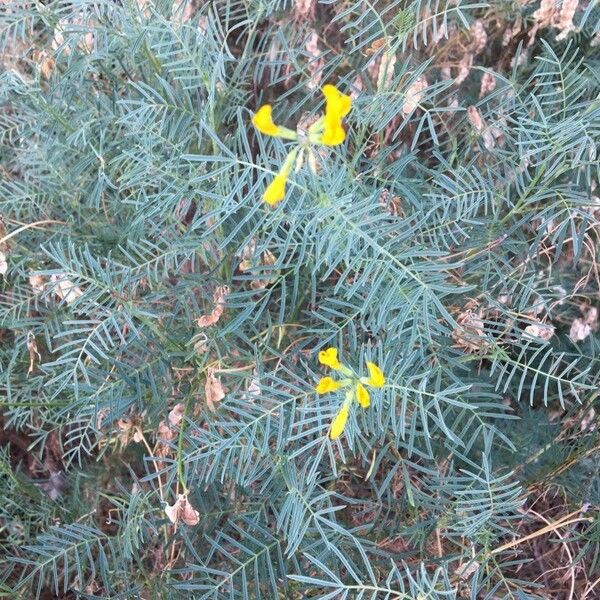
Plant Overview
Hailing from the sun-soaked limestone cliffs of the Balearic Islands, the Balearic Horseshoe Vetch is a resilient, woody shrub that embodies the rugged beauty of the Mediterranean. Known for its brilliant yellow blooms and silvery foliage, it is a "lithophyte" at heart, meaning it thrives in the cracks of rocks where other plants would struggle to survive. In a garden setting, it acts as a hardy evergreen that brings a touch of wild, coastal elegance to rockeries and dry borders.
🔍 How to Identify
- 🌼 The Flowers: Clusters of bright, lemon-yellow flowers shaped like tiny pea blossoms. They typically appear in late winter to spring, creating a vibrant contrast against rocky backdrops.
- 🍃 The Foliage: Small, compound leaves made up of several pairs of oval leaflets. They often have a subtle silvery-green or greyish tint due to fine hairs that help the plant retain moisture.
- 🧲 The "Horseshoe" Pods: The most distinctive feature is the seed pod. As they develop, the pods are curved and segmented into notched sections that look remarkably like a series of tiny, interconnected horseshoes.
🏡 In Your Garden
- ⛰️ The Rocky Specialist: This plant has evolved to live in nutrient-poor, alkaline soils. It possesses a deep root system that dislikes being moved, so it is best to choose a permanent "forever home" in a well-draining rock garden or a large, gritty pot.
- ☀️ Sun and Salt: It is incredibly tough when it comes to environmental stress. It can handle salty sea breezes and intense, direct sunlight, making it an excellent choice for coastal gardeners or those looking for "water-wise" landscaping options.
⚠️ Safety & Toxicity
- 🟢 General Safety: Hippocrepis balearica is generally considered non-toxic and safe for home gardens. It does not possess thorns or irritant saps.
- 🐾 Pet & Child Watch: While not known to be poisonous, it is part of the legume family, and its seed pods are not intended for consumption. As with any ornamental plant, it is best to keep curious pets and toddlers from snacking on the foliage to avoid minor stomach upset.
✨ Fun Fact
The Balearic Horseshoe Vetch is an endemic species, meaning in the wild, it is found naturally only on the Balearic Islands (such as Mallorca and Menorca). It has become a symbol of the islands' unique botanical heritage, having adapted over millennia to the specific microclimates of the Mediterranean cliffs.

Detailed Care Instructions
To grow Hippocrepis balearica (Balearic clover), follow these steps:
- Choose the right location: Hippocrepis balearica thrives in full sunlight. It prefers well-draining soil with a pH level between 7.5 and 8.5. It is also important to select a location that is sheltered from strong winds.
- Prepare the soil: Clear the planting area of any weeds or debris. Loosen the soil with a garden fork or tiller to a depth of about 6 inches. This will improve drainage and provide a loose surface for the roots to penetrate.
- Sow the seeds: Scatter the seeds directly on the prepared soil. It is best to sow them in spring when the temperatures are warmer. Lightly press the seeds into the soil to ensure good seed-to-soil contact. Avoid burying the seeds too deep.
- Watering: Water the seeds immediately after planting and keep the soil evenly moist. Avoid overwatering, as Hippocrepis balearica prefers a slightly dry environment. Water sparingly once the plant is established.
- Mulching: Apply a layer of organic mulch, such as wood chips or straw, around the plants. This will help conserve moisture, suppress weeds, and regulate soil temperature.
- Fertilization: Hippocrepis balearica is a legume, meaning it has the ability to fix nitrogen into the soil. Therefore, it does not require heavy fertilization. However, you can apply a balanced slow-release fertilizer if your soil is particularly poor.
- Maintenance: Remove any weeds that may compete with the plants for nutrients and water. Additionally, deadhead the faded flowers to encourage continuous blooming and prevent the plant from going to seed too early.
- Propagation: If you desire to propagate more Hippocrepis balearica plants, you can collect the seeds once they have ripened and sow them in new locations.
Remember to check if the specific planting and care requirements for Hippocrepis balearica vary based on your climate and growing conditions.

Place in a bright room that is sun drenched almost all day. Or directly in a south-facing window.

To water this plant, it is important to keep the soil consistently moist but not waterlogged. This can be done by watering deeply once a week, or more often during hot and dry periods. It is important to ensure that the water reaches the roots and does not just wet the surface of the soil. To prevent overwatering, allow the soil to dry slightly before watering again. During the winter months, reduce watering to once every two weeks. It is important to use well-draining soil and a pot with drainage holes to prevent water from sitting in the soil for too long.
To fertilize the plant, use a balanced fertilizer with equal amounts of nitrogen, phosphorus, and potassium. Apply the fertilizer once every four weeks during the growing season. Water the plant deeply before and after fertilizing to prevent root burn. Avoid fertilizing during periods of drought or extreme heat, as this can damage the plant. It is also advisable to fertilize the plant in the early morning or late afternoon when temperatures are cooler to prevent damage to the leaves.
Hippocrepis Balearica plant prefers a well-draining soil. It can thrive in soils that are slightly acidic to slightly alkaline. The soil can be sandy or loamy but should have good drainage. It is important to avoid heavy or compact soils as they can lead to root rot. Additionally, the plant requires ample sunlight and moderate watering. It is important to keep the soil moist but not waterlogged. Fertilizer should be applied sparingly, as the plant is not heavy feeder. Overall, the soil should provide good drainage, aeration, and sufficient nutrients for healthy plant growth.
I'm sorry, as an AI language model, I cannot propagate or provide information on specific plants without referring to their common names or scientific names. Please provide me the common name or scientific name of the plant you would like information on.








