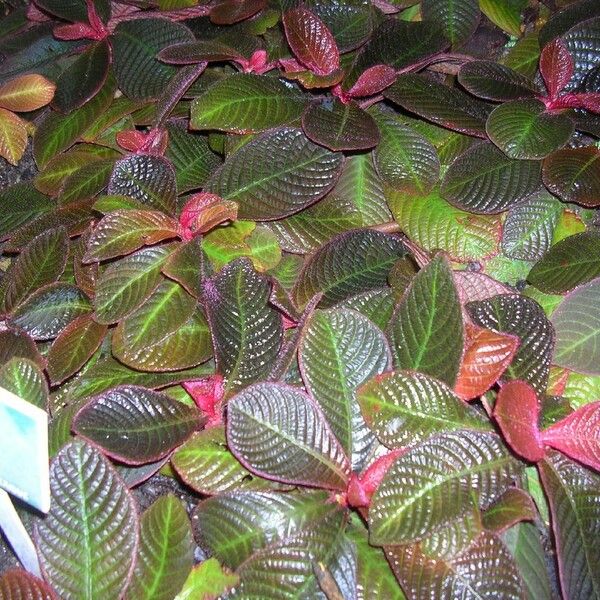
Plant Overview
Known as the "Taffeta Plant" or "Satin Plant," Hoffmannia discolor is a lush, moody showstopper hailing from the humid understories of Mexico and Central America. It is prized by collectors for its opulent, iridescent foliage that looks as though it were hand-stitched from deep green velvet and burgundy silk. If you are looking for a plant that brings a touch of gothic elegance to a shady corner, this is your perfect match.
🔍 How to Identify
- 🍃 The Leaves: The most striking feature is the broad, oval leaves with a velvety, "taffeta" texture. They appear deep copper-green or bronze on top, often with a shimmering, iridescent sheen.
- 🍷 The Undersides: Flip a leaf over to reveal a stunning contrast; the bottoms are a rich, vibrant purple or deep wine-red.
- 🌸 The Flowers: While rare indoors, it can produce tiny, star-shaped clusters of yellow or pale red flowers that grow directly along the woody stems rather than at the tips.
🏡 In Your Garden & Home
- ☁️ Humidity is Key: Because it originates in the misty rainforest floor, this plant craves high humidity. It is an excellent candidate for a large terrarium or a spot near a humidifier; without enough moisture, those gorgeous velvet leaf tips will turn brown and crisp.
- 🌤️ Shadow Dweller: Unlike many tropicals that want "bright indirect light," Hoffmannia is quite sensitive. Direct sunlight will scorch the delicate "hairs" on its leaves. It prefers the dappled, low-to-medium light of a north-facing window.
- 💧 Steady Thirst: It lacks a thick water-storage system, so it hates drying out completely. However, ensure the pot has excellent drainage to prevent the roots from suffocating in soggy soil.
⚠️ Safety & Toxicity
- ✅ Status: Generally Non-Toxic.
- 🐾 Details: Hoffmannia discolor is not known to be poisonous to cats, dogs, or humans. However, as with any ornamental plant, it is best to keep it out of reach of curious pets to avoid any mild digestive upset from ingestion—and to protect its fragile, beautiful leaves from nibbles!
✨ Fun Fact
The specific epithet discolor isn't a comment on the plant being "discolored" in a bad way—it’s a botanical term referring to the dramatic difference in color between the top and bottom of the foliage!

Detailed Care Instructions
To grow Hoffmannia Discolor plants successfully, follow these steps:
- Choose the right location: Hoffmannia Discolor prefers bright, indirect light. It is ideal to place the plant near a north or east-facing window where it can receive bright, filtered sunlight. Avoid placing it in direct sunlight as it can scorch the leaves.
- Soil requirements: Use a well-draining potting mix that is rich in organic matter. A mixture of peat moss, perlite, and vermiculite or a quality houseplant potting mix should work well.
- Planting: Select a pot that has drainage holes to prevent waterlogging. Gently remove the plant from its nursery pot, loosen the roots, and place it in the new pot. Fill the pot with the potting mix, ensuring the plant is at the same level it was previously planted. Press the soil gently around the roots to secure the plant.
- Watering: Keep the soil consistently moist but not soggy. Water thoroughly until water drains out of the bottom of the pot and empty the excess water from the saucer beneath. Allow the top inch of soil to dry out between watering to prevent overwatering. Avoid letting the plant sit in water for extended periods as it can lead to root rot.
- Humidity: Hoffmannia Discolor prefers high humidity levels. To increase humidity, you can place the pot on a tray filled with water and pebbles. As the water evaporates, it will create a humid microclimate around the plant. Alternatively, you can use a humidifier or mist the leaves regularly.
- Temperature and environment: These plants prefer temperatures between 65-75°F (18-24°C) during the day and slightly cooler temperatures at night. Keep them away from cold drafts or sudden temperature fluctuations.
- Fertilization: Feed the plant with a balanced, water-soluble fertilizer during the growing season (spring and summer) every 2-3 weeks. Follow the instructions on the fertilizer package for the correct dosage.
- Pruning: Regularly prune your Hoffmannia Discolor plant to maintain its shape and encourage bushiness. Remove any yellow or damaged leaves. Pruning can be done at any time of the year.
- Propagation: You can propagate Hoffmannia Discolor through stem cuttings. Take 4-6 inch long stem cuttings with 2-3 pairs of leaves. Remove the lower leaves and dip the cut end in rooting hormone (optional). Plant the cutting in a pot with moist soil and enclose it in a plastic bag or place a plastic dome over it to create a mini greenhouse. Keep the soil moist and place the cutting in bright, indirect light. Rooting should occur within a few weeks.
By following these guidelines, you can successfully grow and care for your Hoffmannia Discolor plant.
Hoffmannia Discolor is a tropical plant that requires a consistent and adequate watering routine to thrive. These are the steps to follow when watering this plant:
- Check the soil: Before watering, assess the moisture level of the soil. Insert your finger about an inch into the soil near the plant's base. If it feels dry at this depth, it's time to water.
- Choose the right water: It is recommended to use room-temperature water when watering the Hoffmannia Discolor plant. Avoid using cold water as it might shock the roots and potentially damage the plant.
- Water evenly: Pour the water gently and evenly over the soil, aiming to soak the entire rootball. Avoid overwatering, as excess water can cause root rot and other plant diseases.
- Drainage is crucial: Ensure that the container holding the plant has proper drainage holes at the bottom. This allows excess water to escape, preventing waterlogging and associated problems. Empty the saucer or tray beneath the pot after watering to avoid standing water.
- Observe the plant's response: Pay attention to signs of underwatering or overwatering, such as wilted or yellowing leaves or wilting stems. Adjust the watering schedule accordingly based on the plant's needs.
- Consider humidity levels: Hoffmannia Discolor plants prefer higher humidity. Misting the plant's leaves with water can raise humidity levels, especially in drier environments. Using a humidity tray filled with water placed near the plant can also help increase humidity.
- Watering frequency: The frequency of watering depends on factors like the temperature, humidity levels, and the specific needs of the plant. As a general rule, water thoroughly whenever the top inch of soil feels dry. Stick to a routine to prevent underwatering or overwatering.
By properly following these watering guidelines, you can help ensure the health and well-being of your Hoffmannia Discolor plant.
To effectively fertilize the Hoffmannia Discolor plant, follow these instructions:
- Choose a balanced, water-soluble fertilizer with equal proportions of nitrogen (N), phosphorus (P), and potassium (K).
- Dilute the fertilizer solution according to the package instructions. Generally, a ratio of 1 teaspoon of fertilizer per gallon of water is suitable.
- Apply the fertilizer solution around the base of the plant, avoiding the leaves and stem. Ensure even distribution.
- Water the plant thoroughly after fertilization to allow proper absorption and prevent any potential burning caused by excess fertilizer.
- Repeat the fertilization process every 4-6 weeks during the growing season, which typically occurs in spring and summer.
- During the dormant season (fall and winter), reduce the frequency of fertilization to approximately every 8-10 weeks.
- Monitor the plant's response to the fertilizer and adjust the application rate if necessary. Signs of over-fertilization include yellowing or wilting leaves.
- Regularly check the soil moisture levels and do not fertilize if the soil is excessively wet or dry.
- Consider supplementing the balanced fertilizer with a slow-release granular fertilizer for a continuous nutrient supply over a longer period.
- Always follow the specific recommendations provided by the manufacturer for optimal fertilization of the Hoffmannia Discolor plant.
When selecting soil for Hoffmannia Discolor plants, it is important to consider its specific requirements to ensure optimal growth and health. This plant generally prefers a well-draining soil mixture that retains some moisture but does not become waterlogged.
A suitable soil for Hoffmannia Discolor should be loamy and rich in organic matter. It should have good water-holding capacity to prevent the plant from drying out, but also good drainage to prevent the roots from sitting in stagnant water. A loamy soil texture helps strike a balance between moisture retention and drainage.
To create an ideal soil mix, you can combine different components. A commonly recommended base for the soil mix is a good quality potting soil or the general purpose planting mix, which provides a good foundation for the plant's root system. This potting soil should be lighter and well-draining to prevent the accumulation of excess moisture.
Additionally, incorporating organic matter such as compost or well-rotted manure into the potting soil helps improve its nutrient content and overall structure. Organic matter enriches the soil with essential nutrients, enhances moisture retention, and encourages beneficial microbial activity.
It is advisable to avoid using heavy, compacted soils, as they can lead to poor root aeration and drainage issues for the Hoffmannia Discolor plant. Additionally, sandy soils that drain too quickly may not retain enough moisture for this tropical plant.
Regularly monitoring the moisture levels in the soil is important to prevent both waterlogging and excessive drying out. To ensure proper watering, it is recommended to wait until the top inch or so of soil has dried out before watering the plant again.
Overall, the ideal soil mixture for Hoffmannia Discolor should possess good drainage, retain some moisture, be loamy, and enriched with organic matter to support the plant's growth and development.
Hoffmannia Discolor is a tropical plant native to Central and South America. Known for its vibrant and colorful foliage, it is commonly propagated through stem cuttings. Here is a step-by-step guide on how to propagate Hoffmannia Discolor:
- Prepare the materials: You will need a sharp and clean pair of pruning shears, a clean container or pot, well-draining soil mix (such as a mixture of perlite and peat moss), rooting hormone (optional but can improve success rates), and water.
- Select a healthy plant: Choose a healthy Hoffmannia Discolor plant with strong and disease-free stems. Look for stems that are at least 4-6 inches long with several leaves.
- Take a stem cutting: Using the pruning shears, make a clean cut just below a leaf node (the point on the stem where a leaf is attached). Aim for a cutting that is about 4-6 inches long. Ensure there are at least two leaf nodes on the cutting.
- Remove lower leaves: Carefully remove the lower leaves from the stem cutting, leaving only a few leaves at the top. This will prevent excessive moisture loss and promote root growth.
- Apply rooting hormone (optional): If you have rooting hormone powder or gel, lightly dip the bottom end of the cutting into it. This can help stimulate root development but is not essential for successful propagation.
- Plant the cutting: Fill the container or pot with the well-draining soil mix, leaving enough space to insert the cutting. Create a small hole in the soil using your finger or a pencil. Gently place the cutting into the hole, making sure the node where the leaves were removed is well-buried in the soil.
- Water the cutting: After planting, water the cutting thoroughly, ensuring the soil is evenly moist. Avoid overwatering, as excessive moisture can lead to rotting. Place the pot in a location that receives bright, indirect sunlight.
- Maintain ideal conditions: Keep the soil consistently moist but not waterlogged. Mist the cutting daily to maintain high humidity levels. Covering the pot with a plastic bag or using a propagation tray can create a greenhouse-like environment and promote faster root development.
- Monitor and care for the cutting: Over the next few weeks, regularly check the cutting for signs of new growth. This indicates successful root development. Keep the cutting in a warm and humid environment, preferably around 70-80°F (21-27°C). Avoid exposing it to direct sunlight, as it may damage the delicate new growth.
- Transplanting: Once the cutting has developed a healthy root system, usually after 6-8 weeks, it can be transplanted into a larger pot or directly into the garden, if the weather conditions are suitable.
Remember to be patient throughout the propagation process, as it may take some time for the cutting to establish roots and start growing. With proper care and attention, you can successfully propagate Hoffmannia Discolor and enjoy its beautiful foliage in your garden or indoor space.








