Plant Overview
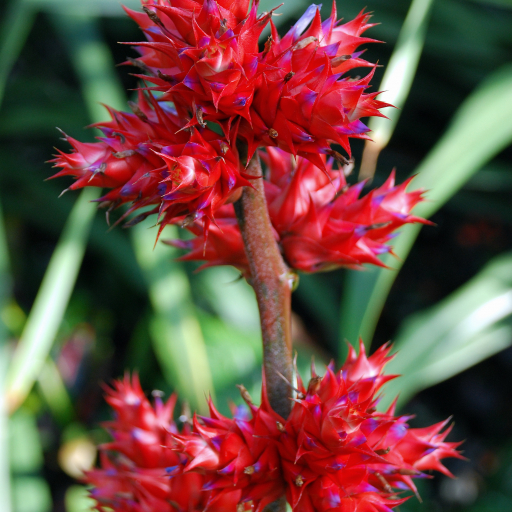
Often called the "Star of the Tropics," Hohenbergia stellata is a true showstopper in the bromeliad world. Hailing from the humid forests of Brazil and the Caribbean, this architectural masterpiece is prized for its dramatic, star-shaped inflorescence and its bold, prehistoric appearance. Whether it's perched in a tropical garden or sitting as a centerpiece on a patio, it commands attention with its vibrant colors and structural elegance.
🔍 How to Identify
- 🌵 Foliage Structure: It grows in a large, stiff rosette of strap-like leaves that are typically a bright, yellowish-green. The leaves form a central "urn" or "tank" designed to catch and hold rainwater.
- ⚔️ Spiny Edges: The leaf margins are lined with small, sharp teeth, so handle with care! The tips of the leaves often taper to a fine point.
- 🟣 The Inflorescence: The plant produces a tall, upright spike covered in white, woolly bracts. From these "cottony" clusters, small, brilliant purple or deep blue flowers emerge, creating a stunning contrast.
🏡 In Your Garden
- ☀️ Light & Color: This plant loves bright, filtered light. While it can handle some direct morning sun, too much harsh afternoon light may scorch the leaves; however, adequate light is the "secret ingredient" to getting those purple flowers to pop.
- 💧 The Central Tank: Unlike many plants, it drinks through its center. Keep the "cup" filled with fresh rainwater or distilled water, but be sure to flush it out occasionally to prevent stagnation and mosquito breeding.
- 🪵 Growth Habit: It is naturally epiphytic (growing on trees) but adapts well to gritty, well-draining potting mixes. It hates "wet feet," so ensure the pot allows water to flow away freely from the base.
⚠️ Safety & Toxicity
- 🟢 Pet Friendly: Hohenbergia stellata is considered non-toxic to cats, dogs, and horses, making it a safe choice for pet-filled households.
- 🧤 Physical Hazard: While not poisonous, the serrated "teeth" along the leaf edges can easily scratch skin or snag clothing. It is best to wear gloves when repotting and keep it away from narrow walkways where people might brush against it.
✨ Fun Fact
In the wild, this plant acts as a miniature ecosystem! Its central water tank doesn't just nourish the plant; it provides a vital breeding ground and habitat for specialized species of tropical tree frogs and insects that spend their entire lives inside bromeliad "urns."

Detailed Care Instructions
Hohenbergia Stellata plant is a type of bromeliad that can be grown both outdoors and indoors. Here are some tips on how to grow Hohenbergia Stellata plant successfully:
- Light: This plant thrives in bright, indirect light. Place it near a window where it receives plenty of indirect sunlight.
- Water: Water the plant thoroughly, allowing the water to drain out completely. Allow the top inch of soil to dry out before watering again. Be sure to water the plant in the center cup of the rosette as well.
- Humidity: Hohenbergia Stellata prefers high humidity levels. To increase humidity, you can place a tray with pebbles filled with water beneath the plant or use a humidifier.
- Temperature: Keep the plant in a warm environment, preferably between 65-80°F (18-27°C). Avoid exposing it to draughts or extreme temperature fluctuations.
- Soil: Use well-draining soil mix for bromeliads or orchids. You can also use a mix of peat moss, perlite, and bark chips.
- Fertilization: Feed the plant with a balanced liquid fertilizer every 2-4 weeks during the growing season (spring and summer). Do not fertilize during winter.
- Repotting: Repot the plant only when it outgrows its container, usually every 2-3 years. Use a slightly larger pot with fresh soil mix.
- Maintenance: Remove any dead leaves or debris from the plant to keep it healthy and pest-free. Hohenbergia Stellata is generally resistant to pests and diseases, but it's always good to keep an eye out for any issues.
By following these tips, you can successfully grow Hohenbergia Stellata plant and enjoy its beautiful foliage and vibrant blooms.
Hohenbergia Stellata plants should be watered thoroughly but infrequently to prevent overwatering. Allow the soil to dry out slightly between waterings to avoid root rot. When watering, make sure to water the soil directly at the base of the plant to prevent water from sitting on the leaves, which can lead to rot or disease. It is important to use room temperature water and avoid using water treated with water softener or other chemicals. Additionally, it is recommended to water in the morning or early afternoon to allow the plant's foliage to dry before nighttime, reducing the risk of fungal infections.
To fertilize Hohenbergia Stellata plants, apply a balanced liquid fertilizer once a month during the growing season from spring to fall. Dilute the fertilizer to half strength to avoid over-fertilization. Make sure to water the plant thoroughly after fertilizing to help the nutrients penetrate the soil and reach the roots. Avoid fertilizing during the winter months when the plant is dormant.
Hohenbergia Stellata plants thrive best in well-draining soil that is slightly acidic to neutral in pH. A mixture of peat moss or coconut coir, perlite or sand, and bark chips or pine bark fines is ideal for these plants. This combination of ingredients will provide the necessary nutrients, aeration, and drainage that Hohenbergia Stellata plants need to grow and thrive. Additionally, adding some organic matter like compost or leaf mold can help improve the overall health of the soil and provide essential nutrients for the plant's growth. It is important to avoid using heavy clay soils or soils that retain too much moisture, as this can lead to root rot and other issues for the plant. Regularly repotting the plant with fresh, well-draining soil is recommended to ensure its continued health and growth.
Hohenbergia stellata can be propagated through division or offsets. To propagate through division, carefully remove the plant from its pot and gently separate the offsets or pups from the mother plant using a sharp, clean knife. Make sure the offsets have their own roots attached. Plant the offsets in a well-draining potting mix and water thoroughly. Keep the new plants in a warm, bright location with indirect sunlight and water regularly to promote healthy growth.
Another method of propagation is through offsets, which are smaller plants that grow from the base of the mother plant. Simply detach the offsets from the mother plant by gently twisting or cutting them off with a sterilized knife. Plant the offsets in their own pots with well-draining soil and water them regularly to help establish healthy roots.
Overall, propagating Hohenbergia stellata is a relatively simple process that can help you expand your plant collection and share this beautiful species with others.








