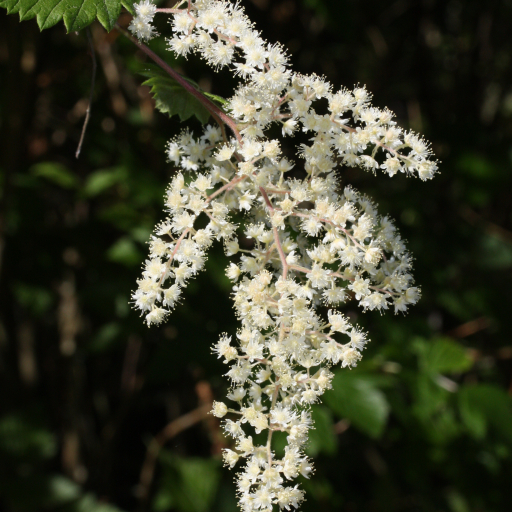
Plant Overview
Known as Oceanspray or Creambush, Holodiscus discolor earns its name from the frothy, cascading clusters of creamy white flowers that resemble the spray of breaking waves. In the wild, it drapes itself across the hillsides of Western North America, while in the garden, it acts as a hardy, fountain-like centerpiece. Historically, it was nicknamed "Ironwood" by Indigenous peoples because its wood is incredibly dense and becomes even harder when seasoned over a fire.
🔍 How to Identify
- 🌊 The Flowers: Large, drooping, pyramid-shaped clusters of tiny white to cream blossoms. As they age, they turn a unique "toasted" papery brown and often cling to the branches throughout the winter.
- 🍃 The Leaves: Small, dull-green leaves that are shaped somewhat like a triangle or an egg. They have deep teeth or lobes along the edges and a soft, velvety texture on the underside.
- 🎋 Growth Habit: A multi-stemmed shrub with gracefully arching branches that create a "fountain" silhouette, often reaching heights of 10 to 15 feet.
🏡 In Your Garden
- 🦋 Wildlife Magnet: This plant is a powerhouse for biodiversity; its nectar-rich plumes attract a wide variety of butterflies, including the Pale Tiger Swallowtail, while its dense structure provides excellent nesting sites for small birds.
- 💪 Hardy and Adaptable: Unlike many ornamental shrubs, Oceanspray is remarkably drought-tolerant once its roots are established. It thrives in "tough" spots like rocky slopes or forest edges where the soil might be poor.
- ✂️ Pruning Patience: It blooms on "old wood," so if you prune it back too hard in early spring, you might accidentally cut away all of the season’s flowers. It's best to prune lightly right after the blooms have faded.
⚠️ Safety & Toxicity
- ✅ Status: Generally non-toxic and safe for home landscapes.
- 🐾 Details: Holodiscus discolor is not listed as toxic to dogs, cats, or horses. While it isn't meant for human consumption, it lacks the aggressive thorns or irritating saps found in many other woodland shrubs, making it a "friendly" choice for family gardens.
✨ Fun Fact
The "Ironwood" branches of this plant were so highly valued for their strength that they were used to create everything from sturdy digging sticks and harpoon shafts to knitting needles and specialized skewers for roasting salmon!

Detailed Care Instructions
| Humidity | High |
| Lighting | Part Sun |
| Toxicity | Poisonous |
| Difficulty | Easy |
| Temperature | 12°C - 30°C |
| Hardiness Zones | 7A - 12 |
To grow a Holodiscus discolor plant, also known as ocean spray, follow these steps:
- Choose a suitable location: Holodiscus discolor thrives in full sun to partial shade. It can tolerate a wide range of soil types but prefers well-draining soil.
- Prepare the soil: Amend the soil with organic matter such as compost to improve drainage and fertility. This will also help retain moisture.
- Germination: Collect seeds from mature plants in late summer or early fall. Soak the seeds in warm water for 24 hours prior to planting. This will help break down the seed coat and improve germination.
- Planting: Sow the seeds in pots or directly in the ground in early spring after the last frost. Plant the seeds about 1/4 to 1/2 inch deep and lightly cover with soil. Space the seeds or seedlings about 2-3 feet apart as they will grow into a large shrub.
- Watering: Water the plant regularly during the first growing season to establish a strong root system. After that, it should be able to tolerate some drought conditions but still requires occasional watering during prolonged dry periods.
- Mulching: Apply a layer of mulch around the base of the plant to help retain moisture, control weeds, and regulate soil temperature.
- Pruning: Prune Holodiscus discolor annually during late winter or early spring to remove dead or damaged branches and shape the plant. This will promote healthy growth and enhance its appearance.
- Fertilizing: Holodiscus discolor generally tolerates poor soils but can benefit from an annual application of a balanced slow-release fertilizer in early spring.
- Pests and diseases: This plant is relatively pest-resistant, but keep an eye out for aphids or powdery mildew. If necessary, apply organic insecticidal soap or a fungicide regularly to control pests and diseases.
- Propagation: In addition to growing from seeds, you can propagate Holodiscus discolor through softwood cuttings in early summer or hardwood cuttings in late winter.
By following these steps, you can successfully grow a Holodiscus discolor plant in your garden or landscape. Remember to provide adequate care and maintenance to ensure its healthy growth and development.

Place in a bright room that is sun drenched almost all day. Or directly in a south-facing window.

To water this plant, ensure that the soil is adequately moist, but not waterlogged or overly dry. The frequency of watering will depend on the climate and temperature of the environment. It is important to avoid overwatering as this can lead to root rot and other issues. A good way to determine if the plant needs water is to stick a finger into the soil to a depth of one inch. If the soil feels dry at this depth, the plant requires watering. When watering, slowly pour water onto the soil around the base of the plant until it is evenly moist. Avoid getting water on the foliage as this can cause damage and lead to disease. It is also a good idea to ensure that the pot or container has a drainage hole to prevent water from accumulating at the bottom.
To fertilize this plant, apply an all-purpose fertilizer in the early spring, before new growth appears. Use a slow-release formulation and follow the manufacturer's recommended application rates. Water the plant deeply after fertilizing to ensure the nutrients penetrate the root zone. Continue to fertilize every four to six weeks throughout the growing season, and cease fertilization in the late summer to allow the plant to harden off for winter. Avoid fertilizing when the plant is under moisture or temperature stress, as this may cause fertilizer burn.
Holodiscus Discolor plant prefers well-draining soil with a neutral to slightly acidic pH. It can thrive in a variety of soils including loamy, sandy, or rocky soils, but needs adequate moisture to establish and grow. Organic matter, such as compost, can be added to the soil to improve its fertility and water-holding capacity. The plant is tolerant to drought, but should be watered regularly during the first year of establishment. It is also tolerant to salt, making it suitable for coastal areas.
To propagate this plant, you can take softwood cuttings in the early summer when the plant is actively growing. Use a sharp, clean pair of garden shears to take cuttings from the tips of the stems. The cuttings should be 4-6 inches long and have at least two sets of healthy leaves. Strip the lower leaves from the cutting and dip the cut end in rooting hormone powder. Plant the cutting in a well-draining potting mix and keep it moist but not soaking wet. Cover the pot with a plastic bag to create a humid environment and place it in a bright, but indirect light. After a few weeks, you should start to see new growth indicating that the cutting has rooted. Gradually remove the plastic bag and begin to acclimate the new plant to normal growing conditions.








