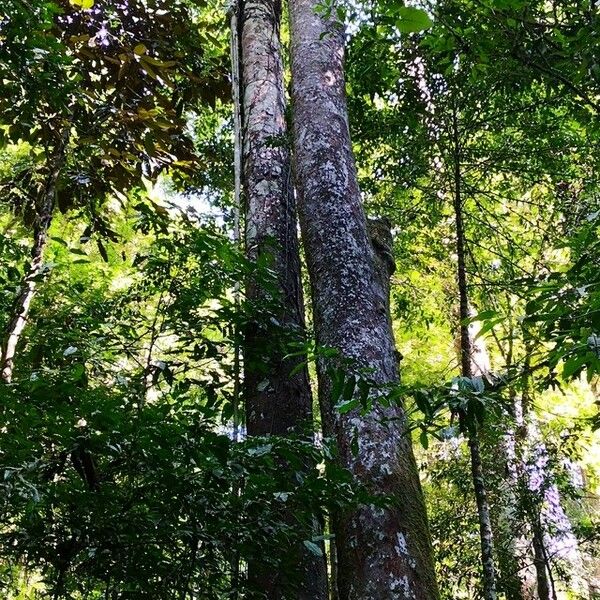
Plant Overview
Often called the Chinese Hopea, this rare and majestic tree is a true survivor of the ancient tropical forests of Southern China and Vietnam. As a member of the Dipterocarp family—the "giants of the jungle"—it is prized for its incredible height and its role as a cornerstone of its ecosystem. Today, it is a critically endangered species, regarded by botanists as a precious living relic of the subtropical landscape.
🔍 How to Identify
- 🍃 Leathery Foliage: The leaves are glossy, dark green, and oblong, featuring distinct lateral veins that give the foliage a pleated, structural appearance.
- 🪵 Rugged Bark: In its youth, the bark is relatively smooth and grey-brown, but it develops deep, vertical fissures and a rugged texture as the tree matures into a forest giant.
- 🚁 "Shuttlecock" Fruits: Its most iconic feature is the fruit; the seeds are attached to long, papery wings that cause them to spin like miniature helicopters or shuttlecocks when they fall from the canopy.
🌲 Habitat & Ecology
- 💧 Water Lovers: In the wild, these trees are "hydrophilic," meaning they are almost always found hugging the banks of streams or nestled in moist, humid valleys where they can keep their roots hydrated.
- ☁️ Microclimate Creators: Because of their massive size, they help regulate the temperature of the forest floor, providing shade and trapping humidity for smaller ferns and mosses that grow beneath them.
⚠️ Safety & Toxicity
- ✅ Non-Toxic: Hopea chinensis is not known to be poisonous to humans, cats, or dogs. It is a "friendly" giant in terms of chemistry.
- 🚧 Physical Scale: The main safety concern is its size. This is a massive timber tree that can reach heights of over 15 meters; it is not suitable for indoor growth or small residential gardens where falling branches or expansive roots could cause damage.
✨ Fun Fact
The family name Dipterocarpaceae literally translates to "two-winged fruit" in Greek. The Chinese Hopea uses these wings to "fly" away from its mother tree; the spinning motion (autorotation) allows the seed to catch the wind and land far enough away to find its own patch of sunlight!

Detailed Care Instructions
To grow a Hopea Chinensis plant, also known as the Chinese White Oak, you can follow these steps:
- Climate and Light: Choose a planting location that receives full sun or partial shade. The ideal climate for the Hopea Chinensis plant is tropical or subtropical regions with temperatures between 65-90°F (18-32°C).
- Soil: The plant prefers well-draining soil. Amend the soil with organic matter, such as compost or peat moss, to improve its fertility and drainage.
- Watering: Hopea Chinensis plants prefer moist soil but not waterlogged conditions. Water the plant regularly, keeping the soil evenly moist. However, avoid overwatering, as it can lead to root rot.
- Planting: Obtain a healthy Hopea Chinensis sapling from a nursery or propagate one from seeds. Dig a hole in the prepared soil that is slightly larger than the root ball. Place the sapling in the hole and backfill it with soil, gently pressing it around the base of the plant. Make sure the sapling is planted at the same depth it was in the container.
- Mulching: Mulch around the base of the plant with a layer of organic matter to help retain moisture, suppress weed growth, and provide insulation.
- Pruning: Regularly prune away any dead or damaged branches to promote healthy growth. Prune lightly to maintain the plant's natural shape, but avoid excessive pruning, as it can stress the plant.
- Fertilization: After the first year of planting, you can apply a balanced slow-release fertilizer in spring to boost the plant's growth. Follow the manufacturer's instructions for proper dosage and application.
- Pests and Diseases: Hopea Chinensis plants are generally resistant to common pests and diseases. However, monitor the plant for any signs of infestation or disease and promptly address any issues using appropriate pest control measures or treatments.
Remember to regularly monitor the plant's growth, watering needs, and overall health. With proper care and maintenance, your Hopea Chinensis plant can grow into a beautiful, long-lived tree.
Hopea Chinensis is a species of plant that belongs to the genus Hopea. This tree requires a moderate amount of water to thrive, and its soil should always be moist but not waterlogged. It is essential to water the plant regularly during the growing season, which is from spring to fall. The frequency of watering depends on the weather conditions and the soil's moisture level.
To water Hopea Chinensis, it is best to use a watering can or hose to apply water at the base of the plant. Avoid watering the leaves or trunk of the tree as it can lead to fungal diseases. The soil should be allowed to dry slightly between watering to prevent overwatering and root rot.
During the winter months, when the plant is dormant, it should be watered sparingly. This is because the plant's water needs are much lower during this time. It is advisable to only water when the top inch of soil is dry.
In summary, water Hopea Chinensis regularly during the growing season, keep the soil moist but not waterlogged, water sparingly during the winter months, and avoid watering the leaves or trunk of the tree to prevent fungal diseases.
To fertilize this plant, mix a slow-release granular fertilizer with rich organic compost. Apply the mixture to the soil around the base of the plant, taking care not to get any on the leaves. Water the plant thoroughly after fertilizing. Repeat this process every two to three months during the growing season. Avoid fertilizing during the winter months when the plant is dormant.
Hopea Chinensis plant thrive well in well-draining soil that contains a good amount of organic matter. The soil should be slightly acidic with a pH level between 5.5 to 6.5. Additionally, the soil should be able to retain moisture but not become waterlogged as this can lead to root rot. It is recommended to add peat moss or leaf mold to the soil mix to provide the necessary organic matter. Fertilizer should be applied during the growing season to enhance growth and development. Avoid using heavy clay soil, as it can limit proper drainage and aeration, which may lead to stunted growth or even death of the plant.
To propagate this plant, you will need to gather some stem cuttings. Find a healthy stem with several leaves and cut it at a 45-degree angle using a sharp, sterile knife or scissors. The cutting should be around 6 inches long. Remove the lower leaves, leaving only the top two or three leaves.
Dip the cut end of the stem into rooting hormone powder to encourage root growth. Place the cutting gently into a container filled with moistened potting soil. Cover the container with a plastic bag to maintain humidity and place it in a bright, warm spot with indirect sunlight.
Check the soil frequently and keep it moist but not waterlogged. After about four weeks, gently tug on the stem to check for root growth. Once roots have formed, you can transplant the new plant into a larger container or directly into the ground.
It is important to note that propagating plants can take time and patience, and not all cuttings will be successful. It is always best to use healthy, disease-free cuttings and to keep an eye on them during the rooting process.








