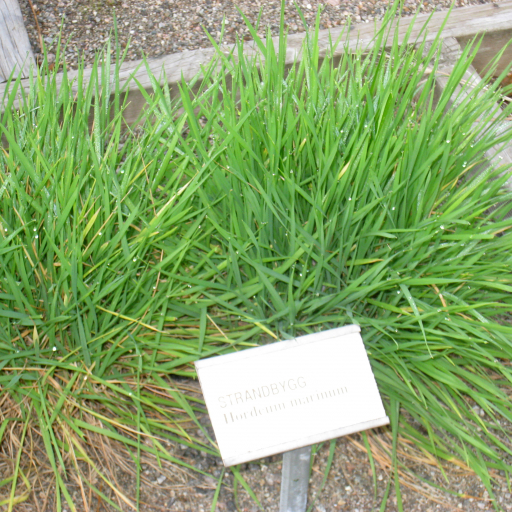
Plant Overview
Often called Mediterranean Barley or Kneeling Barley, this hardy annual grass looks like a miniature, wild version of the grain used to brew ale. Originally hailing from the Mediterranean and Western Asia, it has traveled the globe, often showing up as a rugged pioneer in coastal pastures and disturbed garden beds. Its ability to thrive in harsh, salty conditions makes it a true survivor of the grass world.
🔍 How to Identify
- 🌾 The "Knee" Bend: The stems are famously "geniculate," meaning they bend sharply at the lower joints. This gives the plant a distinct zig-zag appearance near the ground rather than growing perfectly straight.
- 🖌️ Bristly Spikes: The seed head is a dense, compact spike that looks like a tiny, stiff bottle brush. These bristles (awns) are typically shorter and more rigid than those of common garden barley.
- 🍃 Rough Texture: The leaves are narrow and flat, often feeling slightly rough to the touch due to tiny hairs, and they transition from a soft green to a parched straw color as the season progresses.
🏡 In Your Garden
- 🧂 Salt Specialist: This plant is an extremophile when it comes to salt. If you live near the ocean or have soil with high mineral content, you’ll likely find it popping up where other grasses wither.
- 🌱 Soil Indicator: Mediterranean Barley is a fan of compacted or "tired" soil. Its presence often suggests that the ground has been heavily trodden or lacks the aeration needed for more delicate ornamental plants.
⚠️ Safety & Toxicity
- 🐕 Mechanical Hazard: While the plant is not chemically toxic to humans or pets, it is physically dangerous. The sharp, barbed bristles on the seed heads are designed to "hitchhike."
- ⚠️ Pet Risks: These stiff bristles can become lodged in a dog’s ears, nose, or between paw pads. Because they are one-way barbs, they can burrow into the skin or even be inhaled, often requiring a trip to the vet for removal.
✨ Fun Fact
The name geniculatum comes from the Latin word geniculum, meaning "little knee." It’s the same root word used in anatomy to describe the "geniculate ganglion" in the human facial nerve—nature’s way of highlighting the many "joints" and "bends" in the plant's architecture!

Detailed Care Instructions








