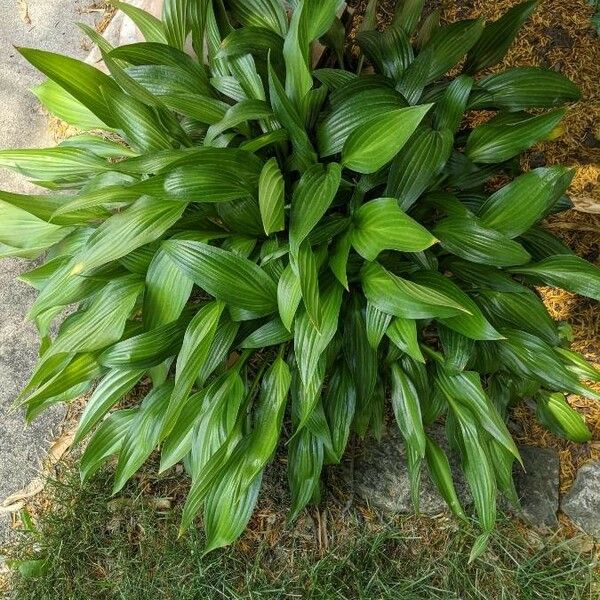
Plant Overview
Known affectionately as the "Lance-leaf Hosta," this Japanese native is a timeless staple of the shade garden. While many Hostas are prized for their massive, round leaves, the Hosta lancifolia stands out with its elegant, sword-like foliage and glossy finish. It is often the "reliable grandparent" of the garden, holding its own in the deep shadows where other plants might struggle to survive.
🔍 How to Identify
- 🍃 The Foliage: Look for narrow, lance-shaped leaves that taper to a sharp point. Unlike the matte texture of other varieties, these leaves have a distinct, polished shine.
- 📏 Growth Habit: It forms a very tidy, fountain-like mound that stays relatively compact, making it a perfect choice for edging garden paths.
- 🌸 Late Blooms: In late summer or early autumn—when other plants are fading—this Hosta sends up slender stalks topped with delicate, funnel-shaped lavender flowers.
🏡 In Your Garden
- 🌱 The Perfect Filler: Because it spreads through underground rhizomes, it is excellent for "knitting" a garden bed together. It creates a lush, green carpet that prevents weeds from taking hold.
- 💧 Thirst for Moisture: While it is incredibly hardy, it performs best in rich, organic soil that stays consistently moist. If the leaf tips start to turn brown and crispy, it’s likely telling you it needs a long drink.
- 🐌 Slug Resistance: Interestingly, the tougher, glossier texture of its leaves makes it slightly more resistant to slugs than its thinner-leaved cousins, though it's still a favorite snack if they are hungry enough!
⚠️ Safety & Toxicity
- 🐾 Pet Warning: Hostas contain saponins, which make them toxic to dogs, cats, and horses. If ingested, they can cause vomiting, diarrhea, and abdominal pain.
- 👶 Child Safety: Generally safe for children to be around and touch, but the leaves and flowers should never be consumed. Some people may experience mild skin irritation when handling the sap during pruning.
✨ Fun Fact
Unlike many modern Hosta hybrids that are sterile and can only be grown from divisions, Hosta lancifolia is a true species plant. It has been used for centuries in Japanese gardens to symbolize devotion and the quiet beauty of the shade.

Detailed Care Instructions
To grow Hosta Lancifolia plants, you can follow these steps:
- Select a suitable location: Choose a spot in your garden that receives partial shade or filtered sunlight. Hosta Lancifolia plants prefer shade or dappled sunlight rather than direct sunlight.
- Prepare the soil: Hostas thrive in well-draining soil that is rich in organic matter. Prior to planting, amend the soil with compost or well-rotted manure to improve its fertility and drainage.
- Planting: Dig a hole that is slightly wider and deeper than the plant's root ball. Place the Hosta Lancifolia plant in the hole, ensuring the crown (where the stems meet the roots) is level with the soil surface. Backfill the hole with soil, gently firming it around the plant.
- Watering: Keep the soil consistently moist, but not waterlogged. Water deeply and thoroughly, especially during dry spells or drought.
- Mulching: Apply a layer of organic mulch, such as wood chips or shredded leaves, around the base of the plant. This will help retain moisture in the soil, suppress weeds, and provide insulation to the roots.
- Maintenance: Hostas are generally low-maintenance plants but benefit from regular care. Keep the area around the plant free of weeds and remove any yellow or dead leaves. Apply a balanced fertilizer in spring and summer to promote healthy growth.
- Division: Over time, Hosta Lancifolia plants can become overcrowded. Dividing the clumps every few years will help rejuvenate the plant. To divide, carefully lift the entire clump from the ground and separate it into smaller sections using a sharp garden knife or spade. Replant the divisions in new locations or share with other gardeners.
- Pest and disease control: Hostas can be susceptible to slugs, snails, and certain diseases such as crown rot. Apply organic slug control methods, such as beer traps or copper tape, to deter slugs. Ensure good air circulation around the plant to prevent fungal diseases.
By following these steps, you can grow and maintain healthy Hosta Lancifolia plants in your garden.

Place in a window with dappled sun or a spot in the middle of a room. Or directly in a window facing west or east.

Hosta Lancifolia is a plant that needs regular watering to thrive. To water it, you should first check the soil moisture level by sticking your finger about an inch deep into the soil. If it feels dry, it's time to water.
You should water the plant's soil thoroughly, making sure that the water reaches the plant's roots. You can achieve this by watering slowly and deeply, rather than quickly and shallowly.
It's important to avoid getting water on the plant's leaves as this can lead to fungal diseases. Additionally, you should avoid overwatering, as this can lead to root rot.
In general, you should water Hosta Lancifolia about once a week during the growing season, and less frequently during the dormant season. However, the exact watering schedule may vary depending on factors such as the plant's size, the type of soil it's planted in, and the local climate.
To fertilize this plant, apply a balanced fertilizer in early spring before new growth emerges, and again in midsummer. Use a slow-release formula and apply according to the package instructions. Be careful not to over-fertilize, as this can lead to burned leaves and stunted growth. Water the plant immediately after fertilizing to ensure that the nutrients are absorbed.
The ideal soil to use with this plant is a well-draining, nutrient-rich mixture that is slightly acidic. It should have a pH level between 5.5 and 7.5. The soil should be able to retain moisture while allowing excess water to drain easily, as this plant prefers moist but not waterlogged soil. Additionally, the soil should be loose and friable, allowing the roots to spread easily and avoiding compaction. Organic matter such as compost or peat moss can be added to the soil to help with moisture retention and nutrient content. It is important to avoid using heavy clay soils or soils that are too sandy, as they can negatively impact the growth of the plant.
Hosta lancifolia is a popular ornamental plant that can be propagated in several ways. One method is by division, which involves separating the roots and shoots of an established plant and replanting them separately. To do this, choose a healthy plant with several shoots emerging from the soil. Dig around the base of the plant, being careful not to damage the roots, and gently lift the clump out of the ground. Use a sharp knife or trowel to divide the clump into smaller pieces, making sure each section has at least one healthy shoot and a portion of the root system. Replant the divisions in a suitable location, ensuring they are watered well and given adequate light and nutrients.
Another method of propagation is by leaf cuttings, which involves taking a leaf from an established plant and using it to generate new growth. Select a healthy leaf from a mature plant and cut it from the stem, ensuring the cut is clean and straight. Make several cuts along the underside of the leaf, then place it with the cut side down on a moist growing medium, such as peat moss or vermiculite. Cover the leaf with a clear plastic bag or container to provide a humid environment, and keep it in a warm, bright location. Over time, the leaf should develop small plantlets at the cut edges, which can be transplanted into individual pots or directly into the garden.
These methods of propagation can be used to increase the number of Hosta lancifolia plants in your garden or to share them with friends and family. By following these simple steps, you can enjoy the beauty of this stunning plant for years to come.
Common pests of the narrow-leaved plantain-lily include Larvae, snails. Make a habit of checking your narrow-leaved plantain-lily frequently for pests so that any infestations can be caught and managed early.








