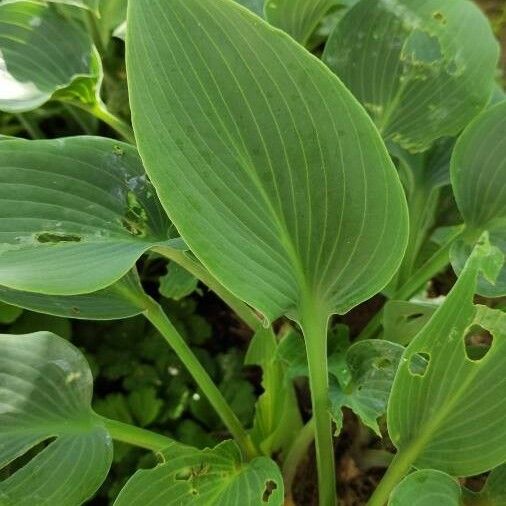
Plant Overview
Known as the Rock Hosta or Iwa Giboshi in its native Japan, Hosta longipes is a graceful perennial that clings to the mossy cliffs and rocky crevices of mountainous regions. Unlike the massive, broad-leafed cultivars often found in suburban yards, this species is prized for its elegant, "long-footed" appearance and its ability to thrive in vertical landscapes. It brings a sense of wild, misty Japanese highlands to any shaded garden or container collection.
🔍 How to Identify
- 🍃 The "Long Feet": True to its name (longipes means long-footed), the plant features exceptionally long leaf stalks (petioles) that are often speckled with tiny purple dots near the base.
- 💚 Heart-Shaped Foliage: The leaves are relatively small, smooth, and heart-shaped (ovate), lacking the heavy puckering or "seersucker" texture seen in many hybrid hostas.
- 🌸 Late-Season Stars: While many hostas bloom in early summer, this species is a late-season performer, sending up slender scapes of pale lavender, bell-shaped flowers in late August or September.
🏡 In Your Garden
- 🪨 The Cliff-Dweller’s Edge: Because it naturally grows on rocky outcrops, this Hosta is perfect for rock gardens or "crevice" planting. It doesn't require deep, heavy soil but does demand excellent drainage to prevent its roots from sitting in stagnant water.
- 🐌 Vigilance Required: The leaves are thinner and more delicate than many modern blue-leafed varieties, making them a "gourmet" choice for slugs and snails. Consider elevated planters or organic barriers to keep the foliage looking its best.
⚠️ Safety & Toxicity
- 🐱 Pet Toxicity: Like all members of the Hosta genus, this plant contains saponins, which are toxic to dogs, cats, and horses.
- 🤢 The Risk: If ingested, it can cause distress including vomiting, diarrhea, and lethargy. It is best placed in areas where curious pets are unlikely to graze on the leaves.
✨ Fun Fact
In Japan, the name Iwa Giboshi translates to "Rock Bridge Finial." This refers to the shape of the flower buds, which supposedly resemble the traditional ornamental carvings (giboshi) found on the railings of Japanese bridges and shrines.

Detailed Care Instructions
To grow Hosta longipes plants, follow these steps:
- Choose a suitable location: Hosta plants prefer a partially shaded area with fertile, well-draining soil. Avoid planting them in direct sunlight, as it can scorch their leaves.
- Prepare the soil: Before planting, amend the soil with compost or well-rotted manure to improve its fertility and drainage. Hosta longipes prefers a slightly acidic soil pH between 6.0 and 7.0.
- Dig a hole: Dig a hole that is wide and deep enough to accommodate the plant's root ball. Make sure to space multiple plants at least 18-24 inches apart.
- Plant the hosta: Place the plant in the hole, ensuring that the crown is level with or slightly above the soil surface. Backfill the hole with soil and gently firm it around the plant, but avoid compacting it too much.
- Water thoroughly: After planting, give the hosta a good watering to settle the soil and remove any air pockets around the roots. Keep the soil consistently moist but not waterlogged throughout the growing season.
- Mulch: Apply a layer of organic mulch, such as shredded bark or compost, around the plant. This will help conserve soil moisture, suppress weeds, and regulate soil temperature.
- Provide regular care: Hosta longipes plants require regular watering, especially during dry periods. They also benefit from feeding with a balanced, slow-release fertilizer in early spring and midsummer.
- Divide when necessary: Over time, hosta plants can become crowded, affecting their growth and overall health. Divide them every 3-5 years in early spring or fall to maintain their vigor. Dig up the clump, separate it into smaller sections, and replant them at the same depth as the original plant.
- Pest and disease management: Hostas are generally resistant to pests and diseases, but they can occasionally face issues with slugs, snails, or fungal infections. Use organic slug repellents or create physical barriers to protect the plants, and ensure good airflow by avoiding overcrowding.
By following these tips, you can successfully grow Hosta longipes plants in your garden.
To properly water this plant, it is important to take into consideration its habitat and moisture needs. Hosta Longipes is native to areas where it receives consistent rainfall, so it requires regular watering to maintain healthy growth.
When watering, it is important to avoid soaking the soil, which can lead to root rot and other issues. Instead, a gentle stream of water should be used to moisten the soil around the plant's root zone.
It is important to monitor the soil moisture levels and adjust watering frequency based on the plant's needs. During periods of extended drought, the plant may require more frequent watering, while during periods of high rainfall, watering may need to be reduced to prevent overwatering.
Additionally, it is important to provide the plant with adequate drainage to prevent waterlogged soil. This can be achieved by planting in well-draining soil or by adding drainage holes to containers.
Overall, consistent and mindful watering practices are key to maintaining the health and vitality of Hosta Longipes.
To fertilize this plant, it is recommended to apply a slow-release fertilizer with a balanced analysis in early spring or late fall. It should be applied at a rate recommended on the label and watered in thoroughly. Avoid over-fertilizing as it can burn the roots and harm the plant. It is also beneficial to regularly add organic matter to the soil to improve soil fertility and structure.
The ideal soil for Hosta Longipes plant is a nutrient-rich, well-draining soil with a slightly acidic to neutral pH level. This type of soil will allow for optimal root growth and optimum absorption of nutrients. Additionally, the soil should have good water retention capabilities to prevent the plant from drying out during periods of drought. A combination of compost, peat moss, and sand or perlite can be used to achieve these soil characteristics. It is important to avoid soils with high salt content or heavy clay soils, as these can be detrimental to the growth and health of the plant.
To propagate this plant, you can first identify a mature and healthy plant. Then, you will want to wait until the early spring when new growth will start to appear. Take cuttings from the base of the plant, making sure to cut through the root system. Be sure to use a sharp, clean tool to avoid transmitting any diseases.
Next, prepare a pot or bedding area with moist soil. Make sure the soil is well-draining and nutrient-rich. Place the cuttings into the soil, ensuring that they are covered with just enough soil to anchor them. Keep the soil consistently moist, but not soggy.
Over time, the plant will take root and begin to grow. Be patient, as this process can take several weeks to several months. Once the plant has established itself and is growing strongly, you can transplant it to a larger container or outdoor garden bed.
Remember to continue to care for the newly propagated plant as you would a mature plant, with regular watering and fertilization. With proper care and attention, your Hosta Longipes plant cutting will grow into a beautiful, mature plant.








