Plant Overview
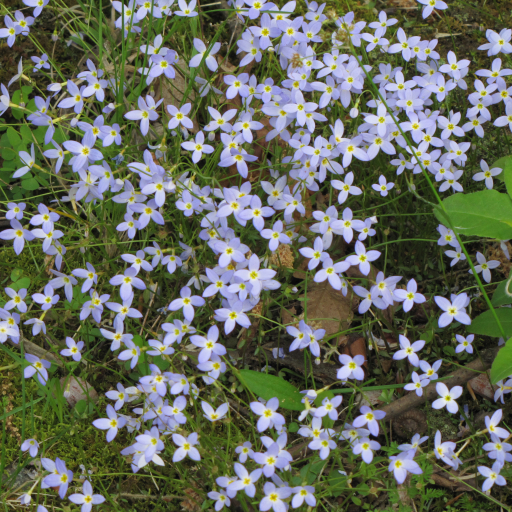
Known as "Quaker Ladies" or "Azure Bluets," these tiny treasures turn spring meadows and lawns into a sea of sky-blue. Native to eastern North America, they are cherished for their delicate, starry appearance. They often appear in large drifts, creating a "frosted" look on the landscape as if the sky has spilled onto the grass.
🔍 How to Identify
- 🌸 The Bloom: Dainty, four-petaled flowers that range from pale violet to sky blue or even white, always featuring a distinct, bright yellow "eye" at the center.
- 🌿 Growth Habit: They grow in low, dense tufts or cushions, rarely reaching more than 6 inches in height, making them perfect for rock gardens or path edges.
- 🍃 Foliage: The base consists of tiny, spoon-shaped leaves in a rosette, while the stems hold even smaller, opposite leaves that are almost unnoticeable.
🏡 In Your Garden
- 🌱 Soil & Sensitivity: These plants are indicators of acidic, lean soil. They thrive in mossy areas where other plants might struggle, but they possess a sensitive root system that dislikes being moved once established.
- 💧 Moisture Balance: They love "feet" that stay moist during the spring blooming season but can tolerate slightly drier conditions once they go dormant in the heat of mid-summer.
- 🐝 Pollinator Magnet: Despite their diminutive size, they are an important early-season food source for small native bees and gnats who are drawn to that bright yellow center.
⚠️ Safety & Toxicity
- ✅ Status: Non-toxic and safe.
- 🐾 Details: There are no known toxic effects for humans, cats, dogs, or horses. They are a "worry-free" addition to any backyard where children and pets play.
✨ Fun Fact
- 🎩 The "Quaker" Connection: The nickname "Quaker Ladies" is said to come from the pale blue color of the flowers, which supposedly resembled the fabric used for the modest bonnets and dresses worn by Quaker women in the 18th and 19th centuries.

Detailed Care Instructions
| Humidity | High |
| Lighting | Part Sun |
| Difficulty | Medium |
| Hibernation | Cold Period |
| Hardiness Zones | 3 - 9 |
Houstonia caerulea, also known as bluets or azure bluet, is a hardy perennial wildflower that can be grown in a variety of garden settings. Here are some tips on how to grow Houstonia caerulea:
- Site selection: Houstonia caerulea prefers full sun to partial shade and well-draining soil. Choose a location in your garden that receives at least 6-8 hours of sunlight per day.
- Soil preparation: Before planting, amend the soil with organic matter such as compost or peat moss to improve drainage and fertility. Bluets prefer slightly acidic soil with a pH of 5.5 to 6.5.
- Planting: Houstonia caerulea can be propagated from seeds, divisions, or plugs. Plant seeds in the fall or spring, spacing them 6-12 inches apart. Water thoroughly after planting to establish roots.
- Watering: Keep the soil consistently moist, especially during dry periods. Bluets are drought-tolerant once established but will benefit from regular watering.
- Mulching: Apply a layer of organic mulch such as bark chips or shredded leaves around the base of the plants to retain moisture and suppress weeds.
- Fertilizing: Bluets do not require heavy fertilization. A light application of balanced fertilizer in the spring can help promote healthy growth and blooming.
- Pruning: Deadhead faded flowers to prolong blooming and prevent self-seeding. Cut back the plants in late fall or early spring to encourage new growth.
- Overwintering: Houstonia caerulea is winter hardy in USDA zones 3-8. Mulch around the base of the plants in late fall to protect them from harsh winter weather.
By following these tips, you can successfully grow Houstonia caerulea in your garden and enjoy its delicate blue flowers throughout the growing season.

Place in a dark room with little light, like a dark bedroom or a spot far away from a window or directly in a north-facing window.

To water this particular plant, you should first check the moisture level of the soil. Stick your finger about an inch deep into the soil and see if it feels dry. If it does, it's time to water.
Use a watering can or hose to gently water the soil around the base of the plant. Avoid getting water on the leaves as this can lead to leaf rot or disease.
Make sure to water the plant deeply enough so that the water reaches the roots. However, be careful not to overwater as this can lead to root rot.
In general, this plant prefers consistently moist but well-draining soil. Allow the top inch or so of soil to dry out between waterings.
During the hotter months or if the plant is in full sun, it may require more frequent watering. In cooler or shadier conditions, it may need less water.
Overall, pay attention to the soil moisture and adjust watering accordingly. Happy watering!
To fertilize Houstonia Caerulea plant, apply a balanced, slow-release fertilizer in the early spring before new growth appears. Use a fertilizer with equal amounts of nitrogen, phosphorus, and potassium. Apply according to package instructions, typically every 4-6 weeks during the growing season. Water the plant thoroughly after fertilizing to help the nutrients penetrate the soil. Avoid over-fertilizing, as this can harm the plant.
Houstonia Caerulea thrives in soil that is well-draining and moist, with a pH level between 5.0 and 6.5. The soil should also be enriched with organic matter, such as compost or well-rotted manure, to provide vital nutrients for the plant. It is recommended to use a soil mix that is composed of a mixture of equal parts of sand, peat moss, perlite, and vermiculite. This soil mixture provides excellent drainage and moisture retention properties ideal for Houstonia Caerulea's growth. Additionally, it's important to ensure that the soil is not compacted as it can reduce the plant's aeration and water retention. Regular watering practices, depending on the climate, are necessary to keep the soil from drying out and ensure the Houstonia Caerulea remains healthy and vibrant.
Houstonia caerulea plants can be propagated through division, seeds, or cuttings.
To propagate through division, carefully dig up the plant and separate the roots into smaller sections, making sure each section has both roots and shoots. Replant the divisions in well-draining soil and water regularly until new growth appears.
To propagate through seeds, collect mature seed pods from the plant and allow them to dry out completely. Plant the seeds in a seed-starting mix and keep them moist until germination occurs. Transplant the seedlings to individual pots once they have established roots.
To propagate through cuttings, snip off a healthy stem from the parent plant and remove any leaves from the bottom half. Dip the cut end in rooting hormone and plant it in a pot of well-draining soil. Keep the cutting in a warm, humid environment and water regularly until roots develop.
Propagation methods should be done in the spring or early summer when the plant is actively growing. Keep the newly propagated plants in a warm, bright location and water regularly to help them establish and grow.








