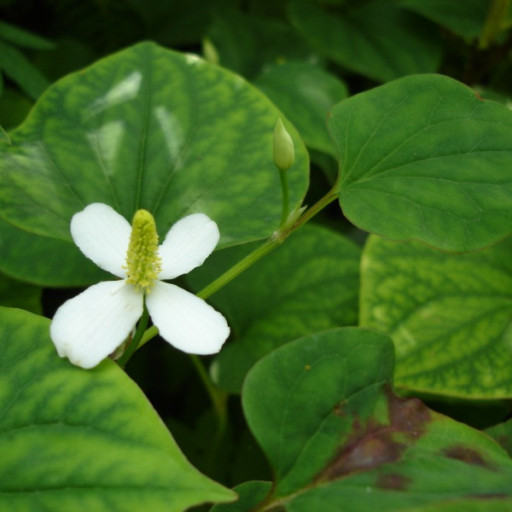
Plant Overview
Known as the "Chameleon Plant" for its vibrant, multi-colored foliage, Houttuynia cordata is a resilient groundcover that wears many hats. In Asian kitchens, it is the pungent "Fish Mint," while in Western gardens, it is a striking—if slightly mischievous—ornamental. It is a plant that tells its story through its scent, often smelling of citrus or fish the moment the leaves are bruised.
🔍 How to Identify
- 🍃 Heart-Shaped Leaves: The leaves are distinctly cordate (heart-shaped), appearing in deep green or splashed with vivid red, yellow, and cream in the popular "Chameleon" cultivar.
- ⚪ Conical Flowers: The plant produces small, white, four-petaled flowers that surround a prominent, upright central spike called a spadix.
- 👃 Scent Signature: The most reliable ID is the smell; crushing a leaf releases a sharp, pungent aroma that some describe as lemony and others as distinctly fish-like.
🏡 In Your Garden
- 🌊 Moisture Lover: This plant is semi-aquatic at heart. It thrives in soggy soil, boggy areas, or even at the edge of a pond, making it perfect for those "problem" wet spots in your yard where other plants rot.
- 🏃 A Persistent Traveler: Be warned—it spreads via vigorous underground runners (rhizomes). Because it hates to stay in one place, it is best grown in containers or areas with physical barriers to prevent it from invading your entire lawn.
- 📉 Shade Tolerance: While it loves the sun to bring out its brightest red colors, it is perfectly happy in deep shade, where it will simply revert to a lush, solid green.
⚠️ Safety & Toxicity
- 🥗 Edible for Humans: It is a common culinary herb in Vietnam and Southwest China. The leaves are eaten raw in salads or used as a garnish, though the flavor is an "acquired taste" for many.
- 🐕 Pet Safety: It is generally considered non-toxic to cats and dogs. However, due to the high concentration of essential oils, ingestion of large amounts might cause minor stomach upset or drooling in sensitive pets.
- 🛑 Garden Threat: The primary "danger" of this plant is to your landscape; its invasive nature makes it very difficult to eradicate once established.
✨ Fun Fact
In Traditional Chinese Medicine, this plant is known as Yu Xing Cao (fish-smell herb). It was historically used as a "natural antibiotic" and was even studied for its potential antiviral properties during the SARS outbreak in the early 2000s.

Detailed Care Instructions
| Humidity | High |
| Lighting | Full Sun |
| Difficulty | Medium |
| Temperature | 5°C - 25°C |
| Hardiness Zones | 5A - 11B |
To grow Houttuynia Cordata, also known as Chameleon plant or Heartleaf, follow these steps:
- Select a suitable location: Houttuynia Cordata prefers partial shade to full sun, and well-draining soil. It can tolerate a variety of soil types, from sandy to loamy.
- Obtain plant cuttings or seeds: You can either purchase Houttuynia Cordata seeds or obtain cuttings from an existing plant. Cuttings should be taken in spring or autumn.
- Prepare the soil: Ensure the soil is loosened and free from any weeds or debris. Improve drainage if necessary by adding organic matter, such as compost.
- Planting from seeds: Sow the seeds in the prepared soil, following the recommended spacing mentioned on the seed packet. Cover the seeds lightly with soil and water gently.
- Planting from cuttings: If using cuttings, ensure they are around 6-8 inches long. Remove leaves from the bottom half of the stem and plant it directly into the soil. Water the cutting well after planting.
- Watering: Keep the soil consistently moist but not waterlogged. Ensure the plant receives around 1 inch of water per week, either through rainfall or manual watering.
- Mulching: Apply a layer of organic mulch, such as bark chips or straw, around the plants. This helps to conserve moisture, suppress weeds, and regulate soil temperature.
- Fertilizing: Houttuynia Cordata generally does not require heavy fertilization. However, you can apply a balanced all-purpose fertilizer once or twice during the growing season, following the manufacturer's instructions.
- Pruning: Regularly trim back or pinch off any excess growth or invasive runners that may spread into unwanted areas. This plant tends to spread aggressively.
- Propagation: Houttuynia Cordata can be propagated easily through division. In spring or autumn, carefully dig up the plant and separate the root clumps. Replant the divisions in separate containers or different parts of the garden.
With proper care and maintenance, Houttuynia Cordata can easily grow and spread, creating a beautiful groundcover or accent plant.

Place in a bright room that is sun drenched almost all day. Or directly in a south-facing window.

When watering this plant, it is important to ensure that the soil remains evenly moist but not waterlogged. Watering should be done regularly, but care should be taken not to overwater as this can cause root rot. The best way to water is to allow the top layer of soil to dry out slightly before watering again. It is also important to avoid getting water on the leaves as this can lead to fungal diseases. When watering, aim to water directly onto the soil around the plant rather than spraying the water over the top of the plant. Additionally, it is important to use room temperature water as water that is too cold or too hot can shock the plant.
To fertilize this plant, you should first make sure that the soil is moist. Then, apply a balanced fertilizer with equal parts nitrogen, phosphorus, and potassium. It's important to not over-fertilize, as this can cause the plant to become leggy and weak. Instead, fertilize every four to six weeks during the growing season, and stop fertilizing during the winter months when the plant is dormant. Be sure to follow the instructions on the fertilizer packaging, as different brands may have different application rates.
When growing Houttuynia Cordata plants, it is important to use a soil that is well-draining and nutrient-rich. Look for a soil that is composed of a mix of organic matter, such as compost or peat moss, and porous materials like perlite or vermiculite. This type of soil will allow for proper drainage and aeration, which is important for the health of the plant. It is recommended to also add a slow-release fertilizer to the soil when planting to provide additional nutrients over time. Avoid using heavy, clay-based soils that can retain too much moisture and cause root rot, as well as soils that are too sandy and do not provide enough nutrients for the plant to thrive.
- Choose a healthy and established Houttuynia Cordata plant: Look for a mature and robust Houttuynia Cordata plant with several healthy stems and leaves.
- Cut stem segments: Using a sharp and sterilized knife or pruning shears, cut 4-6 inch stem segments from the parent plant. Ensure that each segment has at least one node, where leaves or new growth emerges.
- Remove lower leaves: Strip off the leaves from the lower half of the stem segment.
- Dip in rooting hormone: Dip the cut-end of each stem segment into a rooting hormone powder or liquid. This helps stimulate root growth and increase the chances of successful propagation.
- Plant in soil: Plant the stem segments in moist soil, making sure that the nodes are buried in the soil. Press the soil gently around the segments to hold them in place.
- Water appropriately: Water the newly planted stem segments immediately and maintain consistently moist soil until they develop new growth and roots.
- Place in a shaded area: Keep the newly propagated plants in a shaded area where they receive bright but filtered light, and avoid direct sun exposure until they are established.
- Monitor growth: Check on the propagated plants regularly, and ensure that the soil remains moist but not waterlogged. After a few weeks, new growth should appear, indicating that the plant has successfully rooted and is ready to be transplanted to its permanent location.
Common pests of the chameleon plant include Spider mites, aphids, snails. Make a habit of checking your chameleon plant frequently for pests so that any infestations can be caught and managed early.








