Plant Overview
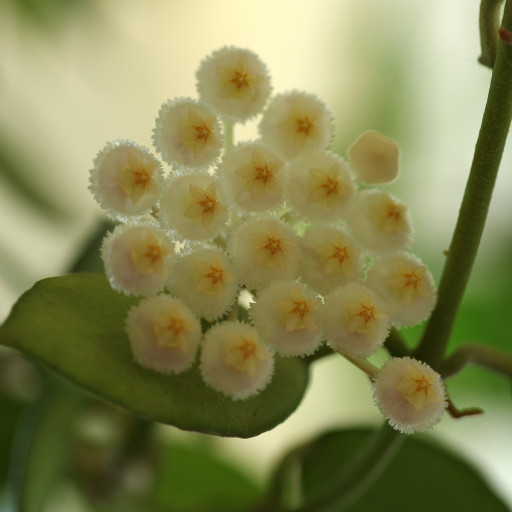
Known affectionately as the "Cinnamon Hoya" or the "Teardrop Hoya," Hoya lacunosa is a petite powerhouse in the world of indoor vines. Originating from the humid tropical forests of Southeast Asia, this plant is a favorite for its manageable size and its legendary perfume. While many Hoyas take years to bloom, this species is a generous "early bloomer," filling a room with a scent that mimics expensive floral spice.
🔍 How to Identify
- 🍃 The Pitted Foliage: The species name lacunosa refers to the "lacunose" or pitted appearance of the leaves. Look for small, lance-shaped green leaves that look slightly sunken or "quilted" between the veins.
- 🌸 Fuzzy Umbels: It produces clusters (umbels) of roughly 15-20 tiny, star-shaped flowers. Each blossom is covered in soft, white "fur" with a yellow-to-orange center, resembling a miniature velvet button.
- 🌿 Compact Vining: Unlike its larger cousins, this Hoya stays relatively compact. Its stems are thin and flexible, making it the perfect candidate for hanging baskets where it can trail elegantly.
🏡 In Your Garden
- 💧 The "Thirsty" Epiphyte: While most Hoyas prefer to dry out completely, H. lacunosa has thinner leaves and likes to stay slightly more hydrated. It hates "wet feet," so use a chunky orchid bark and perlite mix to ensure its roots can breathe while staying damp.
- ☀️ Light and Bloom: To trigger those famous flowers, give it bright, indirect light. If the leaves start to turn a reddish or bronze hue, it is "sun-stressing"—a natural sunscreen mechanism that many collectors find beautiful, but it means the plant is at its light limit.
- ☁️ Humidity is Key: Because of its thin leaves, it thrives in higher humidity (50%+). If your home is dry, grouping it with other plants or using a pebble tray will prevent the delicate new growth from drying up and falling off.
⚠️ Safety & Toxicity
- 🟢 Pet Safety: Hoya lacunosa is generally considered non-toxic to cats and dogs, making it a "pet-safe" choice for indoor jungles.
- 💧 Sap Irritation: Like all Hoyas, it produces a milky white latex sap when cut. While not deadly, this sap can cause mild skin irritation for people with latex allergies or upset stomachs if ingested in large quantities.
✨ Fun Fact
The Hoya lacunosa is a "night-owl" of the plant world. Its spicy, cinnamon-like fragrance is almost undetectable during the day but becomes incredibly potent once the sun goes down to attract nocturnal pollinators like moths!

Detailed Care Instructions
| Humidity | Normal |
| Lighting | Part Sun |
| Difficulty | Medium |
| Hibernation | Cold Period |
| Temperature | 18°C - 24°C |
| Hardiness Zones | Min 10A |
Here are some steps to help you grow Hoya Lacunosa plant:
- Choose a suitable location: Hoya Lacunosa plants prefer bright, indirect light. Place them near a window where they can receive filtered sunlight or provide them with fluorescent grow lights if the natural light is limited.
- Soil and container: Use well-draining soil with a good amount of organic matter. Choose a pot with drainage holes to avoid waterlogging the roots.
- Watering: Water the plant when the top inch of soil feels dry. Hoya Lacunosa plants don't like to sit in soggy soil, so avoid over-watering. Allow the soil to dry out slightly between waterings.
- Humidity: These plants prefer high humidity, so you can increase humidity by placing a tray of water near the plant or using a humidifier. Mist the foliage regularly, especially during dry weather.
- Temperature: Hoya Lacunosa plants thrive in average indoor temperatures, ideally between 60-80°F (15-26°C). Protect them from cold drafts and temperature extremes.
- Fertilizing: Feed your Hoya Lacunosa plant with a balanced, water-soluble fertilizer. Apply it according to the instructions on the packaging, typically during the growing season (spring and summer) every 2-3 weeks.
- Pruning: Trim off any dead or yellowing leaves or stems to maintain the plant's overall health and appearance. You can also prune to control the size and shape of the plant.
- Propagation: Hoya Lacunosa plants can be propagated through stem cuttings. Take a cutting with at least two nodes and place it in a well-draining potting mix. Keep the soil moist until roots develop.
- Support: As Hoya Lacunosa is a vining plant, it can benefit from a trellis or support structure to climb on. You can use stakes or a moss pole to help them grow upward.
Remember, each plant is unique, and it may take some trial and error to find the ideal conditions for your Hoya Lacunosa plant. With proper care, patience, and attention, you can successfully grow and enjoy these beautiful houseplants.

Place in a window with dappled sun or a spot in the middle of a room. Or directly in a window facing west or east.

To properly water this plant, you should first assess the soil moisture level by inserting a finger into the soil up to the second knuckle. If the soil is dry, it is time to water. Fill a watering can with room temperature water and slowly pour it into the soil, being careful not to splash water on the leaves. Allow the excess water to drain out of the bottom of the pot, ensuring that the plant is not sitting in standing water. It is important not to over-water this plant, as it prefers to dry out between waterings. Check the soil moisture level regularly and adjust your watering schedule accordingly.
To fertilize this plant, use a balanced fertilizer with equal amounts of nitrogen, phosphorus, and potassium. Dilute the fertilizer to half the recommended strength and apply once a month during the growing season, which is typically spring and summer. If the plant is not actively growing, reduce or stop the fertilization. Avoid fertilizing during winter or when the plant is dormant. Always water the plant thoroughly before and after fertilizing to prevent fertilizer burn.
Hoya Lacunosa plant prefers well-draining and rich soil that is slightly acidic to neutral in pH. It requires soil with high organic matter content, such as a blend of peat moss, perlite, and coconut coir. It should be kept moist but not water-logged, and the soil should be allowed to dry out slightly before watering again. In addition, the plant prefers soil that is loose and porous, promoting healthy root growth and good circulation. It is important to avoid using soils with excessive clay content, as this can lead to waterlogging and root rot. Overall, the soil should be nutrient-rich, well-draining, and able to retain moisture without becoming waterlogged.
To propagate this plant, start by taking a healthy stem cutting that is at least 4 inches long. Make sure the cutting has at least one node and remove the leaves from the lower third of the stem. Then, dip the cut end of the stem in a rooting hormone and plant it in a well-draining soil mix. Water the soil and cover the pot with a plastic bag to create a humid environment.
Keep the cutting in bright, indirect sunlight and water the soil when it starts to dry out. After a few weeks, check for roots by gently tugging on the stem. If there is resistance, roots have formed and you can remove the plastic bag.
Once the cutting has rooted, you can transplant it into its own pot with a well-draining soil mix. Water regularly and provide bright, indirect sunlight to encourage growth.
Common pests of the grooved wax flower include Scale insect, mealybugs, spider mites. Make a habit of checking your grooved wax flower frequently for pests so that any infestations can be caught and managed early.








