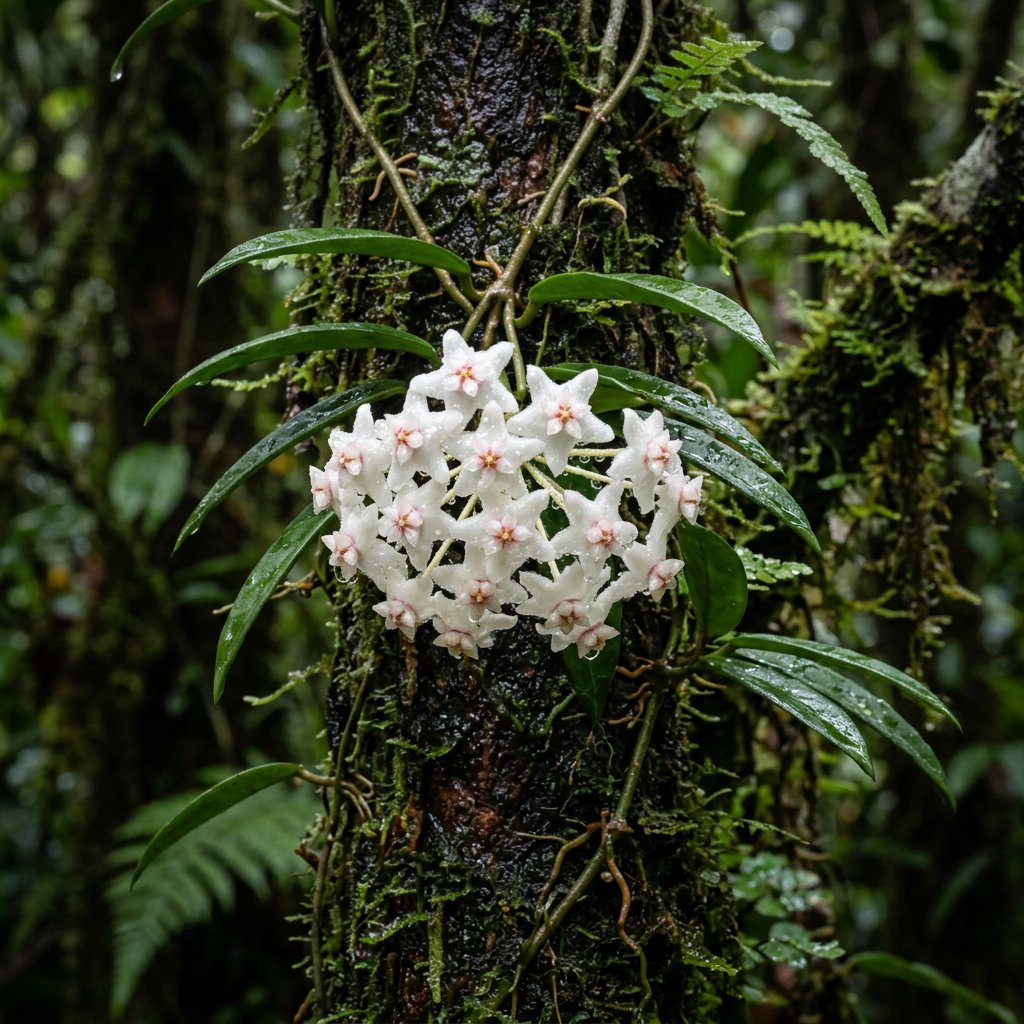
Plant Overview
Often referred to as the "Miniature Philippine Wax Plant," Hoya leytensis is a darling of the Hoya world. Native to the lush, humid forests of Leyte Island in the Philippines, this delicate climber is prized for its petite scale and dainty appearance. It is a storyteller of the tropical canopy, perfect for collectors who love the classic "wax flower" aesthetic but have limited shelf space.
🔍 How to Identify
- 🍃 Lush Foliage: The leaves are small, almond-shaped, and a vibrant light green. They have a subtle waxy texture that helps the plant conserve water during dry spells.
- 🌼 Petite Blooms: It produces charming, rounded clusters (umbels) of tiny, star-shaped flowers. These blooms are typically a soft creamy yellow or pale orange with a glossy, porcelain-like finish.
- 🌱 Vining Habit: It features slender, flexible stems that are eager to scramble. Unlike larger Hoyas, the vines of leytensis remain relatively fine, making it look particularly elegant in a hanging basket.
🏡 In Your Garden
- 🌤️ The Epiphytic Edge: In the wild, this plant lives on trees rather than in the dirt. At home, it hates "wet feet." Use a very chunky mix of orchid bark and perlite to mimic its natural home and ensure the roots stay oxygenated.
- 💧 Island Humidity: Because it hails from the Philippines, it craves a humid environment. If your leaves look dull or growth stalls, it's likely a sign that the air is too dry; a nearby humidifier can work wonders for its vigor.
⚠️ Safety & Toxicity
- 🐾 Pet Friendly: Good news for animal lovers—most Hoyas, including Hoya leytensis, are considered non-toxic to cats and dogs.
- 🧪 Sap Sensitivity: Like its cousins, this plant produces a milky white latex sap when the stem is cut. While not dangerous, this sap can be a skin irritant for humans with latex allergies, so it's best to wear gloves during pruning.
✨ Fun Fact
The species name leytensis is a direct geographical tribute to the island of Leyte in the Philippines, where the plant was first scientifically identified. It is one of the many "island gems" that have made the Philippines a global hotspot for Hoya biodiversity!

Detailed Care Instructions
To grow Hoya Leytensis plant, here are some tips to follow:
- Light: Hoya Leytensis plants thrive in bright, indirect sunlight. Place the plant near a window where it can receive filtered light throughout the day.
- Temperature: Keep the plant in a warm location with temperatures between 60-80 degrees Fahrenheit. Avoid placing the plant near drafty areas or air conditioning vents.
- Watering: Water the plant thoroughly when the top inch of soil feels dry. Allow excess water to drain out of the pot to prevent root rot. Reduce watering during the winter months when growth is slower.
- Soil: Plant Hoya Leytensis in a well-draining potting mix that consists of equal parts of perlite, peat moss, and potting soil. This will help prevent waterlogged soil and promote healthy root growth.
- Humidity: Hoya plants prefer high humidity levels, so mist the leaves regularly or place a humidifier near the plant to maintain a humid environment.
- Fertilization: Feed the plant with a balanced liquid fertilizer diluted to half strength every 2-4 weeks during the growing season (spring and summer). Do not fertilize during the winter months when growth is minimal.
- Pruning: Trim back any leggy or overgrown stems to encourage bushier growth and maintain the plant's shape.
By following these tips and providing proper care, you can successfully grow and enjoy your Hoya Leytensis plant.

Place in a window with dappled sun or a spot in the middle of a room. Or directly in a window facing west or east.

To water this specific plant, one should thoroughly moisten the soil and then allow it to slightly dry out before watering again. It is important not to overwater as this can lead to root rot. Additionally, using room temperature or slightly warm water is ideal as cold water can shock the plant. It is also recommended to avoid getting water on the leaves as this can cause damage or encourage fungus growth.
To fertilize the Hoya Leytensis plant, use a balanced liquid fertilizer with an N-P-K ratio of 10-10-10 or similar. Dilute the fertilizer to half strength and apply it every 2-3 weeks during the growing season, which is usually from spring to early fall. Make sure to water the plant thoroughly before fertilizing and only feed it when the soil is damp to prevent burning the roots. Avoid fertilizing during the dormant winter months.
Hoya Leysentis plant requires a well-draining soil mix that is rich in organic matter. It is recommended to use a mixture of peat moss, perlite, and sand in equal parts to create a soil mix that provides good drainage. The mixture should also be slightly acidic with a pH range of 5.5 to 6.5. This will help to provide the ideal growing conditions for the plant and promote healthy root growth. Additionally, it is important to ensure that the soil is not too compacted and allows for air circulation around the roots.
Hoya Leytensis can be propagated through stem cuttings. To do this, select a healthy and mature stem from the plant. Use a sharp, clean knife or pair of scissors to cut a piece of stem that is around 4-6 inches long. Make sure the cutting has at least one leaf node, which is where the roots will develop.
Remove any leaves from the lower half of the cutting to expose the node. Dip the cut end of the stem in rooting hormone to encourage root development. Plant the cutting in a small pot filled with a well-draining soil mix.
Place the pot in a warm and bright location, but out of direct sunlight. Keep the soil consistently moist but not waterlogged. You can also cover the cutting with a plastic bag to create a mini greenhouse effect, which will help with humidity and root development.
Roots should start to develop within a few weeks. Once the cutting has established a good root system, you can transplant it into a larger pot with regular potting soil. Keep the new plant in a warm and bright location, and continue to water and care for it as you would a mature Hoya Leytensis plant.
Common pests of the hoya leytensis include Scale insect, mealybugs, spider mites. Make a habit of checking your hoya leytensis frequently for pests so that any infestations can be caught and managed early.







