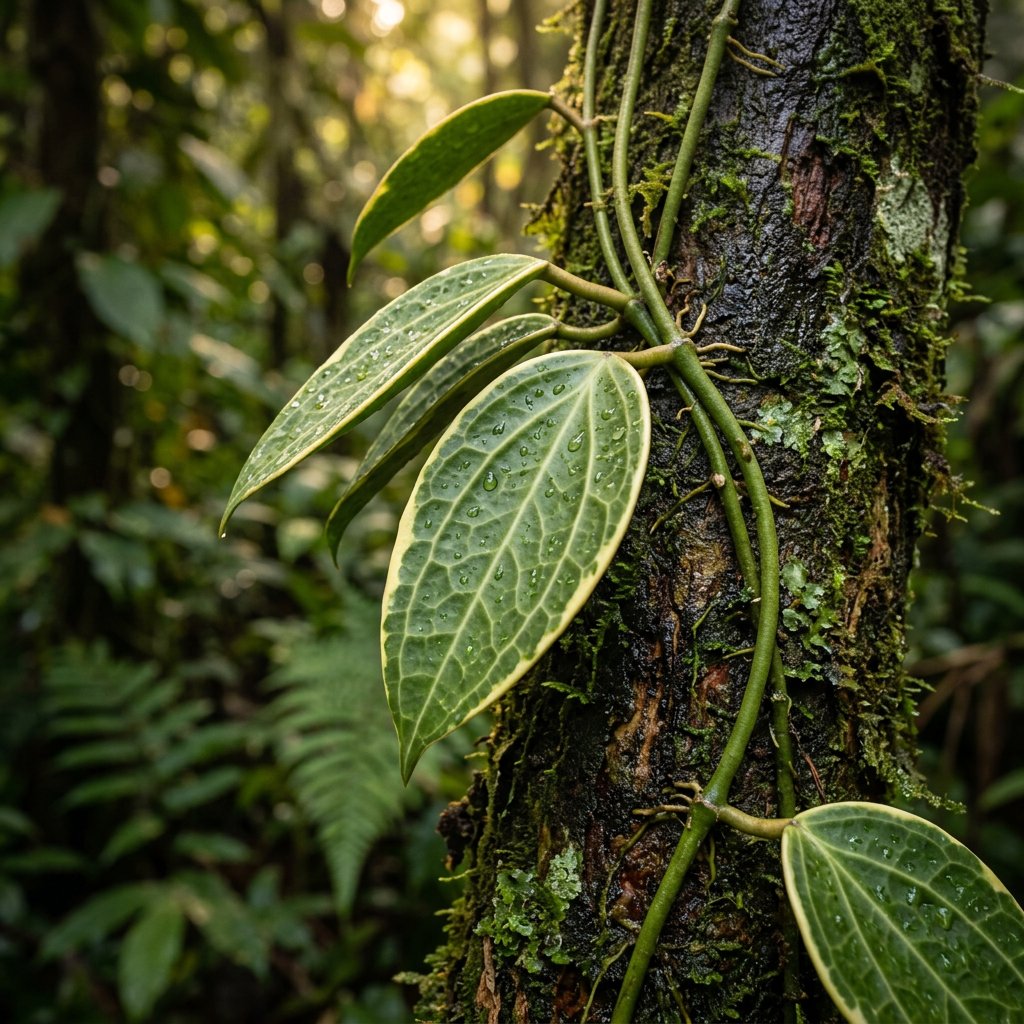
Plant Overview
Known for its dramatic, oversized foliage, the Hoya Macrophylla (recently reclassified by botanists as Hoya latifolia) is often called the "Large-leafed Wax Plant." Native to the tropical jungles of Southeast Asia, this climber is a favorite among collectors for its thick, embossed leaves that look more like carved wax than living tissue. It is a slow-burning beauty that adds a prehistoric, architectural feel to any indoor jungle.
🔍 How to Identify
- 🍃 The Foliage: Look for massive, almond-shaped leaves that can grow up to 5-8 inches long. They are thick, waxy, and feature a distinct 3D-veined texture.
- 🦴 Prominent Veining: The leaves display "prominent venation," meaning the veins are raised and lighter in color, creating a striking contrast against the deep emerald green.
- 🌸 Star-Shaped Blooms: Like all Hoyas, it produces clusters of tiny, porcelain-like flowers. These are usually white or pale pink with a sweet, spicy fragrance that intensifies at night.
🏡 In Your Garden
- 🪴 The Epiphytic Edge: In the wild, this plant grows on trees rather than in soil. At home, it hates "wet feet." Use a chunky, airy mix (think orchid bark and perlite) to mimic its natural home and prevent root rot.
- 🪜 Reach for the Sky: While it can trail beautifully from a hanging basket, this Hoya is a natural climber. Giving it a trellis or moss pole will encourage the leaves to grow even larger and help the plant feel secure enough to bloom.
⚠️ Safety & Toxicity
- 🐾 Pet Safety: Great news for pet parents! This Hoya is generally considered non-toxic to cats, dogs, and horses.
- 💧 Latex Sap: Be aware that when pruned, the stems leak a milky white sap. While not deadly, this sap can cause mild skin irritation for humans, especially those with latex allergies.
✨ Fun Fact
If you give this plant a bit of "tough love" by placing it in very bright indirect light, the creamy variegated edges of the leaves can "sun-stress," turning a stunning shade of vibrant pink or coral!

Detailed Care Instructions
| Color | White |
| Soil Ph | Acidic, Neutral |
| Humidity | Normal |
| Lighting | Part Sun |
| Soil Type | Well-Drained |
| Bloom Time | Summer |
| Difficulty | Medium |
| Plant Type | Tropical Succulent |
| Hibernation | Cold Period |
| Mature Size | Up To 6 Ft. Tall |
| Native Area | Tropical Asia, Australia |
| Temperature | 18°C - 25°C |
| Sun Exposure | Full, Partial |
| Hardiness Zones | 9-11 |
To grow Hoya Macrophylla plant successfully, follow these steps:
- Choose the right conditions: Hoya Macrophylla prefers bright, indirect light. Place it near a window with filtered sunlight or provide artificial grow lights. Avoid placing it in direct sunlight, as it can scorch the leaves. Maintain a temperature between 65-85°F (18-30°C) throughout the year.
- Select the right pot and soil: Hoya Macrophylla prefers well-draining soil. Choose a pot with drainage holes to prevent waterlogging. A mix of peat moss, perlite, and orchid bark or a commercial well-draining potting mix works well.
- Propagation: You can propagate Hoya Macrophylla through stem cuttings. Take a 4-6 inch (10-15 cm) cutting, remove the lower leaves, and place it in a moist potting mix. Keep the cutting warm and humid until it develops roots. Alternatively, you can propagate it through layering, where you bend a flexible stem to touch the soil and secure it with a wire or pin until it develops roots.
- Watering: Allow the top inch of soil to dry between watering. Hoya Macrophylla prefers slightly drier conditions than other Hoya varieties. Ensure not to overwater as it can lead to root rot. Water deeply and let excess water drain out.
- Humidity: Hoya Macrophylla appreciates moderate humidity. You can increase humidity by placing a tray of water near it or using a humidifier. Mist the leaves occasionally to provide additional moisture.
- Fertilizing: Use a balanced, water-soluble fertilizer diluted to half strength. Apply it monthly during the growing season (spring and summer) and reduce or stop fertilizing in winter.
- Pruning: Prune Hoya Macrophylla to control its growth and remove any dead or damaged portions. Pruning can also stimulate branching and create a bushier plant.
- Support: Hoya Macrophylla is a vine and will appreciate a trellis or support to climb on. You can provide a trellis, moss pole, or stake for it to grow upright.
- Pests and diseases: Monitor for pests such as mealybugs, aphids, or spider mites. Treat infestations promptly with a mild insecticidal soap or horticultural oil. Ensure good air circulation to minimize the risk of fungal diseases.
Remember to be patient, as Hoya Macrophylla can be a slow-growing plant. With proper care, it will reward you with beautiful vines and clusters of fragrant flowers.

Place in a window with dappled sun or a spot in the middle of a room. Or directly in a window facing west or east.

Hoya Macrophylla plant should be watered regularly to keep the soil moist but not waterlogged. It is important to avoid letting the plant sit in standing water as it can lead to root rot. Watering frequency may vary depending on the environment and climate, but typically once a week is sufficient. Before watering, check the soil moisture level by inserting a finger about 1-2 inches into the soil. If it feels dry, water the plant until water runs out from the drainage holes. Avoid getting water on the leaves as this can cause damage. If the plant is in a hanging basket, take care not to spill water on anything below it. Reduce watering during the winter months when the plant may be in a dormant period.
For best results, fertilize your plant every two to three weeks during the growing season. Use a balanced, water-soluble fertilizer and dilute it to half strength. Apply the fertilizer to the soil around the base of the plant, taking care not to get it on the leaves. In the winter months, reduce fertilization to once a month or stop altogether. Avoid fertilizing when the plant is dry or stressed, as this can burn the roots.
When choosing a soil for the Hoya Macrophylla plant, it is important to select a soil that is well-draining but doesn't dry out too quickly. The ideal soil should be rich in nutrients such as nitrogen, phosphorus, and potassium. It should also have a slightly acidic pH level, between 5.5 and 6.5.
You can use a mix of peat moss, perlite, and leaf compost to create the perfect soil for your Hoya Macrophylla plant. Alternatively, you can use potting soil that is specifically designed for tropical plants.
It is important to avoid using heavy clay soils as they can retain too much moisture, leading to root rot. Additionally, avoid using garden soil, as it can be too dense and compacted for the plant to grow properly.
Overall, a well-draining, nutrient-rich soil with a slightly acidic pH level is ideal for the Hoya Macrophylla plant.
To propagate this plant, you will need to take stem cuttings from an existing plant. Select a healthy stem with 2-3 leaves and make a clean cut just below a node, using a sharp, clean knife or scissors. Remove the bottom leaf and dip the cut end in rooting hormone.
Prepare a pot with well-draining soil and make a hole in the center. Insert the cutting into the hole and gently press the soil around it. Water the plant thoroughly and cover it with a plastic bag to increase humidity.
Place the pot in a bright but indirect light location and mist the plant daily. After a few weeks, the cutting should start to root and new growth should appear. Once the plant has established roots, you can remove the plastic bag and gradually increase the amount of light it receives.
Be patient with this process, as sometimes it can take several weeks or even months for a cutting to fully root. With proper care and attention, you can successfully propagate this plant and enjoy its beautiful foliage in your home or garden.
Common pests of the wax plant include Scale insect, mealybugs, spider mites. Make a habit of checking your wax plant frequently for pests so that any infestations can be caught and managed early.








