Plant Overview
Often called the "Miniature Hoya" or the "Round-Leaved Hoya," Hoya serpens is a darling of the botanical world. Originating from the cool, misty altitudes of the Himalayas, this tiny climber is beloved for its perfectly round, pea-sized leaves that look like they belong in a dollhouse. Unlike its larger, waxier cousins, this Hoya has a soft, matte finish and a personality that favors high humidity and gentle breezes.
🔍 How to Identify
- 🍃 The Foliage: Look for small, nearly circular leaves about the size of a fingernail. They are a deep, dusty green and covered in a fine, velvety fuzz (pubescence) that gives them a soft texture.
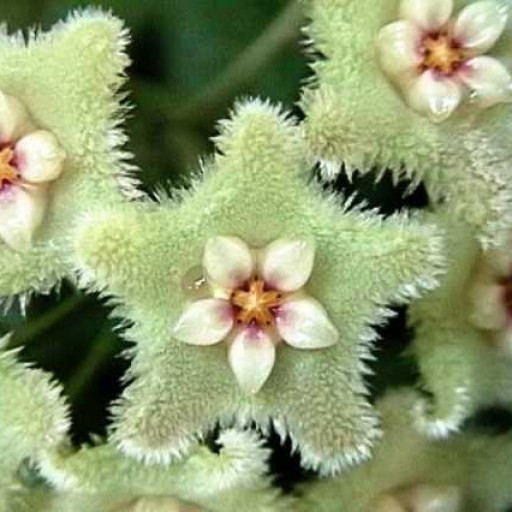
- 🌸 The Blooms: The flowers are surprisingly large compared to the tiny leaves. They appear in clusters (umbels) of fuzzy, mint-green to pale-white stars with a vibrant pink or burgundy center.
- 🌿 Growth Habit: This is a trailing or creeping plant. Its stems are thin and wiry, often looking like a tangled green waterfall when grown in a hanging basket.
🏡 In Your Garden & Home
- ☁️ Cloud Forest Vibes: Because it hails from the mountains, Hoya serpens prefers slightly cooler temperatures than typical tropical Hoyas. It thrives in high humidity—think of a misty morning—making it a perfect candidate for a well-ventilated terrarium or a humid bathroom.
- 💧 Moisture Balance: While most Hoyas like to dry out completely, the Serpens has thinner leaves and prefers to stay slightly more moist. However, it hates "wet feet," so use a very airy, chunky mix with lots of orchid bark and perlite to prevent root rot.
- 🪴 Low Disturbance: This plant is known for being a bit "finicky." It dislikes being moved frequently or having its roots disturbed. Once you find a spot where it’s happy, try to leave it there to settle in.
⚠️ Safety & Toxicity
- 🐾 Pet Friendly: Like most members of the Hoya family, Hoya serpens is considered non-toxic to cats, dogs, and humans. It is a safe choice for households with curious nibblers.
- 🧪 Milky Sap: If a stem is broken, the plant will leak a white, milky latex. While not poisonous, this sap can cause mild skin irritation for some people or sticky messes on furniture.
✨ Fun Fact
The flowers of Hoya serpens are famous for their intense fragrance, which many enthusiasts describe as a heavenly mix of sweet honey and expensive floral perfume. Remarkably, a single cluster of flowers can scent an entire room at night!

Detailed Care Instructions
| Humidity | Normal |
| Lighting | Full Sun |
| Difficulty | Medium |
| Temperature | 21°C - 35°C |
| Hardiness Zones | 10 - 11 |
To grow Hoya Serpens, also known as the wax plant, you can follow these simple steps:
- Choose the right location: Hoya Serpens prefers bright, indirect light, so place it near a window where it can receive bright, filtered light. Avoid direct sunlight, especially during the hot afternoon hours.
- Acquire a suitable container: Select a well-draining pot with drainage holes to prevent waterlogged soil, which can cause root rot.
- Soil and potting mixture: Use a rich, well-draining potting mix that is specifically formulated for houseplants. You can also create a mixture by combining regular potting soil with perlite or vermiculite to improve drainage.
- Planting process: Gently remove the plant from its nursery pot and carefully loosen the roots. Place it in the new pot and fill the remaining space with the potting mixture, making sure not to pack it too tightly.
- Watering regimen: Allow the top inch of soil to dry out between waterings. Overwatering can lead to root rot, so it's crucial to ensure the soil is not consistently wet.
- Humidity: Hoya Serpens prefers high humidity levels. To increase humidity around the plant, you can place a tray filled with water near the plant or use a humidifier.
- Temperature and environment: Keep the plant in a warm environment with temperatures ranging between 60-80°F (15-26°C). Protect it from drafts and extreme temperature fluctuations.
- Fertilization: Feed your Hoya Serpens with a balanced, water-soluble fertilizer during the growing season (spring and summer) every 2-4 weeks. Avoid fertilizing during the dormant winter period.
- Pruning: Regularly prune your Hoya Serpens to maintain its shape and encourage bushier growth. Trim any leggy or overgrown stems to maintain a compact appearance.
- Propagation: Hoya Serpens can be propagated through stem cuttings. Simply cut a healthy stem with a node (a swollen area on the stem) and place it in a well-draining potting mixture. Keep it moist until new roots develop.
Remember that Hoya Serpens is generally an easy-care plant, but it requires patience as it grows slowly. With proper care and attention, you can enjoy the unique cascading vines and beautiful, fuzzy leaves of this stunning plant.

Place in a window with dappled sun or a spot in the middle of a room. Or directly in a window facing west or east.

Hoya serpens plant requires regular watering to keep its soil moist. However, overwatering must be avoided as it can lead to root rot. To water the plant, fill a watering can or a container with water and pour it slowly around the base of the plant until the soil is evenly moist. Wait for the soil to dry out slightly before watering again. The amount and frequency of watering may depend on the humidity and temperature of the environment. Checking the soil moisture regularly is important to prevent over or under watering. It is recommended to use room temperature or tepid water for watering the plant. Avoid using cold water as it can shock the roots. Additionally, water may also be sprayed onto the foliage to increase humidity levels.
To fertilize the plant, mix a balanced fertilizer with water according to the package instructions. Apply the fertilizer solution to the soil every two weeks during the growing season. Avoid over-fertilizing as it can damage the plant's roots. Instead, feed the plant lightly, and ensure that the soil is well-draining. Also, make sure to water the plant thoroughly before applying the fertilizer to avoid burning the roots.
Hoya Serpens plant thrives well in well-draining soil that has good aeration and adequate nutrients. The ideal soil for this plant should be a mixture of peat moss, sand, and perlite or vermiculite. These elements ensure good drainage, lightness, and good moisture retention capacity.
The soil should have a pH between 5.5 to 7.5, which is slightly acidic to neutral, to prevent any excess alkalinity or acidity that can harm the plant's growth. A good soil mix should also contain organic matter, such as compost, to ensure that the plant receives adequate nutrients.
It is important to avoid using heavy, clay-based soils as they can retain too much moisture, leading to root rot. Similarly, soils that are too loose, such as pure sand, may not hold enough moisture for the plant, leading to dehydration and stunted growth.
To provide the best growing conditions for the Hoya Serpens plant, ensure that the soil is airy, well-drained, and retains some moisture without becoming waterlogged.
Hoya Serpens plant can be propagated through stem cuttings. Choose a healthy stem with at least two nodes and a few leaves. Cut the stem at a 45-degree angle with a sharp and sterile knife.
Remove the lower leaves from the stem, leaving only a few at the top. Dip the cut end of the stem into rooting hormone powder and shake off any excess.
Insert the stem cutting into a pot filled with a well-draining potting mix. Water the cutting and cover the pot with a plastic bag or a clear plastic container to create a humidity chamber.
Place the pot in a warm, bright, and indirect light location. Keep the soil slightly moist but not soaking wet.
After two to four weeks, the cutting should begin to produce new growth, indicating that roots have formed. Carefully remove the plastic cover and gradually acclimate the new plant to lower humidity.
Once the new plant has established, it can be potted into its permanent container.
Common pests of the hoya serpens include Scale insect, mealybugs, spider mites. Make a habit of checking your hoya serpens frequently for pests so that any infestations can be caught and managed early.








