Plant Overview
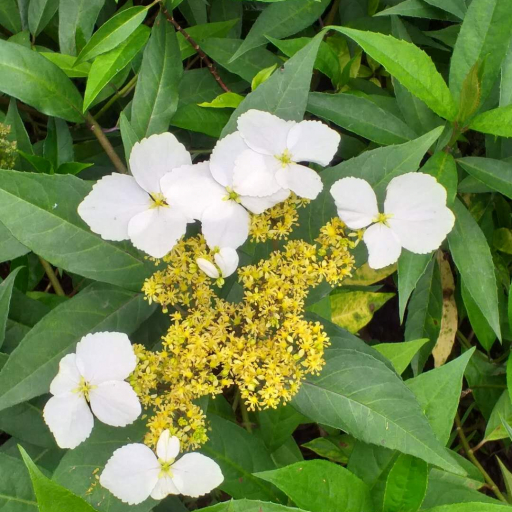
Known for its ethereal, lacy appearance, the Chinese Hydrangea (Hydrangea chinensis) is a woodland treasure native to the misty mountain slopes of East Asia. Unlike the heavy, "mophead" hydrangeas common in suburban yards, this species offers a delicate "wild" aesthetic and a surprising, sweet perfume that drifts through the garden on warm evenings. It is often referred to as the "Chinese Lacecap" due to its intricate flower structure.
🔍 How to Identify
- 🌸 The Bloom Structure: It features a "lacecap" arrangement where a cluster of tiny, fertile yellowish flowers is surrounded by a ring of large, showy, four-petaled sterile white flowers.
- 🍃 Elegant Foliage: The leaves are narrower and more elongated (lance-shaped) than common hydrangeas, typically featuring serrated edges and a deep green, semi-glossy finish.
- 🌿 Growth Habit: This is a medium-sized shrub that tends to have slender, arching stems, giving it a more graceful, airy silhouette rather than a dense, rounded bush.
🏡 In Your Garden
- 🌳 Woodland Preference: This plant thrives in dappled sunlight. It is a "forest edge" species, meaning it hates the harsh midday sun but will fail to bloom in deep, dark shade.
- 🪵 The Fragrance Factor: While most hydrangeas are grown solely for their looks, the Chinese Hydrangea is prized for its scent. Plant it near a walkway or a window to enjoy its light, jasmine-like aroma during the late spring.
- 💧 Soil Nuance: It prefers rich, humusy soil that stays consistently moist. Because it has a relatively shallow root system, it can be sensitive to drought and may wilt quickly if the soil dries out completely.
⚠️ Safety & Toxicity
- ☠️ Status: Moderately Toxic.
- 🐕 Details: Like all members of the Hydrangea family, the leaves and flower buds contain cyanogenic glycosides. If ingested by pets or curious children, it can cause stomach upset, vomiting, or lethargy. It is best placed in a spot where it won't be snacked on by furry friends.
✨ Fun Fact
Unlike many other hydrangea species that change color from blue to pink based on the soil's pH levels, Hydrangea chinensis is much more stable—its elegant white and cream tones remain consistent regardless of your soil's acidity!

Detailed Care Instructions
| Humidity | Normal |
| Lighting | Part Sun |
| Toxicity | Poisonous |
| Difficulty | Easy |
| Hibernation | Cold Period |
| Hardiness Zones | 9 - 11 |
To grow Hydrangea Chinensis plants, follow these steps:
- Choose the right location: Hydrangea Chinensis prefers partially shaded areas. Make sure the plant gets morning sun and afternoon shade. It also needs protection from strong winds.
- Prepare the soil: The soil should be well-draining and fertile. Add organic matter such as compost or well-rotted manure to improve the soil's quality.
- Planting: Dig a hole that is larger than the root ball of the plant. Place the plant in the hole, making sure the top of the root ball is level with the soil surface. Backfill the hole with soil and firm it gently around the plant.
- Watering: Hydrangea Chinensis plants need regular watering, especially during dry periods. Water deeply but make sure the soil doesn't become waterlogged.
- Fertilization: Feed the plant with a balanced, slow-release fertilizer in the spring. Follow the package instructions for the appropriate application rate.
- Mulching: Apply a layer of organic mulch around the base of the plant to help conserve moisture and keep weeds at bay. Avoid piling the mulch directly against the stem.
- Pruning: Prune in early spring before new growth begins. Remove any dead or damaged wood, and shape the plant as desired. This will help maintain its size and shape.
- Protection: If you live in a colder climate, provide winter protection by covering the plant with burlap or a frost cloth. This will help protect it from freezing temperatures.
- Protect from pests and diseases: Monitor your plant regularly for pests like aphids, scale insects, or powdery mildew. Take appropriate measures, such as using insecticidal soap or other remedies, to control infestations.
- Enjoy the blooms: Hydrangea Chinensis produces beautiful flowers in various colors. Enjoy their beauty, and consider cutting them for indoor arrangements if desired.
Remember to be patient with your Hydrangea Chinensis plant, as it may take a few years to reach its full potential. With proper care and attention, it will reward you with stunning blooms.

Place in a bright room that is sun drenched almost all day. Or directly in a south-facing window.

1. Observe the soil moisture level: Before watering Hydrangea Chinensis plant, check the soil moisture level to determine if it requires watering. The top one to two inches of the soil should be dry before watering.
2. Watering frequency: Hydrangea Chinensis needs regular watering during its growing season, which is from spring to fall. The frequency of watering may vary depending on environmental conditions, soil type, and plant size.
3. Watering technique: When watering your Hydrangea Chinensis, apply water gently to the base of the plant to ensure it reaches the roots. Avoid watering the foliage and flowers as it may cause fungal diseases.
4. Amount of water: Hydrangea Chinensis prefers moist but not waterlogged soil. It is best to water it deeply once or twice a week to allow the water to soak deep into the roots. Avoid overwatering, as it can cause waterlogging and root rot.
5. Time of day: It is best to water Hydrangea Chinensis early in the morning or late in the evening when the temperature is cooler and the water can be absorbed properly before it evaporates.
6. Mulching: Adding a layer of mulch around the base of the plant can help retain moisture in the soil, reducing the need for frequent watering.
7. Drainage: Hydrangea Chinensis prefers well-draining soil to prevent waterlogging. Ensure that the container or the planting area has adequate drainage holes to allow excess water to drain out.
- Choose a balanced fertilizer with a ratio of 10-10-10 or 20-20-20.
- Apply the fertilizer in early spring before new growth appears.
- Use approximately 1 tablespoon of fertilizer per square foot of soil.
- Work the fertilizer into the soil around the base of the plant.
- Water the plant thoroughly after fertilizing to help distribute the nutrients throughout the soil.
- Avoid over-fertilizing, as it can lead to excess foliage growth and fewer flowers.
- If the plant shows signs of nutrient deficiency, such as yellowing leaves, apply a light dose of fertilizer in mid-summer.
For Hydrangea Chinensis plants, it is important to use soil that is well-draining and enriched with organic matter. The soil should have a slightly acidic pH level, between 5.5 and 6.5, to ensure optimal growth and blooming. It is essential to avoid using heavy, compacted soils that can cause waterlogging and suffocate the roots. A nutrient-rich soil with good drainage is key to prevent root rot and other soil-borne diseases. When planting in containers or pots, it is recommended to use a high-quality potting mix or a blend of garden soil and compost to provide a well-balanced nutrient environment. Additionally, regular fertilization with a balanced fertilizer can ensure healthy foliage and vibrant blooms.
Hydrangea Chinensis can be propagated through various methods such as stem cuttings, layering, and division.
One way to propagate the plant through stem cuttings is to select a healthy stem that has not yet flowered. Cut the stem at a 45-degree angle, making sure it is at least 4 inches long. Remove the lower leaves on the stem, leaving only a few at the top. Dip the cut end in rooting hormone powder and place it in a container filled with a mixture of perlite and peat moss. Keep the container in a warm, humid, and bright area, ensuring that the soil remains moist. After a few weeks, new roots should start to form, signaling that the cutting has successfully rooted. Transplant the new plant into a larger pot or directly into the ground.
Layering is another method of propagation that involves bending a healthy stem of the plant down to the ground and applying a rooting hormone to the part of the stem that is buried in the soil. Cover the stem with soil and leave it in place for several months. During that time, the buried part of the stem will develop roots. Once the roots have formed, cut the stem from the parent plant and transplant the new plant to a new location.
Finally, division can be used to propagate Hydrangea Chinensis by digging up the parent plant and dividing it into smaller sections with a sharp, clean knife. Make sure each section has healthy roots and stems before planting them in a new location. Water the newly divided plants thoroughly until they become established.








