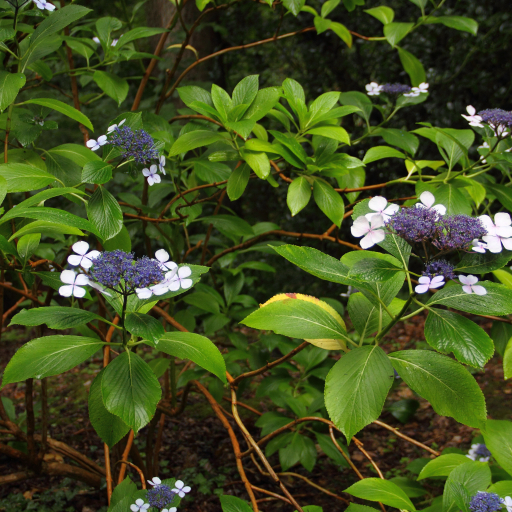
Plant Overview
Often called the "Mountain Hydrangea" or "Tea of Heaven," this elegant shrub hails from the misty, high-altitude forests of Japan and Korea. It is the refined, smaller cousin of the popular Bigleaf Hydrangea, cherished for its delicate lacecap blooms and stunning ability to change color based on the earth it grows in. In its native lands, it is not just a garden ornament but a cultural icon linked to ancient tea ceremonies and mountain legends.
🔍 How to Identify
- 🍃 Serrated Leaves: The name "Serrata" comes from the distinct saw-like, toothed edges of its leaves, which are typically narrower and more matte than the shiny leaves of other hydrangea species.
- 🌸 Lacecap Blooms: Unlike the heavy "mophead" spheres, this plant produces flat, airy clusters. A delicate center of tiny fertile buds is ringed by a "halo" of larger, showy sterile petals.
- 🍂 Autumn Transformation: As the season cools, the foliage often undergoes a dramatic shift, turning shades of deep burgundy, bronze, or purple, providing beauty long after the flowers fade.
🏡 In Your Garden
- ⛰️ Alpine Resilience: Because of its mountain origins, this species is generally more cold-hardy and bud-hardy than the Bigleaf Hydrangea, making it a better choice for gardeners in slightly chillier climates.
- 🧪 The pH Spectrum: The flowers act as a living chemistry set. In acidic soils rich in aluminum, the blooms will turn a piercing blue; in alkaline or neutral soils, they will blush into soft pinks and mauves.
- 🌤️ Dappled Light: While it loves moisture, it hates being baked. It performs best in "woodland" conditions—think morning sun followed by a shady afternoon to prevent the delicate leaves from wilting.
⚠️ Safety & Toxicity
- 🚫 Toxic if Ingested: Like all hydrangeas, this plant contains cyanogenic glycosides. While not usually fatal, it can cause significant distress if eaten.
- 🐾 Pet & Child Safety: Keep this plant out of reach of curious pets and toddlers. Ingestion can lead to nausea, vomiting, and lethargy.
- 🧤 Contact Dermatitis: Some individuals may experience a mild itchy rash when handling the leaves or stems, so wearing gloves during pruning is a wise precaution.
✨ Fun Fact
In Japan, a specific variety of this plant is used to create a natural herbal tea called Amacha. The leaves contain "phyllodulcin," a natural sweetener that is hundreds of times sweeter than sugar. This "Sweet Tea" is traditionally poured over statues of Buddha during the Flower Festival (Hana-matsuri) to celebrate his birthday.

Detailed Care Instructions
To grow a Hydrangea serrata plant, follow these steps:
- Choose a suitable location: Hydrangeas prefer partial shade, as full sun can scorch their delicate leaves. Select a spot with morning sun and afternoon shade or dappled sunlight throughout the day.
- Soil preparation: Hydrangeas prefer well-draining soil rich in organic matter. Amend the soil with compost or well-rotted manure to improve texture and fertility. Aim for a pH level between 5.0 and 6.5, slightly acidic to neutral.
- Planting: Dig a hole twice the width of the root ball and slightly deeper than the container. Gently remove the plant from its nursery container and place it in the hole, ensuring the top of the root ball is level with or slightly above the soil surface. Backfill the hole with soil, firming it gently around the roots.
- Watering: Hydrangeas require regular watering, especially during the hotter months. Keep the soil consistently moist but not waterlogged. Water deeply, allowing the water to penetrate the root zone.
- Mulching: Apply a layer of organic mulch around the base of the plant to help conserve moisture, suppress weeds, and regulate soil temperature. Keep the mulch away from direct contact with the main stem to prevent rotting.
- Fertilizing: Hydrangeas benefit from regular fertilization to promote healthy growth and abundant blooms. Use a balanced, slow-release fertilizer formulated for acid-loving plants. Apply in early spring and again in mid-summer according to the package instructions.
- Pruning: Prune hydrangeas selectively to maintain a desired shape and remove any dead or damaged branches. Hydrangea serratas bloom on old wood, so avoid pruning in late summer or fall, as this may remove the flower buds for the next season.
- Protection from frost: If you live in an area with frosty winters, consider protecting the plant during colder months. Cover the plant with burlap or a frost blanket to shield it from freezing temperatures.
Remember to regularly inspect your Hydrangea serrata for signs of pests, diseases, or nutrient deficiencies. Additionally, provide support if the plant grows large or becomes floppy. With proper care and attention, your Hydrangea serrata should grow and flourish.

Place in a window with dappled sun or a spot in the middle of a room. Or directly in a window facing west or east.

1. Determine the watering needs of the plant based on the soil moisture level, weather conditions, and season.
2. Before watering, check the soil moisture level by inserting your finger 1-2 inches into the soil. If the top layer of soil feels dry, it's time to water.
3. Use a watering can or hose with a nozzle to water the plant directly at the base of the plant. Avoid getting water on the leaves or flowers to prevent damage or disease.
4. Water the plant deeply, but not too frequently, to encourage deep root growth. Apply enough water to moisten the soil to a depth of 6-8 inches.
5. Allow the soil to dry out slightly between watering to prevent root rot.
6. During hot, dry weather, the plant may require more frequent watering to prevent wilting or stress.
7. Adjust watering frequency and amount based on the plant's growth and development. Established plants may require less frequent watering than newly planted ones.
8. Mulch around the base of the plant to help retain soil moisture and reduce watering needs.
9. Avoid overwatering, as it can lead to root rot, fungal diseases, and other problems.
- Once your plant has fully bloomed in the summer, it's time to fertilize.
- Choose a fertilizer that is specifically formulated for acid-loving plants, as this plant thrives in acidic soil.
- Follow the instructions on the fertilizer packaging for application rates and timing - typically, fertilizing once in the summer is sufficient.
- It's important to water your plant thoroughly before and after fertilizing to ensure the nutrients are absorbed properly.
- Avoid fertilizing in the fall or winter, as this can encourage new growth that may not have time to harden off before colder temperatures set in.
Hydrangea Serrata prefers a well-draining soil with a slightly acidic pH. It is important to use soil that has good water retention capacity, as Hydrangea Serrata requires consistent moisture for optimal growth and development. In addition, the soil should be rich in organic matter, such as compost or well-rotted manure, to provide essential nutrients for the plant. It is also advisable to add a layer of mulch around the base of the plant to help regulate moisture levels and suppress weed growth.
Hydrangea serrata can be propagated through softwood cuttings during the summer months. Select a healthy stem and cut a 4-6 inch section below a node. Strip off the lower leaves and dip the base of the cutting in rooting hormone. Plant the cutting in a well-draining potting mix and keep it moist. Place the pot in a warm, bright area but out of direct sunlight. It can take 2-4 weeks for roots to develop. Once the cutting has rooted, it can be carefully transplanted into a larger container or into the ground. It's important to keep the new plant well-watered until it becomes established.
Common pests of the mountain hydrangea include Spider mites, fungus gnats, aphids. Make a habit of checking your mountain hydrangea frequently for pests so that any infestations can be caught and managed early.








