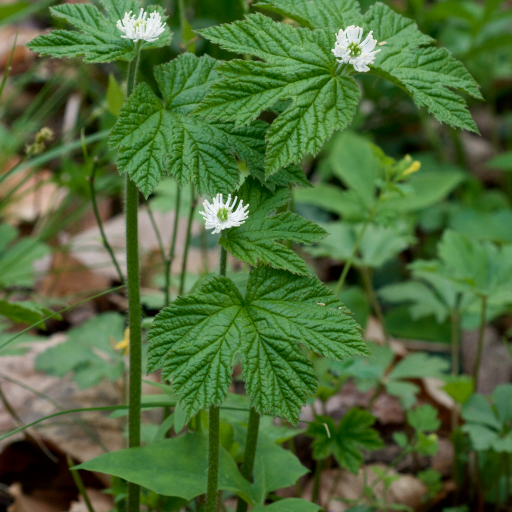
Plant Overview
Deep in the shaded deciduous forests of North America, the Goldenseal (or Hydrastis canadensis) hides its brilliant treasure underground. Also known as "Yellowroot" or "Ground Raspberry," this perennial herb has been a cornerstone of traditional woodland medicine for centuries. Today, it is considered a rare forest gem, often sought after by herbalists but increasingly protected due to its "at-risk" status in the wild.
🔍 How to Identify
- 🌿 The Foliage: Look for two distinct, hairy, palmately lobed leaves (resembling a maple leaf) that sit atop a single forked stem.
- 💮 The "Flower": In early spring, it produces a single, small blossom that lacks petals; it looks like a delicate explosion of white, thread-like stamens.
- 🍓 The Fruit: By mid-summer, the plant develops a single, bright red berry that sits nestled in the center of the upper leaf, looking remarkably like a wild raspberry.
- 🟡 The Root: If the soil is slightly disturbed, you may see the thick, knobby horizontal rhizome, which is a vivid, mustard-yellow color inside.
🏡 In Your Garden
- 🌳 The Canopy Context: Goldenseal is a true "shade-dweller." It thrives best under a canopy of hardwood trees like Beech or Maple, where it is protected from the harsh afternoon sun which can scorch its leaves.
- 🍂 Soil Secrets: This plant is picky about its "bedding." It requires rich, moist, and well-drained soil that is high in organic matter (leaf mold). It hates "wet feet," so ensure the area doesn't have standing water.
- 🐌 Patience is Key: Goldenseal is a slow grower. Because it relies on a delicate rhizome system, it dislikes being transplanted. Once you find a spot it likes, leave it undisturbed to allow it to colonize the forest floor.
⚠️ Safety & Toxicity
- 🚫 Status: Moderately toxic if consumed incorrectly.
- 🐕 Details: While the root is used medicinally in controlled doses, the plant contains high levels of the alkaloid berberine. Ingesting large amounts of the raw plant or root can cause digestive distress, mouth irritation, or more serious neurological symptoms in pets and small children. Always consult a professional before medicinal use.
✨ Fun Fact
Native Americans didn't just use Goldenseal for medicine; they used the vibrant yellow juice from the crushed roots as a powerful natural dye for clothing, baskets, and even as a brilliant body paint for ceremonies!

Detailed Care Instructions
To grow Hydrastis Canadensis, also known as Goldenseal, you can follow these steps:
- Choose the right location: Goldenseal prefers a shaded area with well-drained soil. Select a spot in your garden that receives partial or dappled sunlight but is protected from direct afternoon sun.
- Prepare the soil: Goldenseal prefers moist, loamy soil with a pH range of 5.0 to 6.5. Incorporate organic matter such as compost or leaf mold into the soil to improve its fertility and drainage.
- Planting: Plant Goldenseal rhizomes or root divisions in the spring or fall. Dig a hole that is wide and deep enough to accommodate the roots comfortably. Space the plants about 12 to 18 inches apart.
- Watering: Keep the soil consistently moist but not waterlogged. Water deeply when the top inch of soil feels dry. Mulching around the plants can help retain moisture and regulate soil temperature.
- Fertilizing: Goldenseal typically doesn't require heavy feeding. However, adding a balanced organic fertilizer in the spring can help promote growth. Follow the manufacturer's instructions for application rates.
- Weed control: Keep the area around the plants free from weeds, as they can compete for nutrients and moisture. Hand-pull weeds regularly or apply a thick layer of mulch to suppress weed growth.
- Harvesting: After planting, it takes about three to four years for Goldenseal plants to mature and develop enough roots for harvesting. Harvest the roots in the fall by carefully digging around the plant and gently lifting the rhizomes without damaging them.
- Propagation: Goldenseal can be propagated through root division or by planting seeds. Dividing the rhizomes every few years can help maintain healthy, vigorous plants.
- Pests and diseases: Goldenseal is generally resistant to common pests and diseases. However, monitor the plants regularly for any signs of insect damage or diseases. Treat any issues promptly using suitable organic or natural remedies.
Remember, Goldenseal is a slow-growing plant, and it requires patience and care to establish and maintain a healthy crop.

Place in a window with dappled sun or a spot in the middle of a room. Or directly in a window facing west or east.

To water this particular plant, it is important to use a watering can or a spray bottle in order to evenly distribute water throughout the soil. The soil should be kept moist but not overly saturated, as this can lead to root rot and other plant diseases. It is best to water the plant in the morning or early evening when temperatures are cooler and the plant has a chance to absorb the water before it evaporates in the sun. The plant should be watered regularly, but care should be taken to avoid getting water on the leaves or causing waterlogging in the soil. It is also important to note that this plant prefers slightly acidic soil, so adding a bit of vinegar or citric acid to the water can help maintain the proper pH balance.
To fertilize this plant, it is recommended to use a balanced fertilizer with equal parts nitrogen, phosphorus, and potassium. Apply the fertilizer in early spring before new growth appears, then again in early summer. Be careful not to over-fertilize as this plant prefers nutrient-poor soil. Additionally, it is important to provide adequate moisture for the plant to absorb nutrients.
When planting Hydrastis Canadensis, it is important to use a well-draining soil with a slightly acidic pH level between 5.0 and 6.0. This plant prefers rich, loamy soil that is high in organic matter and can tolerate some shade. It is important to keep the soil evenly moist, but not waterlogged, as this can lead to root rot. Adding compost or other organic matter to the soil can help improve drainage and provide essential nutrients for the plant's growth. Additionally, using a layer of mulch around the base of the plant can help retain moisture and protect the roots from extreme temperatures.
The propagation of this plant can be done through division of its underground rhizomes or by taking stem cuttings.
To divide the rhizomes, wait until the plant has gone dormant during the fall or early winter. Gently dig up the plant and use a garden fork or shovel to carefully separate the rhizomes into smaller sections, ensuring that each section has a healthy amount of roots. These sections can then be replanted in a well-draining soil mix and kept consistently moist until new growth appears.
To propagate through stem cuttings, take 3-4 inch long cuttings from the plant during the summer months when it is actively growing. Dip the cut end of the stem in a rooting hormone and plant it in a well-draining soil mix, keeping it consistently moist until new growth appears. It is important to keep the soil moist and shaded for the first few weeks to allow for proper root development.








