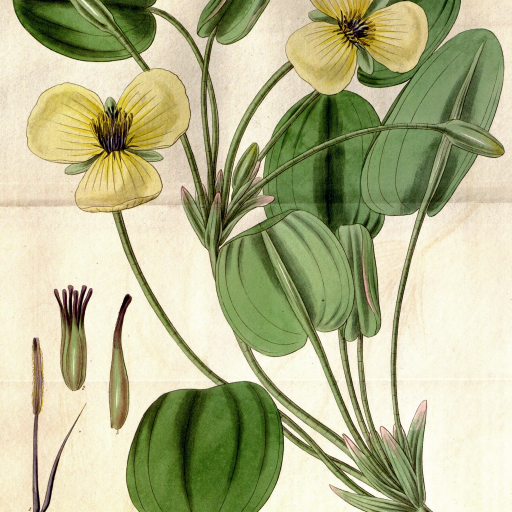
Plant Overview
Often called the "Sunshine of the Pond," the Water Poppy is a charming aquatic perennial native to the warm waters of Central and South America. While its floating, heart-shaped leaves might remind you of a miniature water lily, its delicate, three-petaled blossoms look as if a terrestrial poppy decided to go for a swim. This plant is a favorite for water gardeners looking to add a vertical splash of color and a soft texture to the edges of their ponds.
🔍 How to Identify
- 🌼 The Bloom: Look for creamy, buttery-yellow flowers about 2 inches wide. They feature three distinct, crinkled petals and a striking dark reddish-brown or purple center filled with many stamens.
- 🍃 The Foliage: The leaves are thick, glossy, and oval to heart-shaped. They typically float on the water's surface, though they can occasionally rise slightly above it if the plant is crowded.
- 🌱 Growth Habit: It spreads via long, trailing runners (rhizomes) that can either float or root themselves into the mud at the bottom of a shallow pond.
🏡 In Your Garden
- ☀️ Sun Seeker: The Water Poppy is a sun-lover. To get those iconic yellow blooms, it needs at least 6 hours of direct light; in shady spots, it will produce plenty of leaves but very few "poppies."
- 💧 Depth Nuance: While it is an aquatic plant, it dislikes deep water. It thrives best when planted in containers submerged only 6 to 12 inches below the surface. If the water is too deep, the plant may struggle to reach the light and fail to flower.
- ✂️ Containment: Because it grows via runners, it can quickly cover the surface of a small pond. To keep it from taking over, many gardeners keep it in submerged pots to restrict its footprint.
⚠️ Safety & Toxicity
- ✅ Status: Non-toxic and safe.
- 🐾 Details: The Water Poppy is generally considered safe for pets, livestock, and humans. It is not known to cause skin irritation or poisoning if nibbled, making it a "worry-free" choice for backyard ponds frequented by dogs or curious children.
✨ Fun Fact
The flowers of the Water Poppy are incredibly ephemeral—each individual bloom lasts for only one single day! It opens with the morning sun and fades by evening, but because the plant is such a prolific producer, a healthy colony will appear to be in constant, shimmering bloom all summer long.

Detailed Care Instructions
Here are some steps you can follow to grow Hydrocleys nymphoides, also known as water poppy:
- Choose the right location: Hydrocleys nymphoides thrives in full sun to partial shade. Find a location in your garden or pond that receives at least 6 hours of direct sunlight per day.
- Prepare a suitable container or pond: Hydrocleys nymphoides can be grown in a container or directly in a pond. If using a container, make sure it is wide and shallow, allowing enough room for the plant to spread its leaves.
- Plant the water poppy: If growing it in a container, fill the container with aquatic soil or a mixture of loamy soil and sand. Gently place the plant in the soil, ensuring that the crown is level with the soil surface. If growing in a pond, plant the water poppy in the shallow areas, where the water is about 6 to 18 inches deep.
- Provide proper water conditions: Hydrocleys nymphoides requires clean, still or slow-moving water. Avoid strong currents as it may damage the delicate leaves and flowers. The water temperature should be kept between 60°F and 80°F (15°C to 27°C) for optimal growth.
- Fertilize regularly: To promote healthy growth, use a balanced aquatic fertilizer according to the manufacturer's instructions. Apply the fertilizer every 4-6 weeks during the growing season.
- Control invasive growth: Hydrocleys nymphoides is known to be an aggressive spreader. Keep an eye on the plant and regularly thin out excess growth to prevent it from taking over the pond or container.
- Prune as needed: Trim any dead or faded leaves to maintain a tidy appearance and improve overall plant health. You can also prune the plant back in early spring to encourage new growth.
- Overwintering: If you live in a region with cold winters, you may need to take steps to protect the plant from freezing temperatures. Consider moving the container indoors or to a heated greenhouse, or provide insulation around the plant in the pond to prevent frost damage.
By following these steps and providing the necessary care, you can enjoy a flourishing Hydrocleys nymphoides plant in your garden or pond.

Place in a bright room that is sun drenched almost all day. Or directly in a south-facing window.

The plant should be watered frequently to keep the soil moist. Watering should be done gently to avoid disturbing the plant's delicate roots. It is important to use clean, fresh water that is free of any chemicals or pollutants. Overwatering should be avoided as it can cause root rot and other issues. The plant should be fertilized regularly with a balanced fertilizer to support its growth and development. Proper drainage is also essential to prevent waterlogging and ensure healthy plant growth. It is recommended to place the plant in a shallow water garden or a container with a drainage hole to allow excess water to flow out.
To fertilize this aquatic plant, use a balanced liquid aquarium fertilizer with a nitrogen, phosphorus, and potassium ratio of 1:1:1 or 2:1:1. Add the fertilizer according to the instructions on the package, being careful not to over-fertilize as this can harm the plant. It is recommended to fertilize once every two to four weeks.
The Hydrocleys Nymphoides plant is best grown in nutrient-rich, well-draining soil. It prefers a slightly acidic to neutral pH range (around 6.0-7.0) and requires a good amount of organic matter for healthy growth. It is recommended to use a soil mix that is rich in nutrients and contains materials such as peat moss, compost, vermiculite, or perlite to improve drainage and aeration. Additionally, the soil should be kept constantly moist, but not waterlogged, as the plant is semi-aquatic and requires a high level of humidity. Overall, a well-draining, nutrient-rich soil mix with a slightly acidic to neutral pH and a good amount of organic matter is the best choice for growing the Hydrocleys Nymphoides plant.
To propagate this aquatic plant:
- Take a healthy stem from an existing plant.
- Cut the stem into several smaller pieces, each one with a few leaves and a node (the part of the stem where the leaves emerge).
- Plant each piece in lightly moist soil or in a container of water.
- Place the new plants in a well-lit area with moderate temperatures.
- Keep the soil or water consistently moist to encourage root growth.
- After a few weeks, the new plants should begin to develop roots and can be transplanted into a larger container or planted in an aquatic environment.








