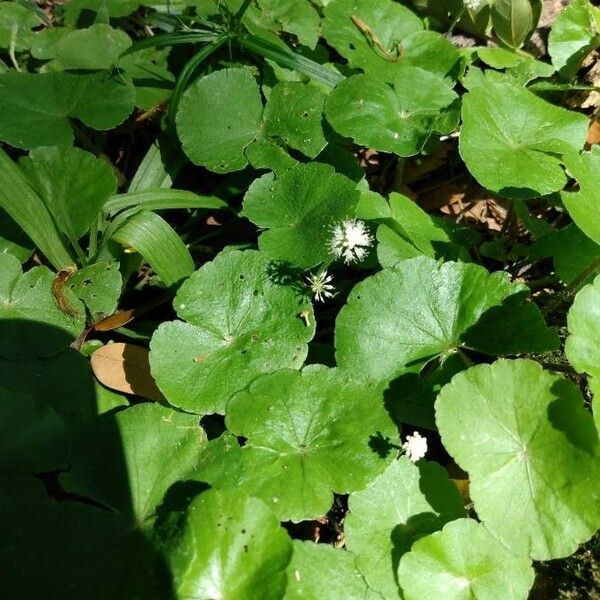
Plant Overview
Known as the Brazilian Pennywort, this versatile gem is a favorite for both aquarium enthusiasts and terrarium lovers. It is famous for its round, shield-like leaves that look like tiny umbrellas floating through the water or cascading over humid soil. Whether you are a beginner or a seasoned aquascaper, its rapid growth and "unkillable" reputation make it a delightful, stress-free addition to your collection.
🔍 How to Identify
- 🍃 The Leaf Shape: Distinctive heart-to-kidney-shaped leaves with slightly scalloped or wavy edges, typically reaching about 1 to 2 inches in diameter.
- 🌿 The Stem: Long, slender, light green vines that are incredibly flexible; they produce white roots at every node, allowing the plant to creep or climb.
- 🌼 The Bloom: When grown "emerse" (with leaves above the water line), it produces clusters of tiny, delicate white flowers that resemble miniature pom-poms.
🏡 In Your Garden (or Tank)
- 💧 Floating vs. Anchored: This plant is a true shapeshifter. You can weigh the stems down in the substrate to create a lush, bushy forest look, or let it float freely on the surface to provide a natural canopy for shy fish and fry.
- 🍴 Nutrient Sponge: Because it grows so rapidly, it is excellent at sucking up excess nitrates and phosphates. This makes it a natural filter that helps prevent algae outbreaks and keeps your water crystal clear.
- ✂️ The "Pruning" Paradox: While it is low-maintenance, its speed is its greatest challenge. If left unchecked, it can quickly blanket the surface, blocking light from plants below. Frequent trimming is necessary to keep it from "conquering" its neighbors.
⚠️ Safety & Toxicity
- ✅ Safe Status: Hydrocotyle leucocephala is non-toxic and perfectly safe for fish, shrimp, and snails. In fact, many aquatic creatures love to graze on the micro-organisms that live on its leaves.
- 🐾 Pets & Kids: It is generally considered non-poisonous to cats and dogs. However, because it is an ornamental plant often treated with fertilizers in aquatic settings, it’s best to keep trailing vines out of reach of curious paws to avoid stomach upset.
✨ Fun Fact
In its native South American habitat, Brazilian Pennywort is often found growing along the edges of marshes and rivers, where it can grow both underwater and on land at the same time! It is so hardy that it can even survive in temperatures just above freezing for short periods.

Detailed Care Instructions
To grow Hydrocotyle Leucocephala (also known as Brazilian pennywort), you can follow these steps:
- Obtain a Hydrocotyle Leucocephala plant: You can get a live plant from a local aquarium store or online. Ensure that the plant is healthy with vibrant green leaves.
- Choose a suitable aquarium or container: Select a tank or container that can hold water and provide enough space for the plant to grow. Make sure it has a lid or cover to prevent fish from nibbling on the leaves.
- Prepare the tank: Fill the tank with clean, dechlorinated water. Maintain the temperature between 70-80°F (21-27°C) and the pH level around 6.5-7.5. Provide suitable lighting for the plant, preferably around 8-10 hours a day.
- Planting the Hydrocotyle Leucocephala: Gently remove any gel or rock wool attached to the plant roots. Dig a small hole in the substrate, bury the roots, and slightly cover the base of the plant with fine gravel or sand. Ensure the plant is secured firmly in the substrate.
- Provide adequate nutrients: Hydrocotyle Leucocephala benefits from nutrient-rich water. Using a liquid aquarium fertilizer or root tabs can supplement the nutrients in the water.
- Maintain and care for the plant: Regularly trim the plant to prevent it from overcrowding the tank. Remove any dead or decaying leaves promptly. Monitor the water quality, temperature, and lighting to ensure optimal conditions for growth.
- Propagation: Hydrocotyle Leucocephala can reproduce through runners that grow horizontally. You can separate these runners from the parent plant and plant them in another location to propagate new plants.
Remember, each aquatic plant has its specific growth requirements, so it would be beneficial to research and understand the needs of Hydrocotyle Leucocephala to promote healthy growth.
Hydrocotyle Leucocephala is a plant that requires frequent and consistent watering. When watering this plant, make sure to use room temperature or slightly warm water. You should avoid using cold water as it can shock the plant and lead to damage or stunted growth.
When watering Hydrocotyle Leucocephala, it is important to avoid overwatering as this can lead to root rot. To ensure that you are giving your plant the appropriate amount of water, check the soil moisture before watering. A good rule of thumb is to wait until the top inch of soil is dry before watering again.
To water Hydrocotyle Leucocephala, you can use a watering can or a spray bottle for smaller plants. When using a watering can, pour the water slowly and evenly over the soil around the base of the plant. Avoid getting water on the leaves or stem as this can cause the plant to become too wet and lead to disease.
For plants in pots, make sure that the pot has drainage holes to allow excess water to drain out. If your plant is in a decorative container without drainage holes, use a saucer or tray underneath to catch excess water.
In summary, Hydrocotyle Leucocephala requires frequent and consistent watering with room temperature or slightly warm water. Avoid overwatering and check the soil moisture before watering. Use a watering can or spray bottle to water the soil around the base of the plant, and make sure that pots have drainage holes to allow excess water to drain out.
For optimal growth, provide the Hydrocotyle Leucocephala plant with a nutrient-rich substrate. Use a water-soluble fertilizer with balanced amounts of nitrogen, phosphorus, and potassium. Apply a diluted solution of the fertilizer once a week during the growing season, and reduce fertilization in the winter months. Avoid over-fertilizing, as this can harm the plant. Monitor the plant's growth and adjust fertilization accordingly.
When choosing soil for this plant, it is important to consider its natural habitat. This plant is typically found growing in wetlands and along bodies of water, indicating that it prefers moist, nutrient-rich soil.
A suitable soil for this plant should be well-draining and have a high organic matter content to provide essential nutrients. A mixture of peat moss, perlite, and vermiculite can be an effective medium for growing this plant. It is also important to maintain the soil at a slightly acidic pH level (between 6.0-6.5) to support optimal growth.
In addition, regular fertilization with a balanced fertilizer can help provide the necessary nutrients for the plant. It is recommended to fertilize every 2-4 weeks during the growing season.
Overall, the most important factors to consider when choosing soil for this plant are moisture retention, nutrient content, and pH level.
To propagate the plant, you will need to identify a healthy stem with multiple nodes. Cut the stem with a sharp and sterile pair of scissors or garden knife. Remove any leaves that would be submerged in water or soil. Place the stem in a container filled with water or a moist seed-starting mix. Keep the container in a bright area, but out of direct sunlight. Change the water or mist the soil regularly to keep it moist. Within a few weeks, the plant should start developing roots and new growth. Once the roots have developed, the plant can be transplanted to a larger pot or directly into the ground.








