Plant Overview
Often called the Pacific Waterleaf, this shade-loving perennial is a hidden gem of the Pacific Northwest's mossy understories. Its name comes from the Greek words for "water" and "leaf," a nod to the translucent, water-spotted appearance often found on the foliage of its close relatives. In the wild, it forms lush, emerald carpets that look like they belong in a prehistoric forest or a fairy tale glade.
🔍 How to Identify
- 🍃 Lobed Leaves: The leaves are large, broad, and deeply divided into five to nine pointed lobes, looking somewhat like a fuzzy maple leaf.
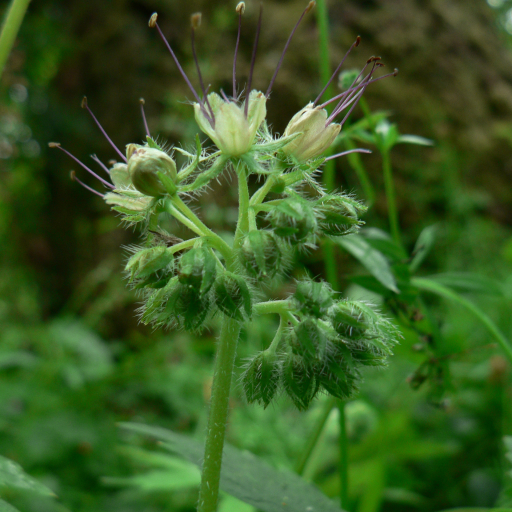
- 🌸 Whisker Flowers: It produces dense, ball-shaped clusters of bell-like flowers that range in color from creamy white to a soft, misty lavender.
- 🧵 Protruding Stamens: The most striking feature is the long, thread-like stamens that poke out far beyond the petals, giving the flower clusters a "spiky" or "hairy" appearance.
🏡 In Your Garden
- 🌑 Shade Specialist: This plant thrives in deep to partial shade where most flowering plants struggle, making it a perfect choice for "forgotten" corners under large deciduous trees.
- 💧 Moisture Seeker: It prefers consistently damp, humus-rich soil; if the ground dries out too much in the summer, the plant may go dormant early to protect its root system.
- 🐝 Pollinator Buffet: The unique "whisker" flowers are a favorite for native bumblebees and mason bees, providing a critical nectar source during the mid-spring transition.
⚠️ Safety & Toxicity
- 🐾 Pet Friendly: Pacific Waterleaf is generally considered non-toxic to cats, dogs, and horses, making it a safe addition to a wildlife-friendly backyard.
- 🌿 Skin Sensitivity: While not poisonous, the fine, stiff hairs on the stems and leaves can cause mild mechanical skin irritation or "prickliness" for people with very sensitive skin.
- 🥗 Edibility Note: While historically used as a cooked green by some indigenous groups, the leaves become very tough and unpleasantly fuzzy as they mature.
✨ Fun Fact
The long "whiskers" (stamens) aren't just for decoration; they act like a specialized landing rig for bees, ensuring that pollen is perfectly positioned to rub off on the insect's belly as it searches for nectar.

Detailed Care Instructions
Hydrophyllum tenuipes, also known as Pacific waterleaf, is a woodland perennial plant native to western North America. Here are some tips on how to grow this plant:
- Choose the right location: Hydrophyllum tenuipes prefers moist, fertile, well-draining soil with partial to full shade. It is typically found in wooded or semi-shaded areas with rich soil.
- Planting: Plant your Hydrophyllum tenuipes in the spring or fall. Dig a hole that is slightly larger than the root ball of the plant and gently place the plant in the hole. Cover the roots with soil and water well.
- Watering: Keep the soil consistently moist, but not waterlogged. Water regularly, especially during dry periods, to mimic the plant's natural woodland environment.
- Fertilizing: Hydrophyllum tenuipes does not typically require fertilization, as it is adapted to grow in nutrient-rich soil. However, you can add a balanced, organic fertilizer in the spring to promote healthy growth.
- Mulching: Apply a layer of organic mulch, such as leaf litter or wood chips, around the base of the plant to help retain moisture, suppress weeds, and insulate the roots.
- Pruning: Trim back any dead or damaged foliage in the fall or early spring to promote new growth and maintain the plant's shape.
- Propagation: Hydrophyllum tenuipes can be divided in the fall or spring to create new plants. Simply dig up a clump of the plant, separate the roots into smaller sections, and replant them in a new location.
By following these tips, you can successfully grow Hydrophyllum tenuipes in your garden and enjoy its beautiful foliage and delicate flowers.

Place in a window with dappled sun or a spot in the middle of a room. Or directly in a window facing west or east.

Hydrophyllum Tenuipes is a plant that appreciates regular watering in order to thrive. When watering this plant, it is important to ensure that the soil is thoroughly soaked, but not waterlogged. One effective way to accomplish this is to water the plant deeply and slowly, allowing the water to gradually permeate the soil and reach the roots of the plant. It is also important to avoid getting water on the leaves of the plant, as this can lead to the development of disease or fungal issues. Additionally, it is recommended to water this plant in the mornings or evenings, when temperatures are cooler and the water can evaporate more slowly, allowing the soil to retain moisture for longer periods of time. Finally, it is important to water Hydrophyllum Tenuipes consistently, as inconsistent watering can cause stress to the plant and affect its growth.
To fertilize Hydrophyllum Tenuipes plant, use a balanced liquid fertilizer diluted to half strength. Apply the fertilizer once a month during the growing season, from spring to fall. Avoid over-fertilizing as it can harm the plant. Water the plant before and after fertilizing to help the nutrients penetrate the soil and reach the roots.
Hydrophyllum Tenuipes is a plant that requires well-draining, moist soil that is rich in organic matter. The ideal soil pH for this plant ranges from mildly acidic to neutral (pH 5.5-7.0). The soil should also be able to retain moisture without becoming waterlogged, as the plant prefers consistently moist but not wet conditions. A mixture of peat moss, compost, and sand can be used to create a well-draining soil that retains moisture and provides the necessary nutrients for Hydrophyllum Tenuipes to thrive. It is important to avoid using heavy, compacted soil or soil that contains a high amount of clay, as this can inhibit root growth and restrict water absorption. Adding organic matter such as leaf litter, shredded bark, or compost to the soil can improve its moisture-retaining capacity and provide additional nutrients for the plant.
Hydrophyllum Tenuipes plants can be propagated through both seeds and division.
To propagate through seeds, collect the mature seeds from the plant in late summer or early fall. Sow the seeds in a well-draining soil mix in a seed tray or small pot. Keep the soil consistently moist and place the tray in a warm, sunny location. Germination typically takes place within a few weeks to a few months, depending on conditions.
To propagate through division, wait until the plant is well-established and has formed multiple separate shoots. Carefully dig up the plant and separate the shoots, making sure each division has a good portion of roots attached. Replant the divisions in a well-draining soil mix and keep the soil consistently moist until the plants are established.
Both methods of propagation can be successful with proper care and attention to the needs of the Hydrophyllum Tenuipes plant.








