Plant Overview
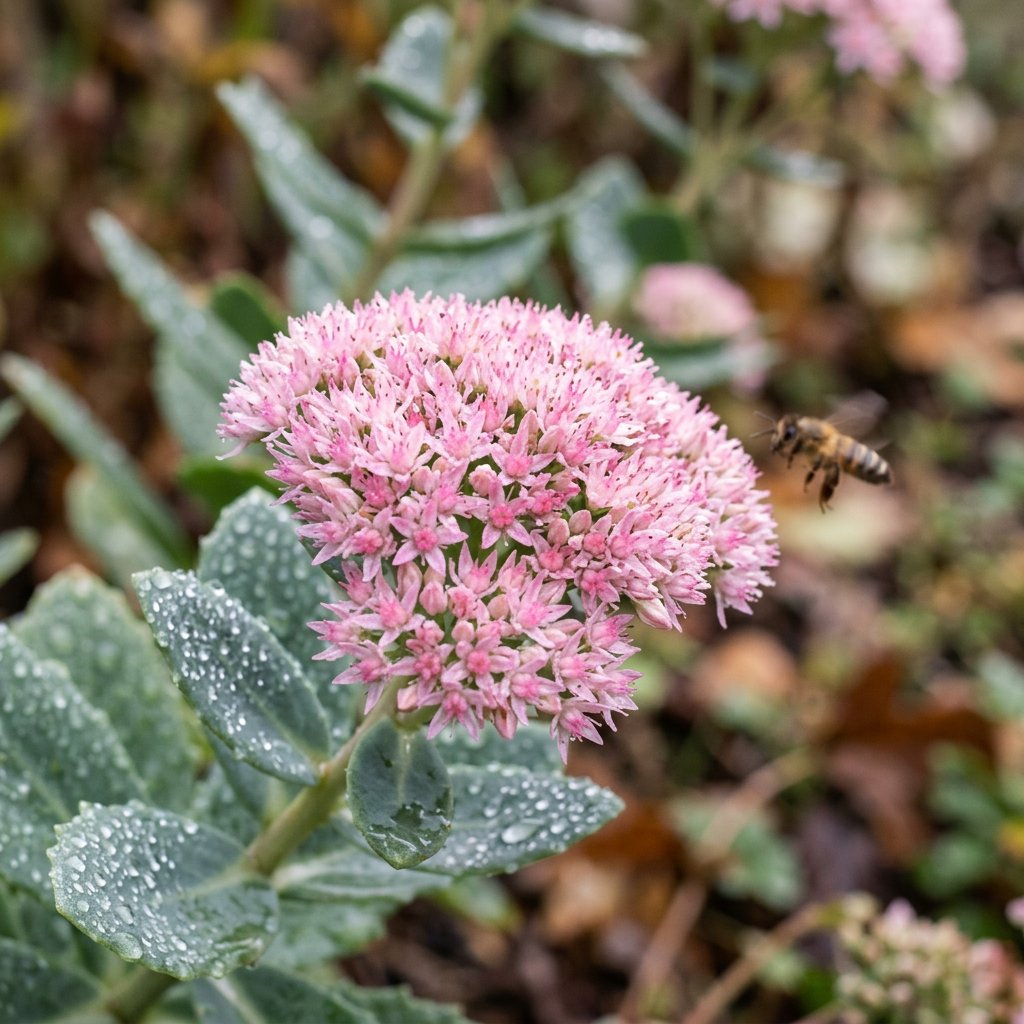
Commonly known as the Showy Stonecrop or Ice Plant, Hylotelephium spectabile is the undisputed king of the late-summer garden. Originating from China and Korea, this succulent perennial is famous for its "slow-burn" beauty, starting the season as a leafy green mound before erupting into massive, flat-topped pink flower heads just as other garden plants begin to fade.
🔍 How to Identify
- 🍃 Succulent Foliage: Features thick, fleshy, oval-shaped leaves that are a soft grey-green color. They have a waxy coating that helps the plant retain moisture.
- 🥦 Broccoli-like Buds: Before the flowers bloom, the tightly packed green buds look remarkably like small heads of light-green broccoli.
- 🌸 Starry Blooms: The flowers are tiny and star-shaped, clustered together in massive "cymes" that can reach 6 inches across, ranging in color from pale pink to deep magenta.
🏡 In Your Garden
- ☀️ Sun and Support: While it is incredibly hardy, it demands full sun. In too much shade, the stems become weak and "leggy," causing the heavy flower heads to flop over and split the clump.
- 💧 Neglect is a Virtue: Because it stores water in its leaves, it thrives in poor, well-draining soil. Over-watering or planting in rich, soggy earth is the fastest way to cause root rot.
- 🦋 Pollinator Magnet: It is a vital late-season nectar source. On a sunny September afternoon, it is common to see a single flower head covered in honeybees and migrating butterflies.
⚠️ Safety & Toxicity
- 🐾 Pet Friendly: Hylotelephium spectabile is generally considered non-toxic to dogs, cats, and horses, making it a safe choice for family landscapes.
- 👶 Mild Sensitivity: While not poisonous, the sap inside the leaves can occasionally cause mild skin irritation for people with sensitive skin, and ingesting large amounts of the foliage may lead to a mild stomach ache.
✨ Fun Fact
In some older traditions, this plant was used as a "living weather station." It was believed that if the cut stems continued to grow and bloom indoors without water, it predicted a mild and short winter ahead!

Detailed Care Instructions
| Color | Green With White, Pink, Or Crimson Blooms |
| Soil Ph | Alkaline, Neutral |
| Humidity | Dry |
| Lighting | Full Sun |
| Toxicity | Toxic |
| Soil Type | Rocky, Sandy, Moderately Dry |
| Bloom Time | August To October (Late Summer To Fall) |
| Difficulty | Easy |
| Plant Type | Succulent, Herbaceous Perennial |
| Hibernation | Cold Period |
| Mature Size | Grows To Approximately 1-2 Feet In Height And Width |
| Native Area | China And Korea |
| Temperature | 20°C - 35°C |
| Sun Exposure | Full Sun |
| Hardiness Zones | 3-9 |
To grow Hylotelephium spectabile (commonly known as stonecrop or showy stonecrop), you can follow these steps:
- Choose the right location: Hylotelephium spectabile prefers full sun to partial shade. Ensure the location has well-draining soil.
- Prepare the soil: Before planting, amend the soil with organic matter like compost to improve its fertility and drainage.
- Planting: Dig a hole that is slightly larger than the root ball of the plant. Place the plant in the hole, making sure it is at the same depth as it was in the container. Gently backfill the hole with soil and pat it down to remove any air pockets.
- Watering: After planting, water the stonecrop thoroughly. Water regularly to keep the soil slightly moist but not waterlogged. Overwatering can cause root rot, so ensure the soil has proper drainage.
- Mulching: To retain soil moisture and suppress weeds, apply a layer of organic mulch around the base of the plant.
- Fertilizing: Hylotelephium spectabile is a low-maintenance plant and generally doesn't require much fertilization. However, you can apply a balanced slow-release fertilizer in early spring to promote healthy growth.
- Pruning: Stonecrop plants typically do not require extensive pruning. However, you can remove any dead or damaged stems in early spring before new growth appears.
- Propagation: Hylotelephium spectabile can be propagated through stem cuttings or division. Stem cuttings should be taken in the spring or early summer, while division can be done in the spring or fall.
- Pests and diseases: Stonecrop plants are generally resistant to most pests and diseases. However, overwatering or poor drainage can lead to root rot. Additionally, watch out for slugs and snails, which may occasionally feed on the plant.
- Winter care: Hylotelephium spectabile is a hardy perennial that can endure cold winters. However, if you live in an area with harsh winters, you can provide some winter protection by adding a layer of mulch around the base of the plant.
Remember to regularly monitor the plant's growth and adjust care accordingly. Stonecrop is known for its low maintenance characteristic, making it an excellent choice for gardeners of all skill levels.

Place in a bright room that is sun drenched almost all day. Or directly in a south-facing window.

To water this plant, make sure to check the soil moisture level before watering. Insert your finger about an inch or two into the soil to check for moisture. If the soil feels dry to the touch, it is time to water. Water the plant deeply, making sure the soil is completely saturated. Avoid getting water on the leaves or flowers as this can lead to fungal diseases. Allow the soil to dry out before watering again. It is important not to overwater this plant as it can lead to root rot.
To fertilize this plant, use a balanced fertilizer with equal parts nitrogen, phosphorus, and potassium. Apply the fertilizer once in early spring as the plant begins to emerge from dormancy, and again in mid-summer when the plant is in full bloom. Mix the fertilizer with water according to the package instructions and apply it around the base of the plant, avoiding direct contact with the foliage. Water the plant after fertilizing to ensure proper absorption of nutrients.
The Hylotelephium Spectabile plant prefers well-draining soil that is slightly acidic to neutral in pH. It grows best in moist soil that is enriched with organic matter. The plant is tolerant of different soil types, including sandy, loamy, and clay soils, but it does not grow well in waterlogged soil. The soil should be kept consistently moist but not waterlogged, as the plant is susceptible to rot in overly wet conditions. It is also recommended to add a slow-release fertilizer during the growing season to promote healthy growth and flowering.
To propagate this plant, you can take stem cuttings in the spring or summer months. Find a healthy stem that is at least 4 inches long and has several leaves on it. Using a sharp, sterile knife, cut the stem at a 45-degree angle just below a leaf node. Remove the lower leaves from the cutting, leaving only 2-3 at the top. Dip the cut end in rooting hormone, and plant it in a pot filled with well-draining soil. Water the cutting thoroughly and place it in a bright, but indirect light. Keep the soil moist but not waterlogged and within a few weeks, roots should begin to form. Once the cutting has established roots, you can transfer it to a larger pot or plant it in the ground.
Common pests of the showy stonecrop include Aphids. Make a habit of checking your showy stonecrop frequently for pests so that any infestations can be caught and managed early.








