Plant Overview
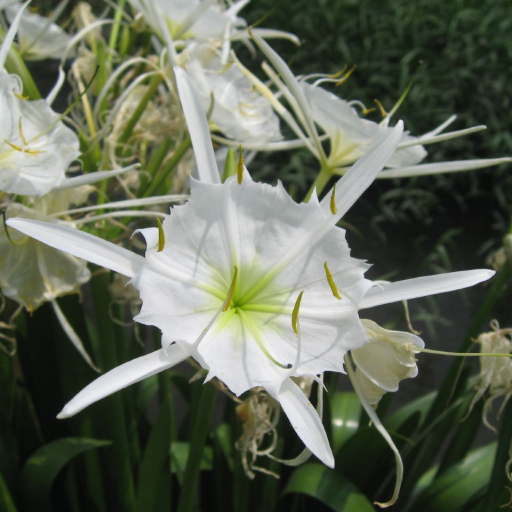
Known as the "Cahaba Lily" or "Shoals Spider-lily," this stunning aquatic perennial is a true Southern belle of the river. Appearing like white stars scattered across rocky shoals, it is a symbol of wilderness and purity in the southeastern United States. It is so beloved that it even has its own annual festival in Alabama, celebrating its brief but breathtaking blooming season.
🔍 How to Identify
- 🌸 The "Crown" Flower: It features a large, white, funnel-shaped central cup (the corona) surrounded by six long, elegant, spider-like petals that droop gracefully.
- 🍃 Strap-like Foliage: Long, dark green, sword-shaped leaves emerge directly from the bulb, often trailing downstream in the water current.
- 🏗️ Anchored Base: The plant grows from large, heavy bulbs wedged deep into the crevices of rocky river shoals, allowing it to stay rooted even during heavy flooding.
🌊 Habitat & Ecology
- 💧 The Need for Speed: This lily is a "rheophyte," meaning it specifically thrives in fast-moving, oxygenated water. It is almost exclusively found in rocky shoals where the water tumbles over stones.
- ☀️ Sun Worshiper: To produce its dramatic blooms, the Cahaba Lily requires full, direct sun hitting the river's surface. In the wild, it acts as a stabilizer for riverbed sediments and provides shelter for small aquatic life.
- 🛑 Specialized Survival: Because it requires very specific flow rates and water quality, it is incredibly difficult to grow in a standard home garden. It is best admired in the wild, as it often fails to thrive in stagnant pond water.
⚠️ Safety & Toxicity
- 🚫 Toxic Assessment: Like many members of the Amaryllis family, all parts of the plant—especially the bulb—contain alkaloids such as lycorine.
- 🐾 Risk to Pets & Humans: Ingestion can cause nausea, vomiting, and abdominal pain. While it isn't usually "deadly" in small amounts, it is highly irritating to the digestive tract of dogs, cats, and curious children.
✨ Fun Fact
The Cahaba Lily is a "one-day-only" showstopper! Each individual flower opens in the evening and lasts for only 24 hours. To make the most of its short life, it emits a powerful, sweet fragrance to attract nocturnal sphinx moths for pollination.

Detailed Care Instructions
To grow Hymenocallis Coronaria, commonly known as the Shoofly Plant, follow these steps:
- Choose a suitable planting location: Select a well-draining spot with partial to full sun exposure. Hymenocallis Coronaria prefers loamy or sandy soil.
- Plant bulbs or seeds: If you have bulbs, plant them in late summer or early fall, about 2-3 inches deep. If starting from seed, sow them in early spring, just barely covering them with soil.
- Watering: Keep the soil evenly moist, especially during the growing season. Avoid waterlogged conditions, which may cause the bulb to rot.
- Fertilization: Apply a balanced, slow-release fertilizer during the growing season to promote healthy growth. Follow the instructions on the fertilizer package for application rates.
- Mulching: Applying a layer of organic mulch around the base of the plant can help conserve moisture, suppress weed growth, and regulate soil temperature.
- Pruning: Remove any dead or damaged leaves as necessary. The plant will naturally die back in winter, and new growth will emerge in spring.
- Pests and diseases: Monitor for common pests such as aphids, scale insects, or spider mites. Treat infestations with appropriate insecticides, following the instructions carefully. Hymenocallis Coronaria is generally resistant to diseases, but it's always good to watch for signs of any issues.
- Propagation: If you wish to propagate Hymenocallis Coronaria, divide the bulbs in early fall. Gently separate the bulbs, making sure each division has a portion of the original bulb and some healthy roots. Replant the divisions as soon as possible.
Remember to check your local climate and weather conditions to ensure they are suitable for growing Hymenocallis Coronaria.

Place in a bright room that is sun drenched almost all day. Or directly in a south-facing window.

To properly water this plant, one should begin by examining the soil moisture. It is essential to not allow the soil to dry out completely between waterings. When the soil feels dry to the touch, it is time to water the plant. When watering, thoroughly saturate the soil until water drips through the drainage holes to ensure that water reaches the plant's base. Avoid getting water on the leaves and flowers by watering the soil directly at the base of the plant. This plant also prefers well-draining soil and good air circulation to prevent root rot and other fungal diseases. Additionally, it is essential to monitor the humidity levels around the plant and mist the leaves occasionally to maintain adequate moisture.
To fertilize this plant, use a balanced fertilizer with a ratio of 10-10-10 or 20-20-20. Apply the fertilizer every two weeks during the growing season, which is typically in the spring and summer. Be sure to dilute the fertilizer according to the instructions on the package. It's also important to water the plant well before and after fertilizing to prevent burning the roots.
Hymenocallis Coronaria plant requires well-draining soil with good moisture retention capabilities. The soil should contain a mix of organic matter such as compost, peat moss, or aged manure to promote root growth and improve aeration. The soil should be slightly acidic to neutral with a pH range between 6.0-7.0. Additionally, adding perlite or coarse sand can help improve soil structure and drainage. It's important to ensure that the soil is always moist, but not waterlogged as the plant does not tolerate drought.
To propagate this plant, you can start by carefully removing offsets or plantlets that have developed from the mother plant. Use a clean, sharp knife or scissors to separate them from the parent plant. Make sure each offset has some roots attached to it.
Next, prepare a well-draining potting mix that is rich in organic matter. You can use a commercial potting mix or make your own using a combination of peat moss, perlite, and vermiculite. Plant each offset in a separate pot and water it thoroughly.
Place the pots in a warm, bright location but protect them from direct sunlight for a few days. Keep the soil moist but not waterlogged. After a few weeks, new growth should appear from each offset.
Continue to care for the new plants by keeping the soil moist and providing them with plenty of bright light. You can start to fertilize the plants every two weeks with a balanced fertilizer once they are established.
With proper care, your Hymenocallis Coronaria plant will grow and thrive, producing beautiful, fragrant flowers for years to come.








