Plant Overview
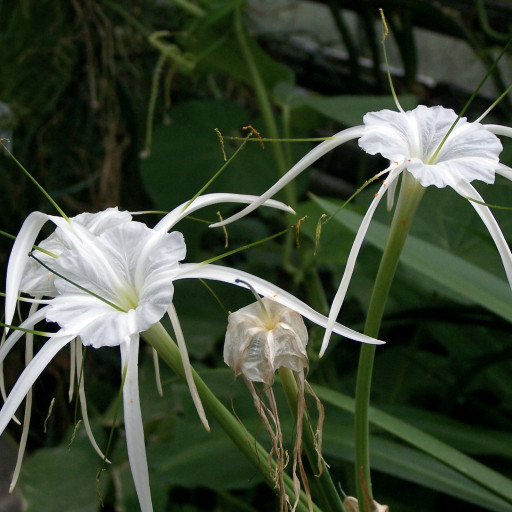
Commonly known as the Beach Spider Lily, this tropical beauty looks like something straight out of a high-end botanical illustration. Native to the coastal regions of Mexico and Central America, it is prized for its ethereal, white blossoms that seem to float like ghosts in the moonlight. Often called the "Basket Lily," it brings a touch of dramatic, architectural elegance to any landscape or patio.
🔍 How to Identify
- 🌸 The "Spider" Bloom: Each flower features six incredibly long, thin petals that radiate from a central, translucent white cup (the corona). This central cup resembles a delicate paper basket or a spider's web.
- 🍃 Strap-Like Leaves: The foliage consists of long, sword-shaped, deep green leaves that grow directly from the bulb in a dense, fan-like arrangement. They remain evergreen in warmer climates.
- 📏 Sturdy Scapes: The flowers sit atop a thick, solid, leafless green stalk that can reach up to 2-3 feet tall, ensuring the heavy blooms don't touch the ground.
🏡 In Your Garden
- 💧 The "Wet Feet" Rule: Unlike many bulb plants that rot in standing water, the Beach Spider Lily is semi-aquatic. It thrives in boggy soil and can even be grown at the edge of a pond where its roots are submerged.
- 🌊 Coastal Warrior: This plant is highly salt-tolerant. If you live near the ocean where salty spray kills other flowers, the Spider Lily will flourish without a second thought.
- 🌱 Low Maintenance Diva: While it looks delicate, it is surprisingly tough. Once established, it requires very little attention other than consistent moisture. It hates being moved, however, so choose its "forever home" carefully to avoid disturbing its sensitive roots.
⚠️ Safety & Toxicity
- 🚫 Toxic Status: All parts of the plant, especially the bulb, contain various alkaloids like lycorine.
- 🐾 Pet & Child Safety: If ingested, it can cause vomiting, diarrhea, and drooling in dogs, cats, and humans. The sap may also cause mild skin irritation or "bulb itch" in sensitive individuals, so wearing gloves during pruning is recommended.
✨ Fun Fact
The name Hymenocallis is derived from the Greek words hymen (membrane) and kallos (beauty). This refers to the "beautiful membrane" that connects the base of the stamens, creating the plant's signature delicate cup.

Detailed Care Instructions
| Humidity | High |
| Lighting | Full Sun |
| Difficulty | Medium |
| Hibernation | Cold Period |
| Temperature | 4°C - 32°C |
| Hardiness Zones | 10 - 11 |
To grow Hymenocallis littoralis, also known as the beach spider lily, you can follow these steps:
- Choose the right location: Hymenocallis littoralis prefers full sun or partial shade. Select a spot in your garden or yard that receives at least 6 hours of direct sunlight daily.
- Prepare the soil: The plant prefers well-draining soil. Amend the soil with organic matter like compost or aged manure to improve its texture and fertility.
- Plant bulbs: Obtain Hymenocallis littoralis bulbs from a nursery or online supplier. Plant the bulbs in spring or early summer, usually after the last frost date for your area. Dig a hole that is two times deeper than the bulb height, and place the bulb in the hole with its pointed end up.
- Spacing: Space the bulbs at least 6-12 inches apart to allow the plants to spread properly as they grow.
- Watering: After planting, water the bulbs thoroughly to settle the soil. Once established, water the plant regularly, keeping the soil evenly moist but not waterlogged. Avoid overwatering as it may cause bulb rot.
- Fertilization: Apply a balanced, slow-release fertilizer during the growing season. Follow the package instructions for application rates and frequency.
- Mulching: Apply a layer of organic mulch around the plants to conserve moisture, suppress weeds, and improve soil quality. Keep the mulch a few inches away from the plant stems to prevent rotting.
- Pruning: Remove any dead or yellowing leaves as needed. After the blooming period, you can cut back the spent flower stalks.
- Winter care: Hymenocallis littoralis is hardy in USDA zones 8-10. If you live in a colder region, you can grow it as a potted plant and bring it indoors before the first frost. Place the potted plant in a location that receives bright indirect light during winter.
- Propagation: You can propagate Hymenocallis littoralis through bulb division. Dig up the bulbs in late winter or early spring, and separate any offshoot bulbs attached to the main bulb. Replant the divided bulbs immediately.
By following these guidelines, you can successfully grow Hymenocallis littoralis in your garden or as a potted plant.

Place in a bright room that is sun drenched almost all day. Or directly in a south-facing window.

Hymenocallis Littoralis plant requires regular watering to thrive and survive. The plant should be watered deeply once a week, providing enough water to saturate the soil and reach the root system. However, it is important not to overwater the plant, as it may cause root rot and damage. It is also recommended to check the soil moisture level before watering to ensure that the soil is not too wet or too dry. During the summer months, the plant may require more frequent watering due to increased heat and humidity. Moreover, it is crucial to avoid watering the plant from above to prevent fungal growth and waterlogging of leaves. Instead, water the soil at the base of the plant, allowing it to absorb moisture gradually. Overall, regular and moderate watering is essential for the optimal growth and health of the Hymenocallis Littoralis plant.
- Determine the appropriate time to fertilize the plant.
- Choose a balanced fertilizer with equal parts nitrogen, phosphorus, and potassium.
- Dilute the fertilizer according to the instructions on the packaging.
- Water the plant thoroughly before applying the fertilizer.
- Apply the fertilizer evenly around the base of the plant, ensuring that it is not applied directly onto the foliage or stem.
- Use a garden tool to gently work the fertilizer into the soil.
- Water the plant again after applying the fertilizer to help the nutrients penetrate the root system.
- Fertilize the plant once every four to six weeks during the growing season.
- Adjust the frequency and dosage of fertilization based on the plant's individual needs and growing conditions.
- Monitor the plant for any signs of stress or nutrient deficiencies and adjust the fertilization accordingly.
The ideal type of soil to use for the Hymenocallis Littoralis plant is one that is well-draining and has good organic matter content. The pH of the soil should be slightly acidic to neutral (pH 6.0-7.5), and it should be rich in nutrients such as nitrogen, potassium, and phosphorus. The plant prefers a soil that is moist but not water-logged, so it is important to ensure that the soil is not too heavy or compacted. A mixture of garden soil, compost, and sand is a good option for creating an ideal growing medium for the Hymenocallis Littoralis plant. It is important to avoid using soil that is too heavy or clay-like as this can lead to water-logging and poor growth. Additionally, avoid using soil that is too sandy, as this may lead to the plant drying out too quickly. Overall, the key to growing healthy Hymenocallis Littoralis plants is to provide them with a well-balanced, well-draining soil with good organic matter content.
To propagate this plant without using its common names, it is best to use the division method. This involves carefully digging up the plant and separating the rhizomes (underground stems) into smaller sections. Each section should have at least one bulb or stem and some roots attached to it. These sections can then be planted individually in pots or directly in the ground. It is important to keep the soil moist and well-drained during the growing process. The new plants should be watered regularly and fertilized with a balanced fertilizer every few weeks to encourage healthy growth. With proper care, these new plants will grow into mature Hymenocallis Littoralis plants over time.
Common pests of the beach spider lily include Scale insect, mealybugs, spider mites, fungus gnats, aphids, thrips, whiteflies. Make a habit of checking your beach spider lily frequently for pests so that any infestations can be caught and managed early.








