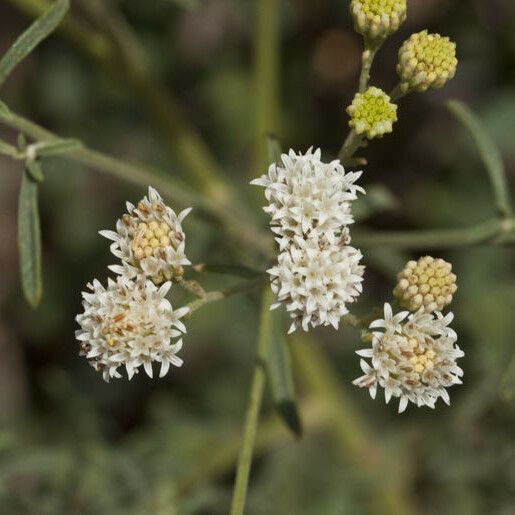
Plant Overview
Often known as Loomis's Thimblehead, this delicate desert dweller is a hidden gem of the American Southwest. Found dancing in the dry breezes of Arizona and New Mexico, its airy, skeletal structure earns it the reputation of being a "desert lace." While it looks fragile enough to blow away, it is a hardy survivor perfectly adapted to the rocky, sun-drenched slopes of the high desert.
🔍 How to Identify
- 🌼 Flower Clusters: Look for small, rounded pom-poms of tiny white to pale lavender flowers. Unlike typical daisies, these lack the long outer petals, giving them a distinct "thimble" or "button" appearance.
- 🌿 Thread-like Leaves: The foliage is deeply divided into very narrow, almost hair-like segments. This "misty" look helps the plant reduce water loss in intense heat.
- 📏 Upright Frame: It typically grows as a slender, branching herb, standing between 1 to 2 feet tall, often appearing somewhat see-through from a distance.
🏡 In Your Garden
- 🌵 Drainage is King: In a garden setting, this plant is a specialist. It thrives in gravelly, poor soils where other plants might struggle. It possesses a deep taproot, meaning it hates being moved once established, but it is incredibly drought-tolerant.
- 🦋 Pollinator Oasis: Despite its subtle appearance, it is a high-traffic station for native bees and small butterflies. Because it often blooms in late summer and autumn, it provides a critical "last meal" for pollinators before the cold sets in.
⚠️ Safety & Toxicity
- ✅ General Safety: Hymenothrix loomisii is not considered a high-risk toxic plant. It is generally safe to have in areas where wildlife or pets roam.
- 🧤 Skin Sensitivity: Like many members of the Aster (Sunflower) family, some people may experience "Compositae dermatitis"—a mild itchy rash—after handling the foliage with bare hands for extended periods.
✨ Fun Fact
The name Hymenothrix is derived from the Greek words for "membrane" and "hair." This refers to the tiny, translucent scales attached to its seeds, which act like miniature parachutes to help the wind carry them across the desert floor!

Detailed Care Instructions

Some plants require more regular watering than others, which should be done every few days. It's critical to maintain the soil moist all of the time. The water requirements of the same plant placed in pots with varying sizes will differ. Because the water in the smaller pot evaporates faster than the water in the larger pot, it will require more watering. Regardless of pot size, the surface should constantly be maintained moist.








