Plant Overview
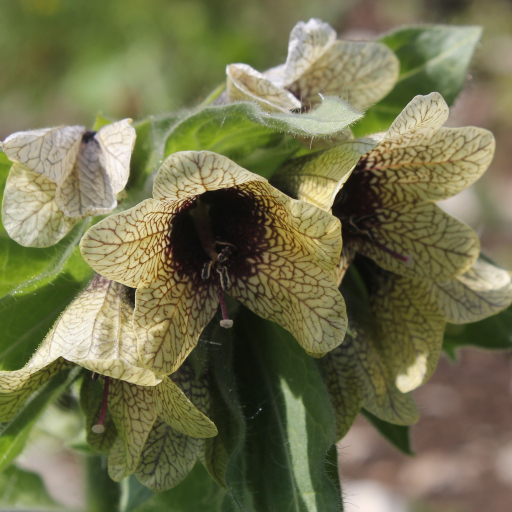
Often called "Black Henbane" or "Stinking Nightshade," this plant has a dark, spellbinding reputation that spans centuries. From its use in medieval "flying ointments" to its role as a ritual poison in Ancient Greece, it is one of the most notorious members of the nightshade family. Though it possesses a strange, haunting beauty with its intricate "veined" flowers, it is a plant that demands absolute respect and distance.
🔍 How to Identify
- 👁️ The Flowers: Distinctive funnel-shaped blooms that are a creamy, pale yellow, etched with a heavy network of deep purple or brownish-violet veins.
- 🌿 The Foliage: Large, grayish-green leaves that are deeply lobed and covered in a layer of sticky, glandular hairs.
- 👃 The Scent: The entire plant emits a heavy, unpleasant, and somewhat foetid odor, especially when the leaves are bruised or the sun is high.
🏡 In Your Garden
- 🌱 Growth Habit: As a biennial, it spends its first year as a low-lying rosette of leaves, only bolting into a tall, sturdy flowering stalk (up to 3 feet) in its second year.
- 🏜️ Soil Nuance: It thrives in disturbed, nitrogen-rich soils and is often found near old ruins, farmyards, or waste ground. It has a long taproot, which makes it incredibly difficult to transplant once established; it prefers to stay exactly where it germinated.
⚠️ Safety & Toxicity
- 💀 Status: EXTREMELY TOXIC. All parts of the plant, especially the seeds and leaves, contain potent alkaloids (hyoscyamine and scopolamine).
- 🚫 Details: Ingestion can lead to severe hallucinations, rapid heart rate, convulsions, and even death. It is dangerous to children and pets, and even handling the plant with bare eyes or skin can cause pupil dilation or irritation. Always wear gloves if you must remove it.
✨ Fun Fact
In Greek mythology, it was believed that the dead wandering the banks of the River Lethe were crowned with Henbane to ensure their eternal forgetfulness and descent into the underworld.

Detailed Care Instructions
| Lighting | Full Sun |
| Toxicity | Poisonous |
| Hardiness Zones | Min 5A |
To grow Hyoscyamus Niger, also known as henbane, follow these steps:
- Choose the right location: Henbane prefers a sunny spot with well-draining soil. It can tolerate a range of soil types, including sandy or loamy soils.
- Prepare the soil: Before planting, prepare the soil by removing any weeds or grass. Loosen the soil with a garden fork or tiller, and amend it with organic matter such as compost or aged manure to improve fertility and drainage.
- Sow seeds: Henbane is typically grown from seeds. Sow the seeds directly into the prepared soil in early spring after the last frost. Scatter the seeds evenly on the soil surface and lightly press them into the soil. Keep in mind that henbane seeds are toxic, so handle them with care and avoid ingesting or touching your face before washing hands.
- Watering: Water the seeds gently after sowing, keeping the soil moist but not waterlogged. You can use a misting spray bottle for initial watering to avoid displacing the seeds. As the plants grow, water them regularly to keep the soil consistently moist.
- Thin out seedlings: Once the seedlings reach a few inches in height, thin them out to provide enough space for each plant to grow and thrive. Space the seedlings about 12-18 inches apart.
- Mulch: Apply a layer of organic mulch around the plants to help retain soil moisture, regulate temperature, and suppress weed growth.
- Fertilize: Henbane generally doesn't require heavy fertilization. However, if the soil is poor, you can apply a balanced organic fertilizer during the growing season to promote healthier growth.
- Pruning: Henbane usually grows to a height of 2-3 feet. If necessary, you can trim back leggy or straggly growth to maintain a more compact and bushy shape.
- Pests and diseases: Henbane is typically resistant to pests and diseases. However, keep an eye out for common garden pests like aphids or slugs. If detected, use appropriate organic pest control methods to manage the issues.
- Harvesting: The leaves, seeds, and roots of henbane have medicinal uses, but they are highly toxic if consumed in large quantities or without proper knowledge. If you wish to harvest any plant parts, it is crucial to research and consult with a knowledgeable herbalist or healthcare professional who is familiar with the plant's toxins and medicinal properties.
Remember to always handle henbane with caution and ensure it isn't accessible to children or pets due to its toxic nature.

Place in a bright room that is sun drenched almost all day. Or directly in a south-facing window.

Hyoscyamus Niger is a plant that requires moderate watering. The soil should remain moist but not soggy. It is important to water the plant thoroughly, allowing the water to reach the roots. Be careful not to overwater the plant as this can lead to root rot. The plant should be watered when the top inch of soil feels dry to the touch. It is best to water early in the day to allow the plant to dry off before nightfall, which can reduce the risk of fungal growth. Watering from the bottom is also an option, allowing the plant to absorb water through its roots.
To fertilize this plant, begin by choosing a high-quality fertilizer that contains a balanced mix of key nutrients, such as nitrogen, phosphorus, and potassium. When ready to apply, make a solution by following the manufacturer's instructions regarding dilution and apply it to the soil around the base of the plant. Be careful not to directly apply the fertilizer to the leaves or stem of the plant. It is best to fertilize when the plant is actively growing, typically during the spring and summer months. Avoid over-fertilizing, as this can lead to excessive growth and potential damage to the plant.
The ideal soil for Hyoscyamus Niger plant is a well-draining soil with a pH between 6 and 7.5. It should be rich in organic matter and have good moisture retention ability. The soil should be loose and friable with good porosity for optimum root development. It should not be too compact or heavy, as this could hinder root growth and cause waterlogging. Incorporating a balanced fertilizer before planting can also be beneficial for the plant's growth. The soil should be kept moist but not waterlogged, and good drainage is important to prevent root rot. It is important to avoid using soil that has been previously used for growing plants in the same family as Hyoscyamus Niger, as it may have accumulated disease or pests.
- First, you will need to collect the seeds of the plant. Choose mature seeds that are plump and firm.
- Next, prepare a well-draining potting mix using a combination of peat moss, perlite, and vermiculite.
- Fill a small plant pot with the potting mix and moisten the soil with water.
- Place the seeds on top of the soil, and cover them with a thin layer of soil.
- Water the pot gently, making sure not to disturb the seeds.
- Place the pot in a bright, warm location, such as a windowsill, where the temperature is around 70-80°F.
- Keep the soil moist but not waterlogged. You can cover the pot with a plastic bag to retain moisture.
- In about 2-3 weeks, the seeds should start to germinate. Once the seedlings emerge, remove the plastic bag.
- Continue to keep the soil moist and provide plenty of light. When the seedlings have grown to about 4-6 inches tall, transplant them into larger pots or into the garden.
- Be sure to space the plants about 12 inches apart in the garden to allow them to grow to their full size.
- Water the plants regularly, and fertilize them every 2-3 weeks with a balanced fertilizer.
- Prune the plants as needed to promote bushy growth and control their size.








