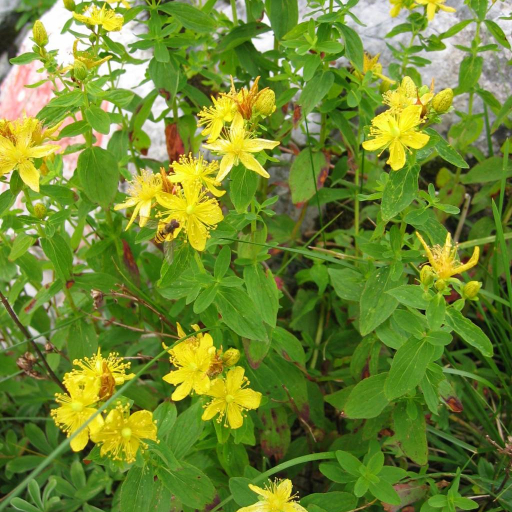
Plant Overview
Often called the Imperforate St. John's-wort, this golden-hued perennial is the moisture-loving cousin of the more famous common St. John's-wort. While it shares the same sun-bright glow, it prefers the quiet dampness of meadow edges and riverbanks. In European folklore, these flowers were traditionally gathered on St. John’s Eve to protect homes from lightning and "evil spirits."
🔍 How to Identify
- 🟨 The Golden Bloom: Features star-shaped, bright yellow flowers with five petals. If you look closely at the edges of the petals, you’ll see tiny black dots—these are actually glands containing essential oils.
- 🟩 Square Stems: A key identifier is the stem; unlike its round-stemmed relatives, Hypericum maculatum has a distinctly square stem with four raised ridges running down its length.
- 🍃 "Imperforate" Leaves: While other species look like they are full of pinpricks when held to the light, this plant’s leaves are mostly solid, with a dense network of visible veins instead of translucent holes.
🏡 In Your Garden
- 💧 Damp Foundations: Unlike many Mediterranean herbs, this plant thrives in heavy, moist soil. It is a perfect choice for those "problem areas" in the garden that stay soggy or near the edges of a backyard pond.
- 🐝 Pollinator Magnet: It is a vital resource for hoverflies and bees. Because it blooms in mid-to-late summer, it provides a crucial nectar bridge when other spring flowers have already faded.
⚠️ Safety & Toxicity
- 🐾 Mildly Toxic: Contains a compound called hypericin. While it’s not usually fatal, it can cause "photosensitivity" in grazing animals like horses or sheep, making their skin painfully sensitive to sunlight.
- 👶 Keep Away from Kids: While it has herbal uses, raw ingestion can cause stomach upset in children or pets. It is best enjoyed visually rather than medically without professional guidance.
✨ Fun Fact
The specific epithet maculatum is Latin for "spotted." This refers to the black glandular dots on the flowers and leaves which, when crushed between your fingers, release a deep blood-red oil that was once used as a natural dye for wool and silk.

Detailed Care Instructions
To grow Hypericum maculatum, commonly known as St. John's Wort, follow these steps:
- Select a suitable location: Hypericum maculatum prefers full sun to partial shade. Choose a spot in your garden that receives at least 6 hours of direct sunlight each day, preferably with well-draining soil.
- Prepare the soil: Ensure the soil is fertile and well-draining. You can amend the soil with organic matter like compost or aged manure to improve its structure and fertility.
- Sow seeds or plant seedlings: You can start Hypericum maculatum from seeds or purchase young plants from a nursery. Sow the seeds in early spring or early fall directly into the prepared soil. If using seedlings, plant them in the ground, spacing them about 12-18 inches apart.
- Watering: Keep the soil evenly moist but not waterlogged. Water the plants deeply once or twice a week, depending on rainfall and the moisture needs of your specific location.
- Mulching: Apply a layer of organic mulch around the plants to retain moisture, suppress weeds, and regulate soil temperature. Keep the mulch a few inches away from the stems to prevent rotting.
- Fertilizing: Hypericum maculatum generally does not require heavy fertilization. However, you can apply a balanced slow-release fertilizer once a year in early spring to provide essential nutrients. Follow the instructions on the fertilizer package for application rates.
- Pruning: Prune the plants lightly in early spring to remove dead or damaged stems and to maintain a compact shape. Avoid heavy pruning as Hypericum maculatum bears flowers on the current year's growth.
- Pests and diseases: St. John's Wort plants are relatively resistant to pests and diseases. However, they may occasionally encounter aphids or leaf spot diseases. Monitor your plants regularly and take appropriate measures if any issues arise.
- Winter care: Hypericum maculatum is cold hardy, but it's beneficial to provide a layer of mulch over the root zone in winter to protect them from extreme freeze-thaw cycles.
With proper care and maintenance, Hypericum maculatum will steadily grow, producing its beautiful yellow flowers and red berries, attracting pollinators and adding visual interest to your garden.

Place in a bright room that is sun drenched almost all day. Or directly in a south-facing window.

To properly water this plant, it is important to first check the soil moisture level. Stick your finger about an inch into the soil and if it feels dry, it's time to water. When watering, avoid getting the leaves wet as this can lead to fungal issues. Slowly pour water around the base of the plant until it begins to drain out of the bottom of the pot. Allow the top inch of soil to dry out before watering again. In general, this plant prefers moderate watering, not too much or too little.
To fertilize this plant, use a balanced fertilizer with equal parts nitrogen, phosphorus, and potassium. Apply the fertilizer once in the early spring and again in midsummer. Be sure to follow the manufacturer's instructions for the specific fertilizer you are using. Water the plant thoroughly after applying fertilizer to help it absorb the nutrients. Avoid over-fertilizing, as this can damage the plant and cause it to produce fewer flowers.
Hypericum Maculatum plant prefers well-draining soil with a pH level between 5.5 and 7.5. The soil should be fertile and rich in organic matter. Sandy loam or loamy soil with good drainage is an ideal choice for this plant. Ensuring proper soil moisture is essential, as the plant does not tolerate waterlogged soil. Adding organic compost to the soil helps to improve its drainage and nutrient content. It is also advisable to amend the soil with perlite or vermiculite to enhance its drainage properties. Avoid using heavy clay soils or compacted soil, as it can inhibit the plant from growing to its fullest potential.
Hypericum Maculatum is a flowering perennial herbaceous plant that belongs to the family Hypericaceae. It is native to several regions of the world and is commonly used in herbal medicine. In order to propagate this plant, the following steps may be taken:
- Take cuttings from the plant: Cut a healthy stem from the plant, making sure to take at least 6 inches of the stem with several leaves attached. Use a sharp knife or pruning shears to make a clean cut.
- Prepare a container: Fill a pot with a well-draining soil mix, leaving enough space at the top for the cutting to be inserted.
- Trim the cutting: Remove the bottom leaves from the cutting, leaving only the top few. This will allow the cutting to focus its energy on growing new roots.
- Apply rooting hormone: Dip the cut end of the cutting into rooting hormone powder, which will encourage root growth.
- Insert the cutting: Make a hole in the soil mix with your finger or a pencil, and insert the cutting into the hole. Firm the soil around it to ensure that it stays in place.
- Water the cutting: Water the cutting thoroughly, making sure that the soil is evenly moist but not waterlogged.
- Provide light: Place the container in a location with bright, indirect light. Avoid direct sunlight, as this can scorch the cutting.
- Monitor the cutting: Check the soil regularly to ensure that it stays moist, and keep an eye on the cutting for signs of growth. You should begin to see new growth within a few weeks.
- Transplant the cutting: Once the cutting has developed a good root system and several new leaves, it can be transplanted into a larger pot or directly into the garden.








