Plant Overview
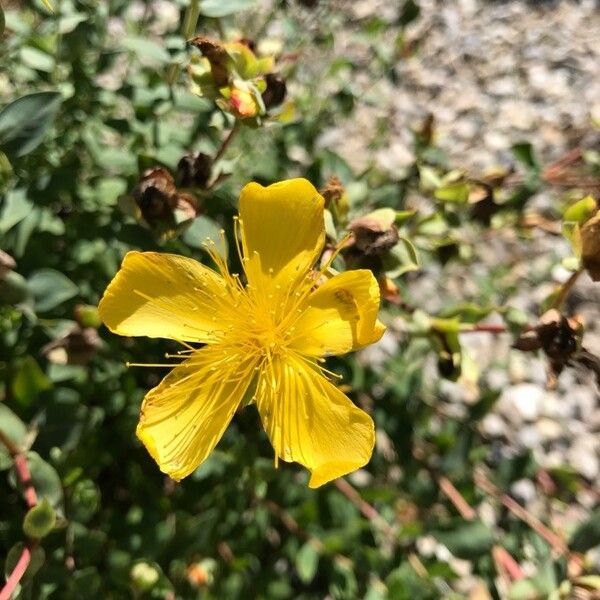
Often described as a miniature sun resting on a silver-green carpet, Hypericum polyphyllum (commonly known as the Large-flowered St. John's Wort) is a prized gem for rock gardens. Native to the rocky slopes of Turkey and the Balkans, this low-growing perennial is beloved for its "exploding" golden blooms that seem far too large for its tiny, delicate foliage.
🔍 How to Identify
- ☀️ The Flowers: Large, bright yellow blossoms featuring five waxy petals and a dramatic central "brush" of long, protruding stamens that look like a golden firework.
- 🍃 The Foliage: Small, oval, blue-green leaves that grow in dense, tidy mounds, providing a cool-toned contrast to the warm flowers.
- 🌱 Growth Habit: A prostrate or mounding habit, rarely exceeding 6-12 inches in height, making it look like a lush, flowering cushion.
🏡 In Your Garden
- 🪨 The Rock Garden Specialist: This plant evolved for mountain life; it craves gritty, well-draining soil and will quickly rot if its "feet" stay wet. It is the perfect candidate for crevices in stone walls or gravel beds.
- ☀️ Sun Seeker: While it can handle a bit of afternoon shade in scorching climates, it needs full sun to produce its signature heavy bloom.
- ⚓ Stability Matters: Like many in its family, it develops a deep taproot to find water. Because of this, it dislikes being moved once established—pick its "forever home" carefully!
⚠️ Safety & Toxicity
- 🐾 Pet Warning: Most Hypericum species contain hypericin. While rarely fatal, if ingested in large quantities by cats or dogs, it can cause digestive upset and photosensitivity (skin irritation when exposed to the sun).
- 👶 Human Caution: Handling the plant is generally safe, but those with sensitive skin should wear gloves to avoid potential mild irritation from the sap.
✨ Fun Fact
The name "Hypericum" translates roughly from Greek to "above an icon." In ancient times, these flowers were placed above images and statues to ward off evil spirits during the midsummer festival of St. John’s Day!

Detailed Care Instructions
Here are some tips on how to grow Hypericum Polyphyllum plant:
- Lighting: Hypericum Polyphyllum plants prefer bright indirect sunlight. Find a location with bright filtered light, such as a windowsill or a spot under a shade tree.
- Soil: Use well-draining soil that is rich in organic matter. A mix of peat moss, perlite, and compost would work well. Avoid heavy clay soils that can lead to root rot.
- Watering: Keep the soil evenly moist but not soggy. Water the plant when the top inch of soil feels dry. Avoid overwatering as it can cause root rot.
- Temperature and humidity: Hypericum Polyphyllum plants prefer temperatures between 65-75°F (18-24°C). They can handle higher humidity but do well in average room humidity levels.
- Fertilizer: Feed the plant with a balanced liquid houseplant fertilizer once a month during the growing season (spring and summer). Dilute the fertilizer to half strength to avoid burning the plant's roots.
- Pruning: Prune the plant in spring to remove any dead or damaged branches and to shape the plant. This will promote bushier growth.
- Propagation: Hypericum Polyphyllum plants can be easily propagated through stem cuttings. Take cuttings in spring or early summer, dip them in rooting hormone, and plant them in a moist soil mixture. Keep the soil moist until roots develop.
- Pests and diseases: Hypericum Polyphyllum plants are generally resistant to pests and diseases. However, keep an eye out for common houseplant pests like aphids, mealybugs, and spider mites. Treat any infestations promptly.
Remember to provide regular care, including proper watering and lighting, to ensure your Hypericum Polyphyllum plant thrives.
To water this particular plant, it is important to understand its watering needs. It is best to provide it with moderate watering, neither too much nor too little. Over watering can lead to root rot and under watering can cause the plant to wilt and die.
One effective way to test the plant's watering needs is to stick your finger 1-2 inches into the soil and feel for moisture. If the soil feels dry, it is time to water. If it feels moist, the plant can go without watering for a few more days.
Another important factor to consider is the type of soil the plant is growing in. If the soil is not well-draining, water may accumulate and cause the plant to rot. To prevent this, it is recommended to use a well-draining soil mix and ensure proper drainage from the pot or planting bed.
Finally, it is essential to provide the plant with water at the base and avoid getting water on the leaves. Water on the leaves can cause them to rot and provide a breeding ground for pests and diseases. Using a watering can with a narrow spout or a drip irrigation system can help ensure that water is delivered directly to the soil and not the foliage.
To fertilize Hypericum Polyphyllum, you should follow these instructions:
- Use a balanced, slow-release fertilizer with an N-P-K ratio of 10-10-10 or similar.
- Apply the fertilizer in early spring, before new growth appears.
- Measure the recommended amount of fertilizer according to the package instructions.
- Sprinkle the fertilizer evenly around the base of the plant, making sure to avoid direct contact with the stems or foliage.
- Gently work the fertilizer into the top layer of soil using a hand rake or garden fork.
- Water the plant thoroughly after fertilization to help the nutrients penetrate the soil.
- Repeat the fertilization process once or twice during the growing season, following the same steps outlined above.
- Remember to monitor the plant's response to fertilization and adjust the frequency or dosage as needed.
The recommended soil for the Hypericum Polyphyllum plant should be well-draining and enriched with organic matter. The pH level of the soil should be slightly acidic to neutral, with a range of 5.5 to 7.0. A mixture of peat moss, perlite, and sand would be suitable for the plant to thrive. It is important to avoid using heavy clay soils or compacted soils as they can restrict root growth and hinder plant development. The plant prefers moist soil, but not waterlogged, so proper drainage is essential. A good balance of nutrients is essential, so regular fertilization is recommended.
Hypericum polyphyllum is a perennial plant that can be propagated through various methods. Here are the detailed steps for propagating Hypericum polyphyllum:
- Seeds:
- Collect mature seeds from the plant during the fall season when seed capsules have turned brown.
- Remove the seed capsules from the plant and allow them to fully dry.
- Gently crush the dry capsules to release the small brown seeds.
- Fill seed trays or pots with a well-draining seed-starting mix.
- Sow the seeds on the surface of the soil and lightly press them down.
- Mist the soil surface with water to keep it moist, but not waterlogged.
- Place the trays or pots in a warm location with indirect sunlight.
- Germination can take several weeks. Once the seedlings are large enough, transplant them into individual pots or a garden bed.
- Collect mature seeds from the plant during the fall season when seed capsules have turned brown.
- Stem cuttings:
- Take stem cuttings from the Hypericum polyphyllum plant during the late spring or early summer.
- Select healthy, non-flowering stems that are about 4-6 inches long.
- Using clean, sharp garden shears, make a clean cut just below a leaf node.
- Remove the lower leaves, leaving a few leaves at the top intact.
- Dip the cut end of the stem in a rooting hormone powder to encourage root development.
- Fill a small pot with a well-draining potting mix or perlite-vermiculite mix.
- Create a small hole in the soil using a pencil or your finger and place the stem cutting into it.
- Gently press the soil around the stem to hold it in place.
- Mist the cutting with water and cover the pot with a plastic bag to create a humid environment.
- Place the pot in a warm, bright location with indirect sunlight.
- Mist the cutting regularly to keep the soil moist, but avoid over-watering.
- After a few weeks, roots should develop. Once the roots are established, transplant the cutting into a larger pot or garden bed.
- Take stem cuttings from the Hypericum polyphyllum plant during the late spring or early summer.
- Division:
- Choose a healthy Hypericum polyphyllum plant that has been growing for at least a couple of years.
- Dig up the plant carefully, trying not to damage the roots.
- Shake off excess soil to expose the root system.
- Locate the natural divisions of the plant, which will usually be evident as separate clumps or sections.
- Use a clean, sharp garden knife or spade to separate these divisions by cutting through the root system.
- Make sure each division has a good amount of roots and several stems or shoots.
- Replant each division into individual pots or directly into a garden bed.
- Water the divisions thoroughly after replanting to promote root establishment.
- Place the newly divided plants in a partially shaded location initially, gradually increasing their exposure to direct sunlight.
Following these propagation methods, you can successfully propagate Hypericum polyphyllum and expand your collection. Remember to provide proper care, including regular watering, sufficient sunlight, and appropriate soil conditions for the best growth.
- Choose a healthy Hypericum polyphyllum plant that has been growing for at least a couple of years.








