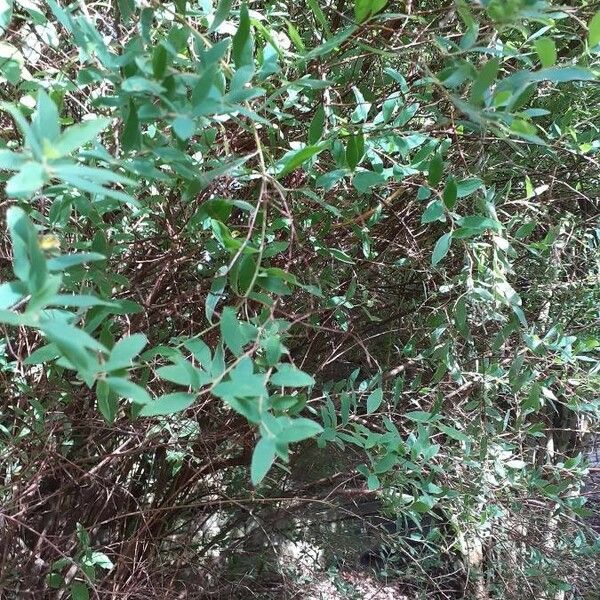
Plant Overview
Often called Roeper’s St. John’s Wort, this golden-bloomed shrub hails from the mist-shrouded mountains and forest margins of Eastern and Southern Africa. It looks like a captured sunburst, brightening garden borders with its glossy foliage and explosive yellow flowers. In its native habitat, it is a sign of high-altitude beauty, often found where the forest meets the grassland.
🔍 How to Identify
- 🌼 Golden Blooms: Large, five-petaled yellow flowers featuring a massive central cluster of long, hair-like stamens that look like a floral firework.
- 🍃 Punctate Leaves: Elliptic green leaves that, when held up to the light, reveal tiny translucent "oil glands" which look like microscopic pinpricks.
- 🌿 Reddish Stems: The young stems often have a distinctive reddish-brown hue and a slightly square shape before they mature into woody branches.
🏡 In Your Garden
- ⛰️ Mountain Origins: Because it naturally grows on high plateaus, it loves bright light but appreciates "cool feet." It thrives best in well-draining soil that stays moist but never becomes a swampy mess.
- ✂️ Pruning Needs: It can become a bit leggy if left to its own devices. Light pruning after the flowering season helps maintain a bushy, compact shape and encourages more blooms for the next year.
⚠️ Safety & Toxicity
- 🐾 Photosensitivity: This plant contains hypericin. If pets (especially horses or livestock) eat large amounts, it can cause their skin to become dangerously sensitive to sunlight, leading to severe sunburns.
- 👶 Keep Away: While not considered "deadly" to humans, ingesting the leaves or flowers can cause stomach upset. It is best kept as an ornamental piece rather than a culinary one.
✨ Fun Fact
- 🖼️ Icon Protection: The genus name Hypericum comes from the Greek words hyper (above) and eikon (picture). This refers to the ancient tradition of hanging the flowers over religious icons to ward off evil spirits during midsummer festivals.

Detailed Care Instructions

Place in a bright room that is sun drenched almost all day. Or directly in a south-facing window.

Some plants require more regular watering than others, which should be done every few days. It's critical to maintain the soil moist all of the time. The water requirements of the same plant placed in pots with varying sizes will differ. Because the water in the smaller pot evaporates faster than the water in the larger pot, it will require more watering. Regardless of pot size, the surface should constantly be maintained moist.








