Plant Overview
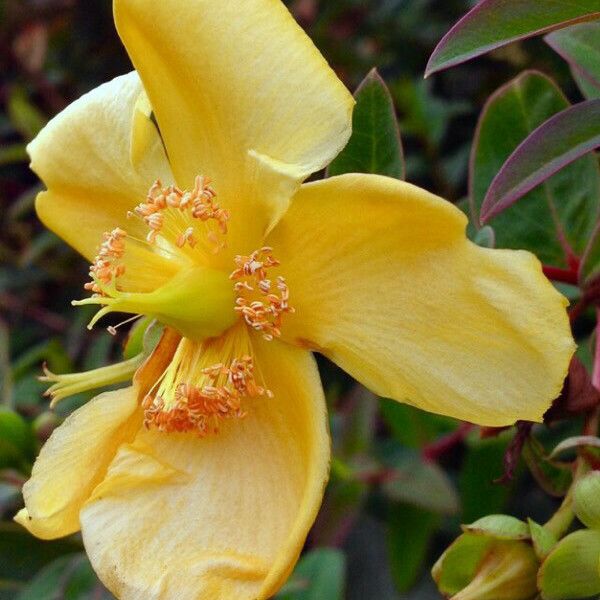
Known as the "Hidcote" St. John’s Wort, this bushy beauty is famous for its saucer-sized golden blooms that seem to glow even on cloudy days. Named after the legendary Hidcote Manor Garden in England, it is a reliable garden staple prized for its rugged nature and spectacular summer-to-autumn show. It acts as a bridge between a groundcover and a shrub, filling garden gaps with effortless elegance.
🔍 How to Identify
- 🌼 The Flowers: Large, cup-shaped blossoms of brilliant golden yellow, featuring a dramatic burst of fine, hair-like stamens in the center that look like tiny eyelashes.
- 🍃 The Foliage: Rich, dark-green leaves that are lance-shaped and grow in pairs. In milder climates, it remains semi-evergreen, keeping its color throughout the winter.
- 🌿 Growth Habit: A dense, rounded shrub that typically reaches about 3 to 4 feet in height and width, creating a tidy "mound" of gold and green.
🏡 In Your Garden
- ✂️ Pruning Nuance: While it is incredibly hardy, 'Hidcote' can become "leggy" or woody over time. To keep it looking like a lush carpet of flowers, give it a hard prune in early spring to encourage fresh, vigorous new growth.
- ☀️ Sun vs. Shade: It is quite forgiving of lighting; however, more sun translates to more flowers. If planted in deep shade, you will get beautiful green leaves but very few of those iconic golden cups.
- 💧 Drainage is Key: This plant is "tough as nails" regarding soil quality, but it will protest if left in standing water. It prefers well-drained spots and is surprisingly drought-tolerant once its root system is established.
⚠️ Safety & Toxicity
- 🐾 Status: Mildly toxic to pets and livestock.
- 🧴 Details: The plant contains hypericin, which can cause photosensitivity (skin sensitivity to sunlight) if ingested in large quantities. While rarely fatal for household pets, it’s best to keep curious puppies or kittens from chewing on the leaves to avoid stomach upset.
✨ Fun Fact
The name "St. John’s Wort" refers to St. John the Baptist, as the plant traditionally begins its peak bloom around St. John’s Eve (June 24th). In medieval times, people would hang the flowers over their doorways to protect the household from "evil spirits" and lightning!

Detailed Care Instructions
To grow Hypericum X Hidcoteense plants, also known as St. John's Wort, follow these steps:
- Choose a suitable location: Hypericum X Hidcoteense prefers full sun to partial shade. Choose a spot in your garden that receives at least 4-6 hours of direct sunlight per day.
- Prepare the soil: Hypericum plants prefer moist, well-draining soil. Amend the soil with compost or organic matter to improve drainage if necessary. Avoid heavy clay soils.
- Planting: Plant the Hypericum X Hidcoteense plants in spring or fall. Dig a hole twice as wide and deep as the root ball. Place the plant in the hole at the same soil level as it was in the nursery container. Backfill the hole with soil, gently firming it around the root ball.
- Watering: Water the plants thoroughly immediately after planting and regularly thereafter while they establish. Keep the soil consistently moist but not waterlogged. During hot, dry periods, water deeply to ensure the roots stay hydrated.
- Mulching: Apply a layer of organic mulch around the base of the plants to help retain moisture, suppress weeds, and moderate soil temperature.
- Pruning: Prune the Hypericum X Hidcoteense plants in early spring or late winter to remove any dead or damaged branches. This will promote healthy growth and maintain an attractive shape. Light pruning during the growing season can also be done to shape the plant if needed.
- Fertilizing: Apply a balanced slow-release fertilizer in spring or use a liquid fertilizer according to the manufacturer's instructions. Avoid over-fertilizing, as this can lead to excessive vegetation growth and reduced flower production.
- Pests and diseases: Hypericum plants are generally pest and disease-resistant but may occasionally be affected by aphids or scale insects. Inspect your plants regularly and take appropriate measures to control pest infestations if necessary.
- Division and propagation: Hypericum X Hidcoteense can be propagated through division in early spring. Dig up the established plant, divide it into sections, ensuring each division has roots attached, and replant them in suitable locations.
By following these steps and providing the necessary care, your Hypericum X Hidcoteense plants should grow and thrive in your garden.
To water this plant, it is recommended to first check the soil moisture level by sticking your finger about an inch into the soil. If it feels dry, then it is time to water. Use a watering can or hose with a gentle spray nozzle to slowly and evenly water the soil around the base of the plant, making sure the water reaches the roots. Avoid getting water on the leaves or flowers, as this can cause disease. Watering once a week should be sufficient, but adjust the frequency based on the plant's needs and environmental conditions. During rainy periods, reduce watering accordingly.
Apply a balanced fertilizer to the plant during the growing season, following the manufacturer's instructions. Water the plant thoroughly before and after application of fertilizer. Avoid fertilizing during periods of drought or extreme heat.
When selecting soil for this plant, it is important to choose a soil that is well-draining and moist, but not waterlogged. The soil should be rich in organic matter and have a slightly acidic pH level. It is best to avoid heavy clay soils which can retain too much water and not allow for adequate drainage. Adding compost or other organic matter to the soil can improve its structure and fertility. The soil should also be free of any contaminants or pathogens that could harm the plant. When planting, it is important to ensure the root ball is level with the soil surface and to water the plant thoroughly to help it establish in its new environment.
To propagate this plant, you can take stem cuttings in the early summer when the plant is actively growing. Choose healthy stems that are about 4-6 inches long, and make sure they have a few leaves on them. Cut the stems just below a leaf node, and remove any leaves from the bottom two inches of the stem.
Next, dip the cut end of the stem into rooting hormone, which will help it develop roots. Then plant the stem in a small container filled with moist potting mix. Make a hole in the soil with a pencil or your finger, and insert the stem so that the bottom inch is covered with soil.
Cover the container with a plastic bag to create a humid environment for the plant. Place the container in a bright, warm spot, but not in direct sunlight. Keep the soil moist but not waterlogged, and mist the plant with water occasionally to keep the leaves hydrated.
After a few weeks, the stem should start to develop roots. You can test this by gently tugging on the stem - if you feel resistance, the roots have begun to grow. At this point, you can remove the plastic bag and continue to care for the plant as you would a mature Hypericum X Hidcoteense plant.








