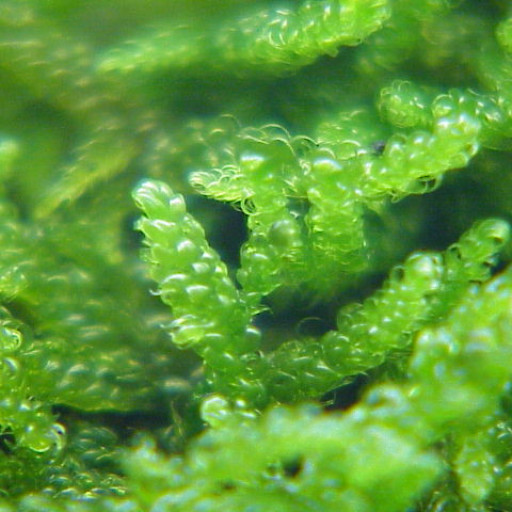
Plant Overview
Known as the Cypress-leaved Plait-moss, this resilient green carpet is one of the most widespread and adaptable mosses on the planet. Its name comes from its delicate, overlapping leaves that look like miniature versions of a Cypress tree branch or a finely woven braid. Whether it is softening the edges of a stone wall or draping over a fallen log, this moss is a master of creating a lush, fairytale atmosphere in any environment.
🔍 How to Identify
- 🌿 The "Braid" Look: The tiny leaves are curved and overlap closely, giving the stems a smooth, plaited, or scaly appearance similar to a cypress twig.
- 🎨 Variable Color: Depending on its environment, it can range from a bright, vivid lime green to a deep olive or even a golden-brownish hue when exposed to more sun.
- 📐 Growth Habit: It forms dense, flat mats that creep horizontally across surfaces rather than growing in upright tufts.
🏡 In Your Garden
- 🦎 The Great Generalist: This is the "chameleon" of the moss world. It isn't picky and will happily grow on tree bark, acidic soil, rocks, or even old roof tiles, making it perfect for rock gardens or "moss masonry."
- ☁️ Drought Survival: While it loves humidity, it is remarkably tough. During dry spells, it simply shrivels and turns darker to protect itself, "waking up" and turning bright green the moment it touches water.
⚠️ Safety & Toxicity
- ✅ Safe Status: Hypnum cupressiforme is considered non-toxic to humans, dogs, cats, and horses.
- 🐜 Nature's Hotel: Because it forms such dense mats, wild moss can often harbor tiny insects, mites, or spores. If you are moving it into a terrarium, give it a gentle rinse to ensure you aren't bringing unwanted hitchhikers into your home.
✨ Fun Fact
The genus name Hypnum is derived from the Greek word Hypnos, meaning "sleep." In ancient times, this soft, springy moss was harvested and dried to stuff pillows and mattresses, as it was believed to have properties that helped cure insomnia and ensure sweet dreams.

Detailed Care Instructions
To grow a Hypnum cupressiforme plant, follow these recommended steps:
- Gather plant materials: Look for a healthy clump of Hypnum cupressiforme plants in a damp and shaded area, such as a mossy forest floor or a wetland. Carefully collect a small portion of the clump without damaging the surrounding environment.
- Prepare a growing environment: Hypnum cupressiforme prefers a shaded and damp environment. Fill a shallow tray or container with a mix of equal parts of peat moss, sand, and compost to create a suitable growing medium for the plant.
- Transplant the moss: Gently place the collected moss clump onto the prepared growing medium and press it down to ensure good contact between the moss and the medium. Avoid burying the moss too deep; it should be visible on the surface.
- Provide moisture: Mist the moss with clean water to keep it moist but not soaking wet. Keep the growing medium and moss damp at all times. Place the tray or container in a shaded area or use a translucent cover to reduce direct sunlight.
- Maintain humidity: Hypnum cupressiforme thrives in a humid environment. To maintain humidity, cover the tray with a transparent lid or use a plastic bag with some small holes to allow for air circulation. Mist the moss whenever it appears to be drying out.
- Provide indirect light: Place the tray or container in a location with indirect sunlight. Too much direct sunlight can cause the moss to dry out or burn. Filtered sunlight or artificial light can also be used.
- Regular care: Mist the moss regularly to keep it moist and monitor the water levels in the tray or container to prevent drying out. Remove any debris or dead moss that may accumulate on the surface. Avoid overwatering, as excessive moisture can lead to mold or rot.
- Encourage growth: Hypnum cupressiforme can be encouraged to spread by occasionally separating a small section of the moss and gently pressing it onto nearby areas of the growing medium. Over time, the new sections will take root and grow.
By following these steps and providing proper care, you should be able to successfully grow your Hypnum cupressiforme plant.

Place in a window with dappled sun or a spot in the middle of a room. Or directly in a window facing west or east.

To water this plant, you should first ensure that the soil is slightly damp to the touch. This can be achieved by inserting your finger roughly 1-2 inches into the soil and checking for moisture. If the soil feels dry, you should give the plant a thorough watering, taking care not to overwater it. You can do this by slowly pouring water into the soil around the base of the plant, allowing it to soak in completely before stopping. It is important not to let water stand in the plant's saucer or tray, as this can cause root rot. Instead, you can empty any excess water out of the saucer or tray after watering, and allow the soil to dry out slightly before watering again. This plant prefers to be kept moist but not waterlogged, so you should aim to water it whenever the top of the soil begins to feel dry to the touch.
To fertilize this plant, you should begin by selecting a fertilizer that is designed for use with mosses and other similar plants. The fertilizer should be low in nitrogen and high in phosphorus and potassium, as this will help to promote healthy growth without encouraging excessive vegetative growth. You can apply the fertilizer by mixing it with water and spraying it directly onto the surface of the plant, making sure to cover all areas evenly. Alternatively, you can mix the fertilizer into the soil around the base of the plant, taking care not to disturb the delicate root system. It is important to avoid over-fertilizing, as this can lead to fertilizer burn and can also stimulate excessive growth that can be difficult to manage. Instead, aim to fertilize your Hypnum Cupressiforme plant once or twice a year at most, and always follow the instructions on the label carefully to ensure that you are providing the right amount of nutrients.
The ideal soil for this plant should be acidic with a pH range of 5.0 to 6.0. It should be well-draining and rich in nutrients with a high proportion of organic matter. A mixture of peat moss, sphagnum moss, and well-composted leaf litter would be suitable. The soil should be kept consistently moist but not waterlogged, as this plant requires high humidity. It is recommended to avoid using soils containing lime or providing the plant with excessive amounts of fertilizer, as this can harm the plant.
To propagate this plant, you need to collect stem cuttings from the parent plant and make sure they are healthy and disease-free. Remove the lower leaves and dip the cut end in rooting hormone powder. Place the cutting in a pot filled with moist soil, and cover it with a plastic bag to create a mini greenhouse. Keep the soil moist and place the pot in a shaded area. After a few weeks, roots should start to form. Once the cutting has established its roots, you can remove the plastic bag and gradually expose it to more light and air. Carefully monitor the plant's growth and water it regularly until it is large enough to plant outdoors in a suitable location.








