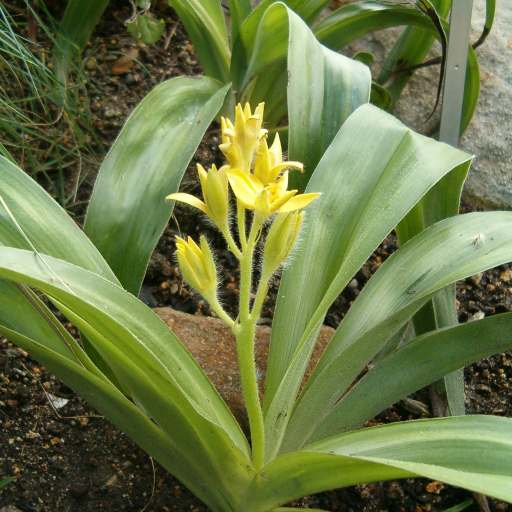
Plant Overview
Often called the "African Potato" or "Yellow Star Lily," Hypoxis hemerocallidea is a resilient survivor from the sun-drenched grasslands of Southern Africa. Despite its name, it isn’t a potato at all but a member of the Star-grass family. It has gained worldwide fame not just for its cheery, sun-bright flowers, but for its legendary status in traditional African medicine as a powerful tonic.
🔍 How to Identify
- 🌟 Star-Shaped Flowers: The plant produces bright, canary-yellow blossoms with six pointed petals that resemble tiny stars nestled among the foliage.
- 🗡️ Sword-Like Foliage: Its leaves are long, strap-shaped, and distinctly hairy. They grow in a characteristic "V" shape (three-ranked) from the base of the plant.
- 🥔 The "Potato" Corm: Hidden beneath the soil is a large, dark brown, tuberous stem. If sliced open, the inside is a surprising, bright yellow fleshy color.
🏡 In Your Garden
- ☀️ Sun Seeker: This plant is a lover of light. It thrives in full sun and is incredibly drought-tolerant, making it an ideal choice for rockeries or "xeriscaped" (water-wise) gardens.
- 💤 The Winter Vanish: Don’t be alarmed if the plant disappears! It is a deciduous perennial that goes completely dormant in winter, retreating into its underground corm to survive the cold or dry months.
- 🌱 Tough Roots: It prefers well-drained, sandy soil. Because it stores its energy in a deep corm, it dislikes being moved once it has settled, so choose its "forever home" carefully.
⚠️ Safety & Toxicity
- 🚫 Toxic if Raw: While it is famous for medicinal uses, the raw corm is considered toxic. It contains compounds that can cause severe stomach upset or even kidney damage if ingested without professional, traditional preparation.
- 🐾 Pet & Child Safety: The plant should be kept away from curious pets and toddlers. The bitter taste usually discourages eating, but the chemical compounds (hypoxoside) are harmful if swallowed.
✨ Fun Fact
📜 A Misleading Moniker: It earned the name "African Potato" simply because the underground corm looks like a lumpy tuber. However, if you tried to mash this "potato" for dinner, you’d be in for a very bitter and dangerous surprise! It is strictly a medicinal and ornamental plant, never a culinary one.

Detailed Care Instructions

Place in a bright room that is sun drenched almost all day. Or directly in a south-facing window.

Some plants require more regular watering than others, which should be done every few days. It's critical to maintain the soil moist all of the time. The water requirements of the same plant placed in pots with varying sizes will differ. Because the water in the smaller pot evaporates faster than the water in the larger pot, it will require more watering. Regardless of pot size, the surface should constantly be maintained moist.








