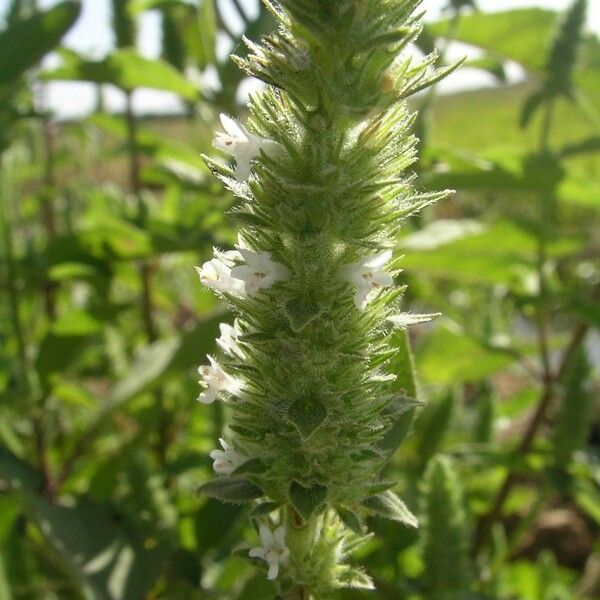
Plant Overview
Often called "Black Sesame" or "Black Benne," Hyptis spicigera is a resilient member of the mint family that bridges the gap between a wild weed and a valuable herb. Native to tropical regions of Africa and the Americas, it is famous for its highly aromatic foliage and its ability to thrive where other plants struggle. In many cultures, it is prized for its oil-rich seeds and its legendary ability to keep household pests at bay.
🔍 How to Identify
- 🌿 Square Stems: Like most of its mint-family relatives, this plant features distinctly four-angled, upright stems that feel "boxy" to the touch.
- 🍃 Serrated Foliage: The leaves are lance-shaped with jagged, saw-toothed edges; they emit a sharp, camphor-like scent when bruised.
- 🌸 Spiked Inflorescence: It is easily recognized by its dense, cylindrical flower spikes (terminal clusters) that host tiny, crowded white or pale lavender blossoms.
🏡 In Your Garden
- ☀️ Sun Seeker: This plant is an "extremophile" for light; it thrives in full sun and becomes leggy and weak if tucked away in the shade.
- 🌱 Disturbed Ground Specialist: It has a unique "pioneer" habit, meaning it is excellent for stabilizing soil in areas that have been cleared or eroded, as its root system is fast-growing and tenacious.
⚠️ Safety & Toxicity
- ✅ Generally Safe: There are no records of high toxicity for humans; in fact, the seeds are frequently eaten in various traditional African cuisines.
- 🐾 Aromatic Sensitivity: While not deadly to pets, the high concentration of essential oils in the leaves can be pungent enough to cause mild drooling or nausea if a curious cat or dog decides to chew on it.
✨ Fun Fact
In many West African villages, bundles of dried Hyptis spicigera are traditionally burned or hung near doorways. The plant contains high levels of cineole and limonene, making it a powerful, natural "organic shield" against mosquitoes and storage weevils!

Detailed Care Instructions
To grow Hyptis spicigera (also known as desert lavender or wild lavender), follow these steps:
- Choose the right location: Select a spot that receives full sun for at least 6 hours a day. Ensure the soil is well-draining and has good fertility.
- Prepare the soil: Loosen the soil and remove any weeds or rocks. Amend the soil with organic matter like compost or aged manure to improve its fertility, drainage, and moisture retention.
- Sow or transplant: You can either sow seeds directly into the prepared soil or start with a nursery-bought seedling for transplanting. If sowing seeds, place them 1/4 inch deep and around 12 to 18 inches apart.
- Watering: Initially, keep the soil consistently moist until the seedlings establish. After that, water deeply but infrequently, allowing the top inch of soil to dry out between each watering. Desert lavender is drought-tolerant and excessive watering can lead to root rot.
- Mulch: Apply a layer of organic mulch, such as wood chips or straw, around the plant to conserve moisture, suppress weed growth, and regulate soil temperature.
- Pruning: Trim the plant regularly to maintain its shape and encourage branching. Pinch off the tips to promote bushiness. You can also prune to remove dead or damaged parts.
- Fertilization: Provide a balanced, slow-release fertilizer in spring to promote healthy growth. Follow the instructions on the fertilizer packaging for the proper application rate.
- Pests and diseases: Desert lavender is generally resistant to pests and diseases. However, keep an eye out for aphids or spider mites. Regularly inspect the plant and remove any infested leaves or use organic insecticidal soap if necessary.
- Harvesting: You can harvest the leaves and flowers of Hyptis spicigera for various uses, such as making tea or potpourri. Trim the stems just above a leaf node to encourage new growth.
Following these guidelines should help you successfully grow Hyptis spicigera. Remember to consult local gardening resources or experts for specific advice tailored to your region's growing conditions.
To water this plant, you should first check the soil moisture level by inserting your finger into the soil up to one inch deep. If the soil feels dry, water the plant thoroughly until excess water begins to drain out from the bottom. Be careful not to overwater the plant, as this can lead to root rot. Watering should be done only when the soil feels dry to the touch to avoid waterlogging. Watering in the morning or evening is recommended, as it helps avoid loss of moisture due to evaporation during the heat of the day. Lastly, you should be careful not to wet the leaves when watering, as this can cause fungal diseases or scorching under direct sunlight.
To fertilize this plant, use a balanced, slow-release fertilizer with an equal ratio of nitrogen, phosphorus, and potassium. Apply the fertilizer once every two months during the growing season, which is typically from spring to fall. Avoid over-fertilizing, as this can damage the plant. Always water the soil before and after applying fertilizer to prevent burning the roots.
Hyptis Spicigera plant grows well in well-draining soil that is rich in organic matter. It prefers slightly acidic to neutral soil (pH range 6.0-7.0) and can tolerate a wide range of soil types including loam, sandy loam, and clay loam. The plant requires adequate moisture but does not tolerate waterlogging or drought conditions. It is recommended to use a soil mix that is a combination of garden soil, compost, and sand in equal proportions. The soil should be well-aerated, and the plants should be fertilized regularly to promote vigorous growth and development. It is also important to ensure proper drainage and to avoid using heavy, compacted soil that can impede root growth.
To propagate this plant, take a stem cutting from a mature plant during the growing season. The cutting should have at least 2-3 nodes. Remove the lower leaves and dip the cut end into rooting hormone powder. Plant the cutting in a pot filled with well-draining soil. Keep the soil moist and place the pot in a warm, bright spot but out of direct sunlight. It will take several weeks for the cutting to develop roots and new growth. Once the cutting has rooted and has grown several inches, it can be transplanted into a larger pot or into the garden.








