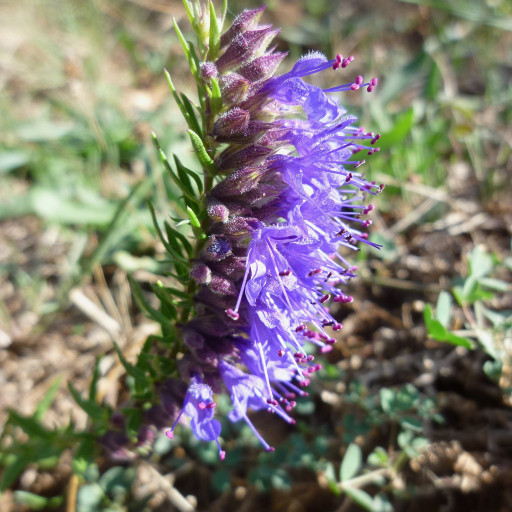
Plant Overview
Known since antiquity as a "holy herb," Hyssop is a semi-evergreen sub-shrub that bridges the gap between medicinal history and culinary art. Often found tucked into the corners of old monastery gardens, this aromatic member of the mint family is famous for its vibrant spikes of flowers and its legendary ability to attract every pollinator in the neighborhood. It has been used for centuries in everything from cleansing rituals to flavoring sophisticated European liqueurs.
🔍 How to Identify
- 🌿 Stems & Growth: Features distinct square-shaped stems that become woody at the base, growing in dense, upright clumps that reach about two feet in height.
- 🍃 Foliage: The leaves are small, dark green, and lance-shaped. They are arranged oppositely along the stem and release a pungent, camphor-like aroma when crushed.
- 🪻 Flower Spikes: In late summer, it produces long, elegant spikes of two-lipped tubular flowers. While most famous for their deep violet-blue hue, they can also be found in soft pink or white.
🏡 In Your Garden
- ☀️ Mediterranean Roots: As a native of Southern Europe, Hyssop thrives in "neglect." It requires sharp drainage and full sun; it will quickly develop root rot if forced to sit in heavy, waterlogged soil or damp clay.
- 🐝 The Beekeeper’s Favorite: It is highly regarded as a premier honey plant. Planting Hyssop is a guaranteed way to bring bees, butterflies, and hummingbirds to your yard. It also acts as a "companion protector," as its strong scent can deter pests from nearby cabbage or grapes.
- ✂️ Pruning Needs: To prevent the plant from becoming too leggy or "floppy," it should be sheared back significantly in early spring. This encourages fresh, bushy growth and more prolific flowering.
⚠️ Safety & Toxicity
- ✅ General Status: Hyssop is generally considered safe for garden handling and is edible for humans in small culinary quantities (as a tea or seasoning).
- 🧪 Essential Oil Caution: The concentrated essential oil of Hyssop contains thujone, which can be neurotoxic in high doses. It should be avoided by pregnant individuals and those with epilepsy.
- 🐾 Pets: While not listed as highly toxic to cats or dogs, the high essential oil content in the leaves can cause mild stomach upset if grazed upon in large quantities.
✨ Fun Fact
Hyssop is a key "secret" ingredient in the famous green French liqueur, Chartreuse. It has been part of the complex, 130-herb recipe used by Carthusian Monks since the 18th century!

Detailed Care Instructions
| Humidity | Normal |
| Lighting | Full Sun |
| Difficulty | Medium |
| Hibernation | Cold Period |
| Temperature | 10°C - 30°C |
| Hardiness Zones | Min 3A |
To grow Hyssopus Officinalis, also known as Hyssop, follow these steps:
- Choose a suitable location: Hyssop prefers full sun exposure, so select a spot in your garden that receives at least 6-8 hours of direct sunlight daily. Ensure the soil is well-draining and has a pH level between 6.0 and 7.5.
- Prepare the soil: Prior to planting, amend the soil with organic matter such as compost or aged manure to improve its fertility and drainage. Clear the area of any weeds or debris.
- Sow the seeds or transplant: Hyssop can be grown from seeds or transplanted seedlings. If starting from seed, sow them directly into the prepared soil in early spring or fall, as the plant is frost-resistant. Space the seeds about 12 inches apart and cover them lightly with soil. Water gently.
- Watering: Hyssop is drought-tolerant once established, so be careful not to overwater. Initially, keep the soil moist but not waterlogged. Once the plants are well-established, reduce watering to occasional deep soakings during dry periods.
- Care and maintenance: Hyssop is a low-maintenance plant. Remove any weeds that compete for resources. Pinch or prune the plant occasionally to encourage bushier growth and prevent it from becoming leggy.
- Fertilization: In spring, apply a balanced organic fertilizer or compost around the base of the plant to provide nutrients. Avoid excessive fertilization, as it may result in less aromatic foliage.
- Harvesting: Hyssop is typically ready to harvest 70-100 days after planting. Harvest the leaves and flowers in the morning when the plant's essential oils are most concentrated. Clip the stems just above a leaf node, leaving enough foliage for the plant to continue growing.
By following these steps, you can successfully grow Hyssopus Officinalis in your garden and enjoy its aromatic foliage and attractive flowers.

Place in a bright room that is sun drenched almost all day. Or directly in a south-facing window.

To properly water this plant, it is important to first check the moisture level of the soil. Using a moisture meter or simply inserting your finger into the soil up to the second knuckle can help determine if watering is necessary. If the soil feels dry, it is time to water.
Fill a watering can with room temperature water and slowly pour it onto the soil around the base of the plant. Avoid getting water on the leaves, as this can increase the risk of fungal diseases. Allow the water to fully saturate the soil, ensuring that it reaches the roots.
It is important not to overwater this plant, as it prefers well-draining soil and can be prone to root rot if kept too wet. Allow the soil to dry out slightly before watering again.
In hot or dry weather, it may be necessary to water this plant more frequently to prevent drought stress. Additionally, newly planted or young plants may require more frequent watering until they are established.
- Begin fertilizing Hyssopus Officinalis when it emerges from dormancy in early spring.
- Use a well-balanced fertilizer with equal parts nitrogen, phosphorus, and potassium.
- Apply the fertilizer evenly around the base of the plant.
- Water the plant immediately after applying the fertilizer to help it absorb the nutrients.
- Repeat this process every 4-6 weeks during the growing season.
- Avoid over-fertilizing, which can lead to leggy growth and reduced flowering.
- Stop fertilizing the plant in late summer to allow it to harden off before winter.
It is recommended to plant this species in well-draining soil that is fertile and rich in nutrients. The ideal soil pH for this plant ranges from 6.0 to 7.5. A mix of organic matter, sand, and loam is preferable. It is also recommended to add compost or well-rotted manure to the soil to improve its structure and nutrient content. Additionally, it is important to ensure that the soil is kept moist but not waterlogged.
To propagate this plant, you will need to collect seeds from mature plants or take stem cuttings from healthy individuals. For seed propagation, collect seeds from the plant after the flowers have faded and the seed pods have formed. Sow the seeds in a well-draining potting mix, and keep the soil moist until the seeds germinate.
For stem cutting propagation, select a healthy stem from the plant and cut it just below a node (the place on the stem where leaves emerge). Remove the lower leaves from the stem, leaving only a few at the top. Dip the cut end of the stem in rooting hormone, and insert it into a potting mix. Water the soil, and cover the pot with plastic to create a mini-greenhouse. Keep the soil moist and in a bright location until new growth appears.
Both methods of propagation can be successful, but each has its advantages and disadvantages. Seed propagation can result in variation among plants, while stem cutting propagation can ensure that the new plants are genetically identical to the parent plant.
Common pests of the hyssop include Spider mites, aphids. Make a habit of checking your hyssop frequently for pests so that any infestations can be caught and managed early.








