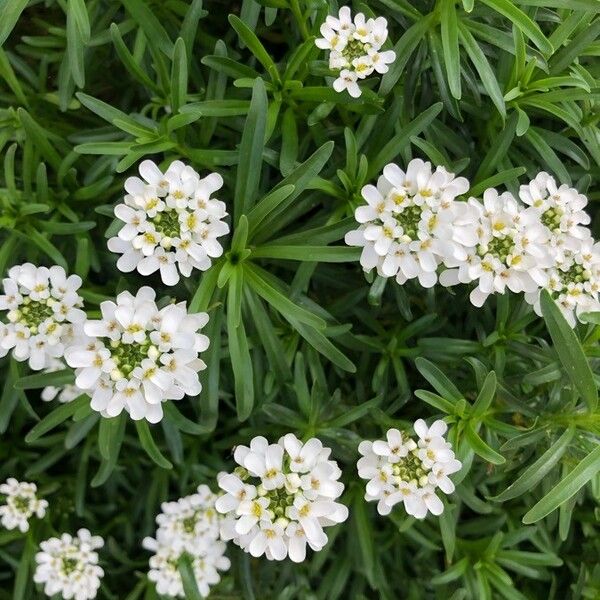
Plant Overview
Often called the Fringed Candytuft, Iberis ciliata is a charming Mediterranean native that transforms rocky outcrops into blankets of brilliant white. While its cousin, the common Garden Candytuft, is a nursery staple, this species is prized by collectors for its delicate, "eyelash" foliage and its rugged ability to thrive where other plants fail. It is a favorite for "moon gardens" because its snowy blooms practically glow under the light of a full moon.
🔍 How to Identify
- 🌸 Asymmetrical Blooms: Look closely at the flower clusters (corymbs); you’ll notice the two outer petals of each tiny flower are significantly longer than the inner two, giving the cluster a frilly, lace-like texture.
- 🍃 Ciliate Margins: The species name ciliata refers to the tiny, hair-like "eyelashes" that fringe the edges of the narrow, dark-green leaves.
- 🌱 Low Cushion Growth: This plant grows in a tight, mounded habit, rarely reaching more than 10 inches tall, creating a dense evergreen carpet even when it isn't blooming.
🏡 In Your Garden
- 🪨 Drainage is Key: Because it evolved in the stony soils of the Iberian Peninsula, it absolutely hates "wet feet." Plant it in sandy or gravelly soil; if the roots sit in heavy, damp clay, the plant may rot over the winter.
- ☀️ Sun Worshipper: To get that iconic blanket of white, place it in the brightest spot possible. In partial shade, the stems will stretch out and become "leggy," losing their compact, ornamental shape.
- ✂️ The Post-Bloom Haircut: Once the flowers fade, shear the top inch of the plant off. This prevents it from becoming woody in the center and encourages a fresh flush of green growth.
⚠️ Safety & Toxicity
- 🐾 Mild Irritant: Iberis ciliata is generally considered non-toxic to humans, but like many members of the mustard family, it contains compounds that can cause mild stomach upset (drooling or vomiting) in dogs and cats if consumed in large quantities.
- 🧤 Sensitive Skin: Some gardeners with very sensitive skin might experience minor redness after pruning the sap-filled stems; wearing gloves is a simple precaution.
✨ Fun Fact
The name "Candytuft" has nothing to do with sugar! It actually refers to "Candia," the ancient name for the island of Crete, where the first species of the Iberis genus were famously sourced for European gardens.

Detailed Care Instructions
| Humidity | Dry |
| Lighting | Part Sun |
| Difficulty | Medium |
| Hardiness Zones | 3 - 8 |
To grow Iberis Ciliata, also known as candytuft, follow these steps:
- Choose a suitable location: Iberis Ciliata prefers full sun to partial shade, so select a spot that receives at least 6 hours of direct sunlight each day.
- Prepare the soil: The plant thrives in well-draining soil with a slightly alkaline pH (around 7.0-7.5). Amend the soil with compost or well-rotted manure to improve its fertility and drainage.
- Sow seeds: Iberis Ciliata can be started from seeds. In late winter or early spring, sow the seeds directly in the garden bed, around ¼ inch deep. Space the seeds about 8-10 inches apart.
- Watering: Keep the soil consistently moist but not waterlogged until the seeds germinate, usually within 1-2 weeks. After germination, reduce watering frequency, allowing the top inch of soil to dry out between waterings.
- Fertilization: Apply a balanced, water-soluble fertilizer once every 4-6 weeks during the growing season to promote healthy growth and blooming. Follow the instructions on the fertilizer packaging for application rates.
- Mulching: Apply a layer of organic mulch, such as shredded bark or straw, around the plants to suppress weed growth, retain moisture, and keep the soil cool.
- Pruning: Trim back the flowers after they fade to encourage continuous blooming. In late fall or early spring, you can also prune the stems lightly to maintain a compact shape.
- Pest and disease control: Iberis Ciliata is generally resistant to most pests and diseases. However, keep an eye out for aphids, snails, or slugs, and treat them accordingly if spotted.
- Winter protection: Iberis Ciliata is a cold-hardy plant that can withstand temperatures as low as -20°F (-29°C). However, in areas with extremely cold winters, consider covering the plant with a layer of mulch or burlap to provide extra protection.
By following these steps, you can successfully grow Iberis Ciliata and enjoy its beautiful flowers in your garden.

Place in a bright room that is sun drenched almost all day. Or directly in a south-facing window.

To water this plant, you should first assess the soil moisture level by sticking your finger about an inch into the soil. If the soil feels dry to the touch, it is time to water. When watering, pour water onto the soil slowly and evenly, making sure to saturate the soil. Avoid getting water on the leaves as this can lead to fungal diseases. Allow the soil to drain fully and make sure the plant is not sitting in standing water. The frequency of watering will depend on the environment, but generally, this plant should be watered when the top inch of soil feels dry.
To fertilize this plant, it is recommended to use a balanced, all-purpose fertilizer with equal parts nitrogen, phosphorus, and potassium. Fertilize in the early spring, before new growth appears, and then again in the mid to late summer. Be sure to follow the instructions on the fertilizer package for the correct application rate. It is important not to over-fertilize, as this can harm the plant. Water the plant thoroughly after fertilizing to ensure the nutrients are absorbed properly.
The ideal soil for Iberis Ciliata plant should be well-draining and loamy with a pH range of 6.0 to 7.5. It should have good water-holding capacity and organic matter content. The soil should be aerated and not compacted. It should also contain essential nutrients such as nitrogen, phosphorus, and potassium. It is recommended to mix the soil with a slow-release fertilizer or compost before planting the Iberis Ciliata plant. Avoid using heavy clay or sandy soil as they may not provide the required nutrients and drainage for the plant to thrive.
Propagation of this plant can be done through seed dispersal or vegetative propagation. To propagate through seeds, collect mature seeds and sow them in well-draining soil in the spring. Cover lightly with soil and keep moist. Seedlings will emerge in a few weeks.
For vegetative propagation, take stem cuttings in the spring from healthy parent plants. Remove the lower leaves and dip the cut ends in rooting hormone powder. Plant in well-draining soil and keep moist until roots form. Transplant to their permanent location when they are established.
It is important to note that proper care and maintenance of the parent plant will result in healthier and more successful propagations.








