Plant Overview
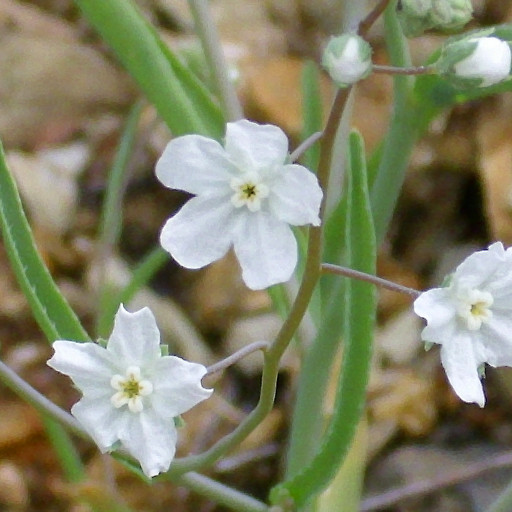
Known as the Flax-leaf Navelwort, this delicate Mediterranean annual looks like a scattering of white stars fallen across a silvery sky. Its common name, "Venus’s Navelwort," refers to the unusual, bowl-like shape of its seeds, which early botanists thought resembled a tiny belly button. It is a favorite for romantic cottage gardens, where it adds a touch of ethereal, cool-toned elegance.
🔍 How to Identify
- 🌸 Petal Power: Small, five-petaled flowers that are typically a brilliant, crisp white, though some varieties display a very faint, ghostly blue tint.
- 🍃 Flaxen Foliage: Narrow, lance-shaped leaves with a distinct silvery-green or "glaucous" hue, providing a soft, dusty contrast to darker garden greens.
- 🐚 Seed Shape: After the flowers fade, the plant produces unique nutlets with a concave center—the "navel" that gives the plant its name.
🏡 In Your Garden
- 🏗️ The Root of the Matter: This plant develops a delicate root system that dislikes being moved. It is best to sow seeds directly into the soil where you want them to grow, as transplanting often leads to wilting.
- 🏜️ Lean and Mean: Unlike many garden favorites, the Navelwort thrives in poorer, well-drained soils. If you give it too much fertilizer, you’ll get plenty of leaves but very few of its iconic white blooms.
- 🌬️ Self-Sowing Style: It is a "one-and-done" annual, but it is excellent at "planting itself." Once established, it will drop seeds that sprout the following spring without any help from you.
⚠️ Safety & Toxicity
- ✅ Safe Resident: Iberodes linifolia is generally considered non-toxic to humans, cats, and dogs, making it a worry-free choice for family gardens.
- 🧤 General Caution: While not poisonous, it is always a good practice to wash your hands after gardening, as the sap of many Mediterranean plants can occasionally cause mild skin redness in highly sensitive individuals.
✨ Fun Fact
🌸 Even though it looks like a delicate wildflower, the Flax-leaf Navelwort is a tough survivor. It has earned the Royal Horticultural Society’s Award of Garden Merit, a prestigious "seal of approval" for plants that are beautiful, easy to grow, and resistant to pests!

Detailed Care Instructions
Growing Iberis linifolia, also known as Iberis linifolia or perennial candytuft, can be an enjoyable gardening project. Here’s a step-by-step guide to help you successfully grow this plant:
1. Selection of Seeds or Seedlings
- Seeds: You can purchase seeds from a reputable nursery or online.
- Seedlings: Alternatively, you can buy young plants from a garden center.
2. Timing
- Sowing Seeds: The best time to sow Iberis linifolia seeds is in early spring or late summer.
- Transplanting Seedlings: If you are starting with seedlings, you can plant them in the spring after the last frost.
3. Location and Soil
- Sunlight: Iberis linifolia prefers full sun to partial shade. Choose a spot where the plant will receive at least 6 hours of sunlight per day.
- Soil Type: Well-drained soil is crucial. The plant does well in average to poor soil and prefers alkaline or neutral pH (6.0–7.5).
- Soil Preparation: If your garden soil is heavy clay or too rich, amend it with sand or gravel to improve drainage.
4. Sowing Seeds
Outdoor Sowing:
- Prepare the soil by tilling and removing any weeds or debris.
- Sow seeds directly on the soil surface and lightly press them in.
- Cover with a thin layer of soil or fine gravel.
- Water gently to keep the soil moist but not waterlogged.
Indoor Sowing:
- Sow seeds in a tray or pots filled with seed-starting mix.
- Cover lightly with soil or perlite.
- Keep the soil moist.
- Place in a sunny location or under grow lights.
- Transplant seedlings to the garden when they have 2–3 true leaves and the danger of frost has passed.
5. Watering
- Initial Period: Water regularly until the plants are established.
- Established Plants: Once established, Iberis linifolia is quite drought-tolerant. Water during prolonged dry spells but generally allow the soil to dry out between watering.
6. Fertilizing
- Iberis linifolia is not a heavy feeder.
- Initial Soil Prep: If your soil is poor, you can add some compost or a balanced, slow-release fertilizer when preparing the planting bed.
- Ongoing Care: You may add a light application of balanced fertilizer in spring if needed.
7. Mulching
- Apply a layer of mulch around the plants to help retain soil moisture and control weeds. Make sure to keep the mulch away from the crown of the plants to prevent rot.
8. Pruning and Deadheading
- Deadheading: Removing spent flowers can encourage more blooms.
- Pruning: Trim back the plants after flowering to maintain a neat appearance and promote bushier growth.
9. Pest and Disease Management
- Iberis linifolia is relatively trouble-free. However, keep an eye out for common pests like aphids or slugs.
- Ensure good air circulation around the plants to prevent fungal diseases.
By following these guidelines, you should be able to grow healthy and attractive Iberis linifolia plants in your garden. Enjoy their charming white blooms that add a touch of elegance to any landscape!

Place in a window with dappled sun or a spot in the middle of a room. Or directly in a window facing west or east.

When watering this plant, it is important to monitor the soil moisture levels. The easiest way to do this is by sticking your finger about an inch into the soil. If it feels dry to the touch, it's time to water.
When watering, pour water slowly and evenly over the soil until it begins to drain out through the bottom of the container. Make sure to empty any excess water that may have collected in the saucer underneath the pot, as standing water can lead to root rot.
Avoid overwatering, as this can also lead to root rot and other health issues for the plant. It's better to underwater slightly than to overwater. If in doubt, wait a day or two and check the soil again.
During winter or periods of dormancy, the plant may require less frequent watering, so adjust accordingly. Additionally, the plant may need more frequent watering in hot, dry weather or if it's located in a particularly sunny spot.
Sure, here are the fertilizing instructions for Iberodes linifolia:
Soil Preparation: Before planting, enrich the soil with organic matter such as compost or well-rotted manure. This ensures the soil is nutrient-rich and promotes healthy root development.
Initial Planting: At the time of planting, you can mix a balanced, slow-release granular fertilizer into the soil. A fertilizer with an equal ratio of nitrogen (N), phosphorus (P), and potassium (K), such as a 10-10-10 formulation, can be beneficial.
Growing Season:
- Early Spring: As new growth starts, apply a balanced liquid fertilizer once every 4-6 weeks. This will support robust growth and blooming.
- Mid-Summer: If the plants appear to need a boost (exhibiting poor growth or pale leaves), you can apply a water-soluble fertilizer high in phosphorus (such as a 10-20-10) to encourage flowering. Avoid excessive nitrogen at this stage as it can lead to lush foliage at the expense of flowers.
Late Season: Reduce fertilizing as the growing season winds down. Over-fertilizing late in the season can encourage tender new growth that might not withstand cooler temperatures.
General Tips:
- Always follow the manufacturer’s instructions on the fertilizer packaging regarding application rates and methods.
- Water the plants thoroughly before and after fertilizing to help distribute nutrients evenly and avoid root burn.
- Monitor the plants regularly for signs of nutrient deficiencies or excesses, such as yellowing leaves (nitrogen deficiency) or stunted growth (possible over-fertilization).
By following these guidelines, you should be able to maintain healthy and vibrant Iberodes linifolia plants throughout their growing season.
When planting Iberodes Linifolia, it is important to use a soil that is well-draining and moisture-retentive. The pH level of the soil should be slightly acidic to neutral, with a range of 6.0 to 7.0. The soil should be rich in organic matter and nutrients, such as compost or aged manure. It is also recommended to mix in a slow-release fertilizer to provide ongoing nutrients to the plant. The soil should be loose and friable, with good aeration to allow for healthy root development. Additionally, it is important to ensure that the soil is free of any pests or diseases that could harm the plant.
Iberodes linifolia, a notable plant for its delicate appearance, can be propagated effectively through seeds. Here’s a step-by-step guide to help you through the propagation process:
Seed Propagation
Seed Collection:
- Allow the plant to flower and subsequently form seed pods.
- Once the seed pods dry out on the plant, they can be gently harvested.
Seed Preparation:
- Clean the seeds by removing them from the dried pods.
- If necessary, store the seeds in a cool, dry place until you're ready to plant them. They can be viable for quite some time if stored properly.
Sowing Seeds:
- Start sowing seeds indoors a few weeks before the last expected frost date, or sow them directly in the garden after the frost risk is gone.
Soil Preparation:
- Iberodes linifolia thrives in well-draining soil, preferably sandy or loamy.
- If planting indoors, use seed-starting mix or a similar light, well-draining soil mix.
Planting:
- Scatter the seeds lightly over the surface of the soil.
- Press the seeds gently into the soil but do not cover them significantly, as they need light to germinate.
Watering:
- Water the soil gently to ensure it is consistently moist but not waterlogged.
- A fine misting spray can help to avoid disturbing the seeds.
Light Conditions:
- Place the seeds in a location with plenty of indirect sunlight if growing indoors.
- If outdoors, ensure they get ample sunlight, as this plant prefers full sun to partial shade.
Temperature:
- Keep the seeds in a warm environment, ideally between 60-70°F (15-21°C).
Germination Time:
- Seeds typically germinate within 1-2 weeks under optimal conditions.
- Keep an eye on moisture levels and light during this period.
Transplanting:
- Once seedlings are large enough to handle and there is no risk of frost, they can be transplanted outdoors.
- Space them appropriately to allow for mature growth, typically 6-12 inches apart.
Care and Maintenance:
- Keep the soil moderately moist but avoid overwatering.
- As the plants establish, they become moderately drought-tolerant.
- Deadhead spent flowers to encourage more blooms and prevent excessive self-seeding if desired.
By following these steps, you can propagate and enjoy growing Iberodes linifolia successfully.








