Plant Overview
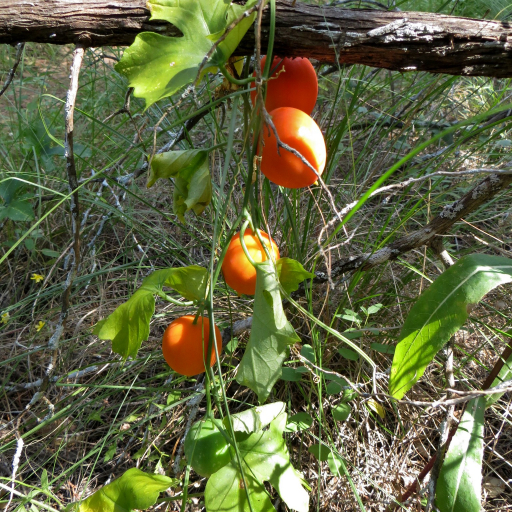
Known affectionately as the Lindheimer’s Globeberry or the Snakeapple, this tenacious vine is a true survivor of the American Southwest. A member of the cucumber family, it is most famous for its vibrant, cherry-red berries that look like tiny, round watermelons before they fully ripen. In the wild, it often drapes itself over shrubs and fences like a natural garland, providing a splash of color to arid landscapes.
🔍 How to Identify
- 🌿 The Foliage: The leaves are bright green and deeply lobed, often divided into three to five distinct segments with a slightly rough texture.
- 🔴 The Fruit: The most striking feature is the "globeberry." These small, round fruits start out green with white stripes (mimicking a tiny watermelon) and mature into a brilliant, translucent scarlet.
- 🌼 The Flowers: It produces small, inconspicuous yellow flowers that are star-shaped, typical of the gourd family, appearing in late spring to mid-summer.
🏡 In Your Garden
- 🥔 The Hidden Caudex: This plant grows from a massive, woody underground tuber (a caudex) that stores water. This specialized root allows the plant to disappear during droughts and "resurrect" quickly when the rains return.
- 🧗 A Natural Climber: Because it uses delicate tendrils to climb, it is perfect for a "wild" garden look. It prefers to scramble over other tough shrubs or a sturdy wire trellis rather than a smooth wall.
- ☀️ Arid Specialist: It thrives in well-draining, rocky soil and full sun. It is a "set it and forget it" plant once established, as it hates being overwatered or kept in soggy soil.
⚠️ Safety & Toxicity
- 🚫 Status: Toxic / Do Not Eat.
- 🤢 Details: While the bright red berries look like tempting candy, they are highly purgative and can cause severe gastrointestinal distress if ingested. Keep these attractive berries away from curious toddlers and pets, as the saponins and cucurbitacins inside are natural defenses against being eaten.
✨ Fun Fact
The plant is named after Ferdinand Lindheimer, often called the "Father of Texas Botany," who collected and identified hundreds of plant species in the 19th century while living in a small cabin on the banks of the Comal River.

Detailed Care Instructions
| Lighting | Full Sun |
| Hardiness Zones | 9A - 10B |
To grow Ibervillea Lindheimeri (also known as Lindheimer's Globeberry or Balsam Gourd), follow these steps:
- Climate: Ensure that you are living in a suitable climate for this plant. It is native to the southwestern United States and northern Mexico, where it thrives in dry, desert-like conditions.
- Soil: Ibervillea Lindheimeri prefers well-draining soil. You can amend your soil with sand or gravel to improve drainage. A sandy or loamy soil with a pH range between 6.0 to 7.5 is ideal.
- Location: Choose a spot in your garden that receives full sun exposure. This plant requires at least 6-8 hours of direct sunlight per day.
- Planting: Sow the seeds directly into the ground in spring after the last frost has passed. Alternatively, you can start the seeds indoors earlier and transplant them once the weather warms up. Space the seeds or transplants about 3-4 feet apart, as Ibervillea Lindheimeri can spread out.
- Watering: Initially, water the plant regularly to establish strong roots. Once established, reduce watering as Ibervillea Lindheimeri is drought-tolerant and prefers dry conditions. Water sparingly during prolonged dry spells.
- Mulching: Apply a layer of organic mulch around the plant to help conserve moisture, suppress weed growth, and insulate the soil.
- Fertilizing: Ibervillea Lindheimeri generally does not require high levels of fertilization. However, you can apply a balanced, slow-release fertilizer in early spring to provide some nutrients.
- Support: As the vine grows, you may need to provide support such as a trellis, fence, or other structure for it to climb on.
- Pruning: Pruning is not necessary for this plant, but you can trim any dead or decaying foliage if needed.
- Pest and diseases: Ibervillea Lindheimeri is generally resistant to pests and diseases. However, some common pests like aphids or spider mites can occasionally infest the plant. Monitor your plant regularly and take appropriate measures like spraying with insecticidal soap or using natural pest control methods if any infestation occurs.
Remember that Ibervillea Lindheimeri is a native plant and can provide great benefits to pollinators. Enjoy the unique flowers and colorful fruits of this fascinating plant!

Place in a bright room that is sun drenched almost all day. Or directly in a south-facing window.

To water this particular plant, you should make sure to keep the soil evenly moist, but not too wet. It is important to avoid excessive watering, as this can lead to root rot and harm the plant. Only water the plant when the top few inches of soil feel dry to the touch. When watering, make sure to thoroughly saturate the soil, but avoid getting water on the foliage as this can encourage disease. It is also important to avoid using cold water, as this can shock the plant. Room temperature or slightly warm water is best. Additionally, during periods of hot weather or if the plant is in direct sunlight, it may require more frequent watering.
- Start by selecting a balanced fertilizer specifically formulated for the needs of ornamental plants or perennials. Look for a fertilizer with an N-P-K ratio (nitrogen, phosphorus, and potassium) of around 10-10-10 or a similar balanced blend.
- Read the label instructions on your chosen fertilizer to determine the recommended application rate. This rate may vary depending on the product and the specific needs of the plant.
- Prior to fertilizing, make sure the Ibervillea Lindheimeri plant is well-hydrated. Water it thoroughly a day or two before applying the fertilizer.
- Apply the fertilizer evenly around the base of the plant, keeping it away from the stem or leaves. You can sprinkle the granules by hand or use a small garden trowel to distribute them.
- Once the fertilizer is applied, lightly water the plant again to help it absorb the nutrients and prevent potential burning of the roots. Make sure not to overwater, as this can lead to root rot.
- Repeat the fertilization process according to the recommended frequency on the fertilizer label. Typically, it is advisable to fertilize every 4-6 weeks during the active growing season, usually in the spring and summer months.
- Regularly monitor the plant's growth and adjust the fertilization schedule or application rate if necessary. Avoid excessive fertilization, as it can lead to imbalances, nutrient deficiencies, or harm to the plant.
- Remember that Ibervillea Lindheimeri plants may have specific nutrient requirements that may not be adequately addressed by a general fertilizer. If you notice any signs of nutrient deficiencies (e.g., yellowing leaves), consider using a specialized fertilizer formulated for the specific needs of the plant or seek advice from a local nursery or gardening expert.
The ideal soil for Ibervillea Lindheimeri plant is well-draining and does not retain water for long periods of time. A sandy loam soil with a mildly acidic to neutral pH level is preferred. The soil should be rich in organic matter and nutrients, as this vine-like plant requires a lot of energy to grow and produce blooms. It is recommended to add compost or aged manure to the soil to improve its nutrient content. Additionally, Ibervillea Lindheimeri plant prefers a soil that is warm and slightly dry to the touch. It is important to avoid overwatering the plant and ensure that it is not planted in an area that is prone to waterlogging. Overall, a well-draining, nutrient-rich soil that is slightly on the acidic side with good drainage is best for Ibervillea Lindheimeri plant.
Propagating Ibervillea lindheimeri can be done using various methods. Here are the steps to propagate this plant:
- Gather the necessary materials: You will need a healthy and mature Ibervillea lindheimeri plant, a sharp and clean pair of pruning shears or scissors, well-draining potting soil, small pots or containers, a spray bottle, and a plastic bag or propagation dome.
- Choose a healthy stem: Select a young and healthy stem from the parent plant for propagation. Look for a stem that is free from diseases or pests and has several nodes.
- Prepare the stem cutting: Using the pruning shears or scissors, make a clean and sharp cut just below a node on the selected stem. The cutting should be around 4 to 6 inches long with at least two nodes.
- Remove lower leaves: Strip off the lower leaves of the stem cutting, leaving only a few leaves at the top. This helps to prevent excess moisture loss and encourages root development.
- Create a rooting hormone solution (optional): If desired, dip the cut end of the stem cutting into a rooting hormone powder or gel. This can help stimulate root growth and improve the success rate of propagation.
- Prepare the potting soil: Fill small pots or containers with well-draining potting soil. Make sure the soil is moist but not waterlogged.
- Plant the cutting: Create a hole in the potting soil using your finger or a pencil. Insert the cut end of the stem cutting into the hole until only the top leaves are exposed. Gently press the soil around the stem to secure it in place.
- Mist the cutting: Use a spray bottle to lightly mist the soil and the leaves of the cutting. This helps to keep the humidity levels high, preventing excessive moisture loss.
- Cover the cutting: Place a plastic bag or propagation dome over the pot to create a mini greenhouse effect. This helps to maintain the humidity around the cutting, promoting root development.
- Provide ideal conditions: Place the pot in a warm and bright location where it can receive indirect sunlight. Avoid direct sunlight, as it may scorch the cutting. Maintain a consistent temperature range between 70-80°F (21-27°C).
- Check and maintain moisture: Regularly check the soil moisture levels and mist if needed to keep it slightly moist. Avoid over-watering, as it can cause root rot.
- Monitor the progress: After a few weeks, check for root development by gently tugging on the cutting. If you feel resistance, it indicates that roots have formed.
- Transplanting: Once the cutting has developed a strong root system, usually within 6-8 weeks, it can be transplanted into a larger pot or directly into the garden.
By following these steps, you should be able to successfully propagate Ibervillea lindheimeri and expand your plant collection.








