Plant Overview
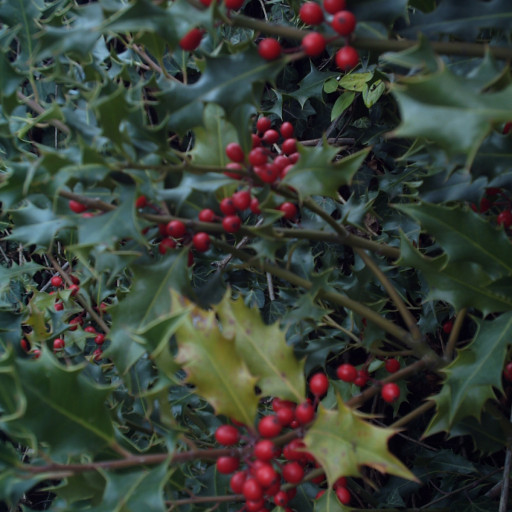
Often called the "English Holly" or "Christmas Holly," this iconic evergreen has been a symbol of protection and winter celebration for centuries. From ancient Druid rituals to modern holiday wreaths, its glossy leaves and vibrant berries have made it one of the most recognizable plants in the temperate world. In the wild, it serves as a crucial winter larder for birds, standing as a stubborn, green sentinel even in the deepest snow.
🔍 How to Identify
- 🍃 The Foliage: Leaves are thick, leathery, and dark "holly-green" with a high-gloss finish. They feature wavy margins and are armed with sharp, needle-like spines.
- 🔴 The Berries: Bright, scarlet-red spheres that grow in clusters. Note that these only appear on female plants during the late autumn and winter months.
- ⚪ The Flowers: Small, inconspicuous creamy-white blossoms with four petals that appear in late spring, smelling faintly sweet to attract pollinators.
🏡 In Your Garden
- 👫 The Mating Game: Ilex aquifolium is dioecious, meaning individual plants are either male or female. If you want the iconic red berries, you must plant a female variety and ensure there is a male "pollinator" nearby.
- 🛡️ Privacy & Protection: Because of its dense growth and prickly leaves, it is one of the best choices for a "security hedge" to deter intruders while providing a safe nesting site for songbirds.
- 🌑 Shade Warrior: While it thrives in full sun, English Holly is remarkably shade-tolerant, making it a perfect choice for brightening up those tricky, dark corners of the garden.
⚠️ Safety & Toxicity
- 🚫 Toxic Berries: The berries contain a substance called ilicin, which is toxic to humans. Eating them can lead to severe stomach upset, vomiting, and dehydration.
- 🐾 Pet Safety: The berries and leaves are toxic to dogs, cats, and horses. Additionally, the sharp spines can cause physical injury to the mouth or paws if chewed.
- 🧤 Protective Gear: Always wear heavy-duty gardening gloves when pruning, as the leaf spines can easily puncture the skin and cause irritation.
✨ Fun Fact
In European folklore, Holly was believed to protect homes from lightning strikes. While this sounds like a myth, modern science suggests that the spiked leaves act as miniature "lightning conductors," helping to dissipate the electrical charge and protect the tree from damage!

Detailed Care Instructions
| Color | Blue/Lilac Shades |
| Soil Ph | Not Particular |
| Humidity | Normal |
| Invasive | Weed |
| Lighting | Full Sun |
| Toxicity | Poisonous |
| Soil Type | Tolerates A Variety, But Must Be Well-Drained |
| Bloom Time | Summer |
| Difficulty | Medium |
| Plant Type | Evergreen Tree Or Shrub |
| Hibernation | Cold Period |
| Mature Size | Up To 10 Meters |
| Native Area | Himalayas Region |
| Temperature | Min 12°C |
| Sun Exposure | Full Sun / Partial Shade |
| Hardiness Zones | 5-8 |
To grow Ilex Aquifolium (also known as English holly), you can follow these steps:
- Choose the right location: Ilex Aquifolium prefers a spot with well-drained soil and partial to full shade. It can also tolerate some sun, but too much direct sunlight can cause leaf burn.
- Prepare the soil: If your soil is heavy or clay-like, it is a good idea to amend it with organic matter like compost or peat moss to improve drainage and fertility. Make sure the soil is evenly moist but not waterlogged.
- Planting: Dig a hole that is slightly wider and deeper than the rootball of the plant. Place the plant in the hole, making sure it is level with the ground. Backfill the hole with soil, gently firming it around the rootball.
- Watering: Immediately after planting, water the plant thoroughly to help it settle in. During the first growing season, keep the soil consistently moist but not waterlogged. After establishment, holly plants are quite drought-tolerant.
- Mulching: Apply a layer of mulch around the base of the plant to help retain moisture and suppress weeds. Keep the mulch a few inches away from the stem to prevent rot.
- Pruning: Prune Ilex Aquifolium in late winter or early spring to shape the plant and remove any dead, damaged, or crossing branches. Pruning also helps improve air circulation and encourages new growth.
- Fertilizing: Holly is generally a low-maintenance plant and doesn't require much fertilization. However, if the plant appears weak or is showing signs of nutrient deficiency, you can apply a balanced slow-release fertilizer in early spring.
- Protection: While holly is relatively hardy, young plants may need protection from harsh winter conditions. You can wrap them with burlap or use stakes and burlap to create a windbreak.
- Propagation: Ilex Aquifolium can be propagated from seeds or cuttings. Collect ripe berries and mash them to extract the seeds. Sow the seeds in containers or directly in the ground in autumn. Softwood cuttings can be taken in spring or semi-hardwood cuttings in late summer.
By following these steps, you can successfully grow Ilex Aquifolium plants in your garden or landscape.

Place in a bright room that is sun drenched almost all day. Or directly in a south-facing window.

Ilex Aquifolium is a plant that requires regular watering to maintain its health. When watering this plant, it is important to avoid overwatering, which can lead to root rot, and underwatering, which can cause the leaves to wilt and fall off.
To properly water Ilex Aquifolium, you should first check the soil moisture level. The soil should be moist but not waterlogged. You can check the soil moisture level by sticking your finger into the soil. If the soil is dry to the touch, it is time to water the plant.
When watering Ilex Aquifolium, it is best to use a watering can or hose with a gentle flow. You should water the plant until the soil is evenly moist but not saturated. It is important to avoid getting water on the leaves as this can lead to fungal diseases.
In addition to regular watering, Ilex Aquifolium also requires well-draining soil. If the soil is heavy and clay-like, it may be necessary to amend the soil with compost or sand to improve drainage.
Overall, watering Ilex Aquifolium is relatively easy as long as you monitor the soil moisture level and avoid over or underwatering. With proper care and maintenance, your Ilex Aquifolium plant will thrive and provide stunning greenery to your home or garden.
To fertilize this evergreen plant, use a balanced fertilizer with equal amounts of nitrogen, phosphorus, and potassium. Apply the fertilizer in early spring and again in late summer. Avoid fertilizing during the winter. Water the plant before and after applying fertilizer to prevent burning the roots. Follow the manufacturer's instructions for application rates and do not over-fertilize, as this can damage the plant.
The ideal soil for this plant should be well-draining and slightly acidic, with a pH level between 5.5 and 6.5. It should not be too heavy or compacted, as this can lead to waterlogging and root rot. Adding organic matter such as compost or leaf mulch to the soil can improve its fertility and drainage. Additionally, this plant prefers a slightly sheltered location, protected from strong winds and direct sunlight.
Ilex Aquifolium plant can be propagated easily through hardwood cuttings. Here is a step-by-step guide on how to do it:
- Choose a healthy, mature stem from the plant that has no signs of disease or damage.
- Cut a section of the stem that is roughly 7-10 cm long and has at least two nodes.
- Remove any leaves or branches from the bottom 3-4 cm of the stem, leaving only a few leaves at the top.
- Dip the cut end of the stem in rooting hormone powder to help it establish roots.
- Place the stem into a pot filled with a mixture of 50% sand and 50% peat moss or another well-draining soil mix.
- Water the soil well and cover the pot with a plastic bag or plastic wrap to create a humid environment.
- Place the pot in a bright, warm location (around 20-25°C) but away from direct sunlight.
- Check the cutting regularly and mist with water if necessary to keep it humid.
- After around 6-8 weeks, new growth should begin to appear, indicating that roots have formed.
- Once the cutting has established roots, it can be transplanted into a larger pot or into the ground outside.








