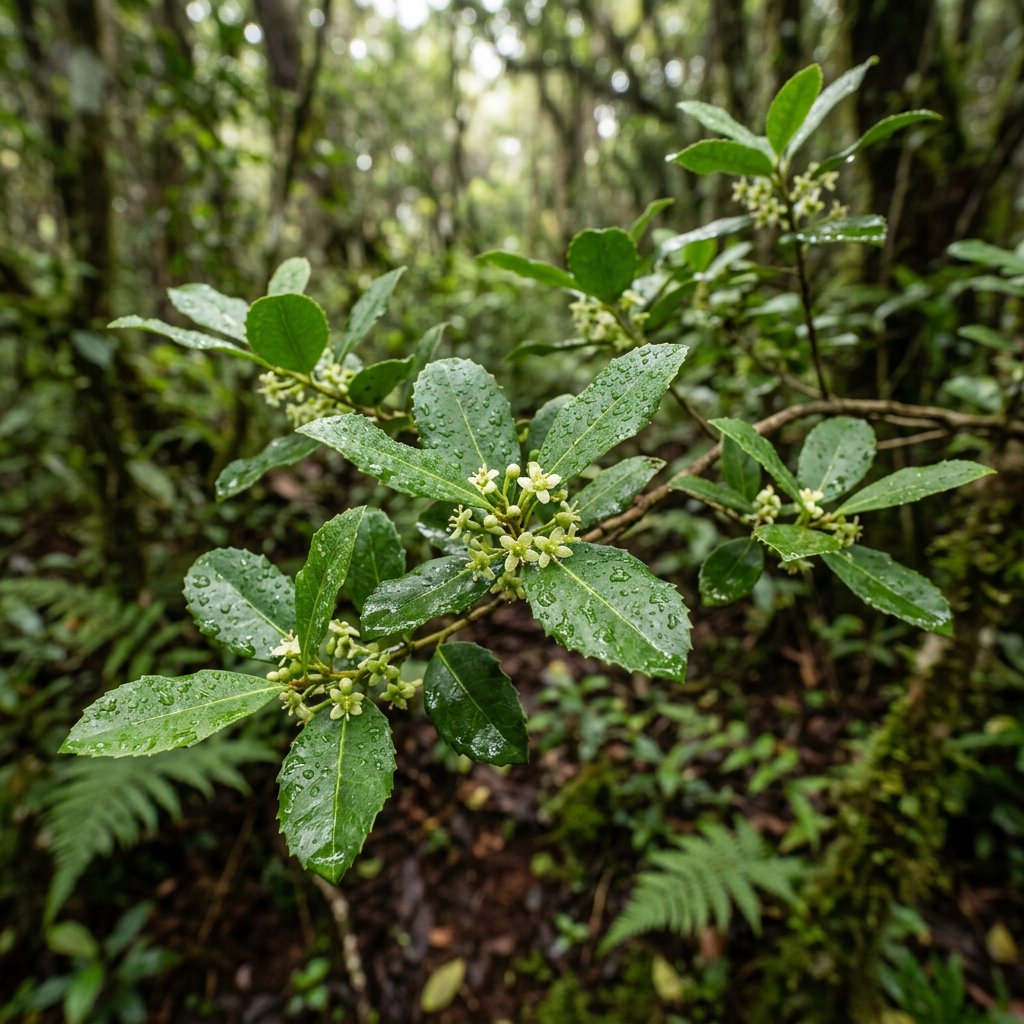
Plant Overview
Known affectionately as the "Green Gold" of South America, Ilex paraguariensis is the source of the world-famous Yerba Mate. Rooted deeply in the folklore of the Guaraní people, it was considered a divine gift from the goddesses of the Moon and the Clouds to reward a kind farmer. Today, it remains a symbol of hospitality and social bonding across the Southern Cone of the continent.
🔍 How to Identify
- 🍃 Leathery Foliage: The leaves are thick, waxy, and obovate (teardrop-shaped) with slightly serrated edges. They are a deep, lustrous green on top and slightly paler underneath.
- 🌸 Discreet Blooms: In late spring, it produces tiny, inconspicuous greenish-white flowers that grow in small clusters near the leaf axils.
- 🍒 Holly Berries: As a member of the Holly family, it produces small, spherical red or reddish-purple berries (drupes) that look beautiful but are not for eating.
🏡 In Your Garden
- 🌱 Subtropical Soul: This plant thrives in high humidity and acidic soil. If you live in a drier climate, regular misting and adding peat moss to the soil will help mimic its rainforest home.
- 💧 The Drainage Dance: While it loves moisture and frequent watering, it is highly susceptible to root rot. It "hates wet feet," so ensure your pot has excellent drainage and use a loamy, well-aerated potting mix.
- ✂️ Pruning for Vigor: In its natural habitat, it can grow into a massive tree, but in a garden or pot, it responds very well to pruning, which encourages the bushy growth needed if you plan to harvest leaves for tea.
⚠️ Safety & Toxicity
- 🐾 Pet Warning: While humans enjoy the leaves as a tea, the plant (especially the berries) contains saponins which can cause vomiting and diarrhea in cats and dogs if ingested.
- ☕ Caffeine Kick: The leaves contain a potent mix of caffeine, theobromine, and theophylline. While safe for human consumption as a beverage, individuals sensitive to stimulants should enjoy it in moderation.
- 🚫 Don't Eat Raw: The leaves must be properly dried and processed (traditionally toasted) before consumption; eating them raw from the plant may cause stomach upset.
✨ Fun Fact
Unlike coffee, which can cause "jitters," Yerba Mate provides a "calm energy" boost. This is because it contains a unique balance of stimulants that relax smooth muscles while sharpening mental focus—a combination often referred to as the "Mateine" effect.

Detailed Care Instructions
| Color | Green White |
| Soil Ph | Preference For Slightly Acidic, But Tolerates A Variety |
| Humidity | Normal |
| Soil Type | Tolerates A Variety, But Should Be Well-Drained |
| Bloom Time | Late Fall/Early Winter |
| Difficulty | Easy |
| Plant Type | Evergreen Tree/Shrub |
| Hibernation | Cold Period |
| Mature Size | Up To 15 Meters |
| Native Area | Subtropical Regions Of South America |
| Temperature | 18°C - 24°C |
| Sun Exposure | Full Sun/Partial Shade |
| Hardiness Zones | Up To 9 |
Growing Ilex paraguariensis, also known as yerba mate, is relatively easy as long as you provide the right conditions. Here's a step-by-step guide to help you grow this plant:
- Choose the right location: Yerba mate prefers partial shade or filtered sunlight. It should be protected from strong winds and extreme temperatures. If you live in a region with hot summers, consider providing some shade during the hottest parts of the day.
- Soil preparation: Yerba mate prefers well-draining soil with a slightly acidic pH between 6-6.5. Prepare the soil by loosening it and removing any rocks, weeds, or debris. You can also add organic matter, such as compost, to improve soil fertility and drainage.
- Planting: Yerba mate is usually grown from seeds. Soak the seeds in water for 24 hours prior to planting to enhance germination. Plant the seeds in small pots or nursery trays filled with well-draining potting mix, covering them with a thin layer of soil. Keep the soil moist but not waterlogged.
- Watering: Yerba mate requires regular watering, especially during dry periods. Keep the soil slightly moist but avoid overwatering as it can lead to root rot. Mulching around the plant can help retain moisture and regulate temperature.
- Fertilization: Yerba mate benefits from regular fertilization to promote healthy growth and production. Use a balanced, slow-release fertilizer or organic options like compost or well-rotted manure. Follow the manufacturer's instructions for dosage and frequency.
- Pruning: Prune your yerba mate plant regularly to maintain its shape, remove dead or diseased branches, and encourage bushier growth. Wait until late winter or early spring to prune when there is less active growth.
- Pests and diseases: Yerba mate is relatively resistant to pests and diseases. However, keep an eye out for common issues such as aphids, spider mites, or fungal infections. Treat any problems promptly with appropriate organic pest control methods if necessary.
- Harvesting: Depending on growing conditions and plant maturity, yerba mate can be harvested 2-5 years after planting. Harvest the leaves by carefully plucking them off the branches. Leave some leaves on the plant to allow for regrowth.
By following these steps and providing the right care, you should be able to successfully grow your own Ilex paraguariensis plant. Enjoy your yerba mate leaves when they are ready for harvesting!

Place in a window with dappled sun or a spot in the middle of a room. Or directly in a window facing west or east.

The plant requires regular and consistent watering to thrive. It is important to ensure the soil remains consistently moist, but not waterlogged. Water the plant deeply, allowing the soil to absorb the water before watering again. It is best to water in the morning or late afternoon to prevent evaporation and ensure the sun doesn't scorch the leaves. Make sure to only water the base of the plant and avoid getting water on the leaves or stems, which can cause disease. During the winter months, the plant may require less frequent watering.
To fertilize this plant, it is recommended to use a slow-release, balanced fertilizer with an NPK ratio of 10-10-10. Apply the fertilizer in early spring before new growth appears and again in late summer. Avoid over-fertilizing as it can lead to excessive growth and reduced potency of the leaves. Instead, follow the recommended dosage on the fertilizer packaging and water the plant thoroughly after application. Additionally, avoid getting fertilizer on the foliage as it can lead to burning and discoloration.
The ideal soil for the plant should be a well-draining and fertile mix with a slightly acidic pH level of around 6.0 to 6.5. The soil should also be rich in organic matter and able to retain moisture without being waterlogged. A suitable mix would typically include peat moss, perlite, and vermiculite, along with a slow-release fertilizer. It is important to regularly test the pH level of the soil and adjust it as needed using garden lime or sulfur. The plant may also benefit from occasional applications of compost or other organic fertilizers to promote healthy growth.
One method of propagating this plant is through seed germination. Collect mature fruits from the plant and extract the small seeds from inside. Soak the seeds in water for 24 hours, then plant them in well-draining soil. Keep the soil moist and warm, preferably between 20-25°C, until the seeds germinate in 2-3 weeks.
Another method is through stem cuttings. Take a 6-8 inch stem cutting from the parent plant and remove the lower leaves. Dip the cut end in rooting hormone powder and plant it in a container filled with well-draining soil. Keep the soil moist and warm, ideally between 20-25°C, and monitor the cutting for signs of root growth after a few weeks.
It is also important to note that Ilex Paraguariensis prefers acidic soil and partial to full sunlight. Proper care and attention should be given to the young plants, such as regular watering and fertilization, to ensure healthy growth.








