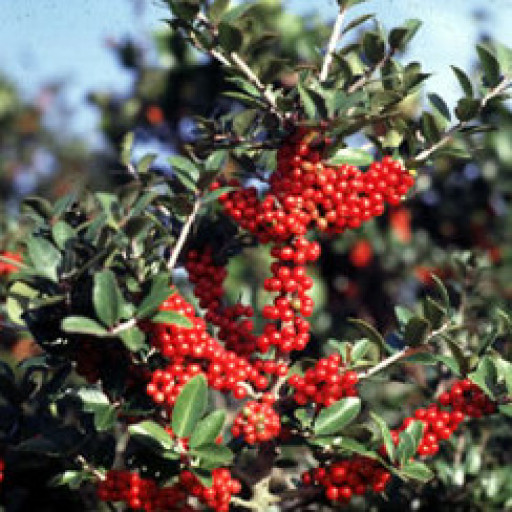
Plant Overview
The Yaupon Holly, famously known as the only native plant in North America that naturally produces caffeine, is a rugged Southern classic. Despite its slightly intimidating Latin name, it has been a staple of indigenous culture for centuries, used to brew the legendary "Black Drink." Today, it is a favorite for gardeners looking for an indestructible evergreen that provides a winter feast for local birds.
🔍 How to Identify
- 🍃 Small Leathery Leaves: Unlike the giant, prickly leaves of the English Holly, Yaupon has small, oval leaves (about 1 inch long) with smooth, rounded "teeth" along the edges.
- 🔴 Translucent Berries: In the winter, female plants are covered in clusters of brilliant, translucent red berries that look like tiny rubies against the dark green foliage.
- 🌫️ Pale Gray Bark: The stems and trunk feature a distinctively smooth, light gray bark that creates a beautiful skeletal contrast if the plant is pruned into a small tree.
🏡 In Your Garden
- 🧂 Coastal Warrior: This is one of the most salt-tolerant plants available, making it a "must-have" for seaside gardens where salt spray kills less hardy shrubs.
- ✂️ Shape Shifter: Yaupon is incredibly versatile; it can be left to grow into a tall, weeping screen for privacy or sheared into formal hedges and tight topiary "balls."
- 💧 Drought Resistance: Once its deep root system is established, it is remarkably drought-tolerant, though it appreciates consistent moisture to produce the best berry crop.
⚠️ Safety & Toxicity
- ☕ The Tea Paradox: While the dried leaves are safe (and delicious) for human tea, the raw berries are toxic.
- 🤢 The "Vomitoria" Name: The species name comes from a historical misunderstanding. Native Americans used high-caffeine Yaupon tea in purification rituals that involved vomiting; however, it was the volume of tea consumed (and other added herbs), not the Yaupon itself, that caused the reaction.
- 🐾 Pet Warning: The berries can cause significant vomiting and diarrhea in dogs and cats. Keep this plant away from areas where pets might snack on fallen fruit.
✨ Fun Fact
During the American Civil War, when the Union blockade cut off coffee supplies to the South, many people turned to Yaupon Holly as a local caffeine substitute, calling it "Cassina" or "South-Sea Tea."

Detailed Care Instructions
| Color | Greenish-White, Followed By Red Berries |
| Soil Ph | 5.5 To 7; Slightly Acidic To Slightly Alkaline |
| Invasive | Weed |
| Lighting | Full Sun |
| Soil Type | Sand (Will Tolerate Other Soil Types) |
| Bloom Time | Spring |
| Plant Type | Broadleaf Evergreen Shrub Or Small Tree |
| Mature Size | 10 To 30 Feet Tall, With 8 To 12-Foot Spread (Shorter Dwarf Varieties Are Also Available) |
| Native Area | Southeastern U.s., Mexico |
| Sun Exposure | Full Sun To Partial Shade |
| Hardiness Zones | 7 To 9 Usda |
To grow Ilex vomitoria, also known as Yaupon holly, you can follow these steps:
- Choose a suitable location: Yaupon holly can be grown in a variety of soil types but prefers well-draining soil. Choose a spot that receives full sun to partial shade.
- Prepare the soil: Before planting, remove any weeds or grass from the area and loosen the soil. Amend the soil with organic matter, such as compost, to improve drainage and nutrient content.
- Planting: Dig a hole that is slightly larger than the root ball of the plant. Place the plant in the hole, ensuring the top of the root ball is level with the ground. Backfill the hole with soil, gently firming it around the base of the plant. Water thoroughly after planting.
- Watering: Initially, water the plant deeply to help establish its roots. Afterward, water regularly, especially during dry periods, but avoid overwatering as the plant prefers slightly dry conditions.
- Mulching: Applying a layer of organic mulch, such as wood chips or shredded bark, around the base of the plant can help retain moisture, reduce weed growth, and regulate soil temperature.
- Pruning: To maintain a compact shape or control the size of the plant, you can prune it in late winter or early spring before new growth appears. Remove any dead, damaged, or crossing branches.
- Fertilizing: Yaupon holly usually doesn't require regular fertilizing. However, if necessary, you can apply a slow-release balanced fertilizer in early spring. Follow the package instructions for proper dosage.
- Pests and diseases: Yaupon holly is generally disease-resistant and relatively pest-free. However, keep an eye out for common issues like scale insects, spider mites, or leaf spot diseases. Treat these issues accordingly using appropriate insecticides or fungicides, if required.
- Propagation: Yaupon holly plants can be propagated through seeds, cuttings, or by transplanting suckers that emerge from the base of the plant.
Remember, Ilex vomitoria is a native plant, so it may be best to check with local plant nurseries or plant experts for specific tips and advice based on your region's climate and conditions.

Place in a bright room that is sun drenched almost all day. Or directly in a south-facing window.

The best approach to watering this plant is to provide it with consistent moisture without over-watering. It is recommended to water the plant deeply but infrequently, allowing the soil to dry partially between watering sessions. Before watering, it is recommended to check the soil moisture level by sticking your finger about one inch deep into the soil. If the soil feels dry, it is time to water. It is ideal to water this plant in the morning or early afternoon to allow time for the foliage to dry before nightfall. Avoid getting water on the leaves as it can encourage fungal disease. When watering, direct the water at the base of the plant to ensure deep watering and encourage root growth. It is also recommended to use a well-draining soil and ensure proper drainage to prevent waterlogging the roots.
To fertilize this plant, you should apply a slow-release fertilizer in early spring. Dig a small trench around the drip line of the plant and spread the fertilizer evenly in the trench. Then, cover the trench with soil. Water the plant thoroughly after fertilizing to help the nutrients penetrate the soil. Avoid over-fertilizing, as this can damage the plant and cause excessive growth.
The ideal soil for the plant in question should be loose, well-draining, and slightly acidic. The pH level of the soil should be between 5.5 and 6.5. It is recommended to use a mix of organic materials such as compost, peat moss, and pine bark to improve drainage and fertility. Avoid using heavy soils or soils that retain too much moisture as they can lead to root rot. The soil should also be amended with a slow-release fertilizer that is high in nitrogen or formulated specifically for acidic soil-loving plants. It's important to ensure that the soil is kept moist but not waterlogged.
- Collect Seeds:
The first step in propagating Ilex Vomitoria is to collect seeds from a mature plant. The seeds are usually contained within small berries that appear on the plant in the fall.
- Prepare the Seeds:
After collecting the seeds, they should be cleaned and prepared for planting by removing any remaining fruit or debris and soaking them in water for 24 hours.
- Plant the Seeds:
The seeds can be planted directly in the ground or in pots filled with seedling soil. If planting in the ground, make sure the soil is well-draining and free from weeds and other plants that may compete with the Ilex Vomitoria seedlings. If planting in pots, the seedlings should be kept in a warm and sunny location.
- Water and Care for the Seedlings:
After planting the seeds, they should be watered regularly to ensure the soil remains moist. The seedlings should also be fertilized with a balanced fertilizer to promote healthy growth.
- Transplant the Seedlings:
Once the Ilex Vomitoria seedlings have grown to a suitable size, they can be transplanted to their permanent location. This should be done during the fall or winter when the plant is dormant. The seedlings should be planted in a location that receives full sun or partial shade and well-draining soil.
- Monitor and Maintain the Plant:
After transplanting, the Ilex Vomitoria plant should be monitored regularly for signs of disease or pest damage. The plant should also be pruned to encourage healthy growth and shape the plant. Regular watering and fertilization will help to maintain the plant's health and promote strong growth.








