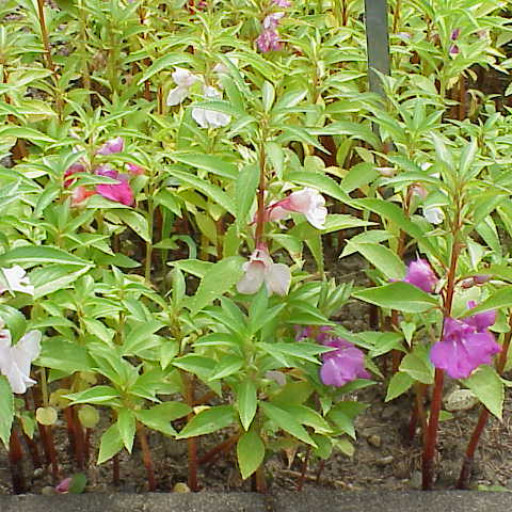
Plant Overview
Often called the "Touch-me-not" or "Rose Balsam," this Victorian-era favorite brings a touch of old-world charm to shady garden corners. Originally hailing from the tropical regions of India and Southeast Asia, it has been cherished for centuries for its camellia-like blooms and its peculiar, interactive seed pods. It is the perfect choice for hobbyists who enjoy a garden that "moves" and evolves rapidly throughout the season.
🔍 How to Identify
- 🌸 The Blooms: Flowers are cup-shaped and can be single or double-petaled, appearing in vibrant shades of pink, red, purple, and white. Unlike many other flowers, these often grow tucked closely along the main central stem.
- 🍃 Leaf Texture: The foliage is long, lance-shaped, and features noticeably "toothed" or serrated edges, giving the plant a lush, slightly rugged appearance.
- 💧 Succulent Stems: The main stalks are thick, fleshy, and almost translucent. They are filled with water, which helps the plant stay upright during the heat of the day.
🏡 In Your Garden
- 🌦️ Moisture is Key: Because of its succulent-like stems, this plant is a "thirsty" grower. If the soil dries out completely, the plant will wilt dramatically as a distress signal, though it usually bounces back quickly once watered.
- 🌱 The Self-Seeding Surprise: You rarely have to replant Balsam every year. It is a prolific self-seeder; once established, it will "plant" its own offspring for the following spring without any help from you.
- 🪴 Preferred Shade: While it can handle some morning sun, it truly thrives in dappled shade. High heat and direct afternoon sun can scorch the delicate petals and cause the plant to lose its vibrant color.
⚠️ Safety & Toxicity
- 🐾 Mild Caution: Impatiens balsamina is generally considered non-toxic to cats and dogs by the ASPCA, making it a "pet-safe" choice for most backyards.
- 👅 Digestive Nuance: Despite being non-toxic, the plant contains small amounts of calcium oxalate crystals. If a curious child or pet munches on a large amount, it might cause a mild stomach ache or a slight tingling sensation in the mouth.
✨ Fun Fact
💥 The nickname "Touch-me-not" comes from the plant’s explosive seed dispersal method. When the seed pods are ripe, the slightest touch—even a heavy raindrop—causes the pod to burst open and coil back like a spring, catapulting seeds several feet away from the parent plant!

Detailed Care Instructions
The genus name, "impatiens" refers to the urgency with which these plants expel their seeds through exploding seed pods. "Balsamina" refers to the plant's resins and oils (balms) that historically were used as a remedy for physical afflictions and skin ailments.
Is this plant still used in folk medicine?
Yes. Especially in Asia, this plant is used in a variety of medical applications. It is less common in western folk holistic practice, but poultices made by crushing the leaves and flowers are used as a balm for burns and other skin irritations.
Why is this plant so hard to find?
Garden balsam was once a very popular plant, found in nearly all Victorian gardens. But by the early 1900s, it was beginning to disappear from flower gardens in favor of other species. Recently, however, individuals interested in heirloom species have fueled new interest in the plant. While it is still not a common offering at garden centers, seed companies and seed-saver organizations now offer seeds for several legacy varieties.
| Color | Purple, Pink, Red, White, Bicolors |
| Soil Ph | Acidic, Neutral |
| Humidity | Normal |
| Lighting | Full Sun |
| Soil Type | Loamy, Moist, Well-Drained |
| Bloom Time | Spring, Summer, Fall |
| Difficulty | Medium |
| Plant Type | Annual |
| Hibernation | Cold Period |
| Mature Size | 6–30 In. Tall, 6–12 In. Wide |
| Native Area | Asia |
| Temperature | 18°C - 30°C |
| Sun Exposure | Full, Partial |
| Hardiness Zones | 2-11 |
To grow Impatiens Balsamina, also known as balsam or touch-me-not, you can follow these steps:
- Choose a suitable growing location: Impatiens Balsamina prefers partial shade to full shade, as direct sunlight can scorch the foliage. Ensure that the area receives at least 4-6 hours of indirect sunlight daily.
- Prepare the soil: The soil should be well-draining and enriched with organic matter. Remove any weeds or debris from the planting area and loosen the soil to a depth of about 8-10 inches. You can also add compost or well-rotted manure to improve the soil's fertility.
- Sow the seeds or transplant seedlings: You can start Impatiens Balsamina from seeds or purchase young seedlings from a nursery. Sow the seeds or transplant the seedlings into the prepared soil, ensuring a spacing of about 8-12 inches between each plant. If sowing seeds directly, barely cover them with a thin layer of soil.
- Watering: Keep the soil consistently moist but not waterlogged. Water the plants regularly, especially during dry periods, to prevent drying out. Avoid overhead watering, as wet foliage can increase the risk of disease.
- Fertilization: Impatiens Balsamina benefits from regular feeding. Apply a balanced, water-soluble fertilizer every 2-3 weeks during the growing season. Follow the instructions on the fertilizer package for the appropriate dosage.
- Mulching: Applying a layer of organic mulch around the base of the plants helps conserve moisture and suppress weed growth. Use materials like straw, wood chips, or compost, ensuring the mulch does not touch the plant stems directly.
- Pruning: Prune and pinch back the plants regularly to encourage bushier growth and more abundant flowering. Pinch off the tips of the stems to promote branching and remove any spent flowers to encourage continuous blooming.
- Pest and disease control: Monitor the plants for any signs of pests, such as aphids or spider mites, and treat them promptly with appropriate insecticidal soaps or oils. Avoid overhead watering to minimize fungal diseases.
- Harvesting seeds: If you prefer to grow Impatiens Balsamina from seeds, allow some flowers to mature and produce seed pods. Harvest the seeds when the pods start to turn brown and split open. Dry the seeds indoors for a few days before storing them in a cool, dry place.
With proper care and attention to these steps, you should be able to grow Impatiens Balsamina successfully. Happy gardening!

Place in a window with dappled sun or a spot in the middle of a room. Or directly in a window facing west or east.

To water this plant, first ensure that the soil is dry to the touch before watering. Using a watering can or hose with a gentle spray, water the soil around the base of the plant, taking care to avoid getting water on the leaves. Water until the water begins to seep out of the bottom of the container or until the soil feels evenly moist. Avoid overwatering, as this can lead to root rot and other issues. It is generally recommended to water deeply and then allow the soil to dry out slightly before watering again.
To promote healthy growth and flowering of this plant, apply a balanced fertilizer that is higher in phosphorus and potassium than nitrogen. Mix the fertilizer into the soil around the base of the plant, being careful not to get any on the leaves. Water the plant thoroughly after fertilizing. Repeat the application every month during the growing season. Avoid over-fertilizing, as this can lead to excessive foliage growth at the expense of flowers.
The Impatiens Balsamina plant thrives in a moist and well-drained soil. It is recommended to use loamy soil that is rich in organic matter. The pH level of the soil should be slightly acidic, with a range of 5.5 to 6.5. Before planting, it is advisable to mix compost, peat moss, and sand with the soil to improve its texture and drainage. The soil should be deeply tilled to allow the roots of the plant to penetrate. It is important to ensure that the soil is not waterlogged, as this can lead to root rot. Additionally, the soil should be kept moist, but not overly wet, as Impatiens Balsamina does not tolerate dry soil.
Propagation of this plant can be done through seeds or cuttings. For the seed method, collect mature seeds from the plant and sow them in well-drained soil. Keep the soil moist and warm, and the seeds will germinate within 10-14 days. For cuttings, take a stem cutting from the plant that includes a few leaves. Dip the end of the cutting in rooting hormone and then plant it in well-draining soil. Keep the soil moist and warm, and the cutting will root within a few weeks. Transplant the new plant to a larger container or in the garden once it has grown to a suitable size.
Common pests of the garden balsam include Mealybugs, spider mites, aphids, thrips. Make a habit of checking your garden balsam frequently for pests so that any infestations can be caught and managed early.








