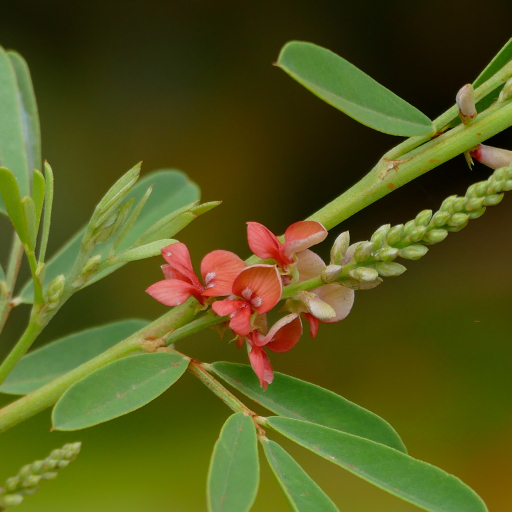
Plant Overview
Often called Guatemalan Indigo or Anil, this resilient shrub was once more valuable than gold throughout the Americas. It is the botanical secret behind the vibrant, enduring blues of ancient Mayan murals. Beyond its historical fame as a dye plant, it is a tough, sun-loving legume that brings a delicate, feathery texture to warm-climate gardens.
🔍 How to Identify
- 🍃 Feathery Foliage: The plant features compound leaves with several pairs of small, oval leaflets that give the shrub a soft, airy, and elegant appearance.
- 🌸 Salmon Spikes: It produces small, pea-like flowers in dense, upright clusters. These blooms usually range from a soft pinkish-red to a distinct salmon-orange.
- 🫛 Curved Pods: One of the easiest ways to spot this specific species is by its seed pods; they are short, densely packed, and notably curved (falcate), looking almost like tiny sickle blades.
🏡 In Your Garden
- 🌱 The Soil Builder: As a member of the legume family, this plant is a "nitrogen fixer." It hosts beneficial bacteria in its roots that pull nitrogen from the air and put it into the soil, acting as a living fertilizer for your garden.
- ☀️ Drought Warrior: This is a "tough love" plant. It thrives in poor, sandy soils and intense heat. It actually prefers to dry out between waterings and hates "wet feet" or soggy roots.
- ✂️ Shape Management: Left to its own devices, it can become a bit leggy or woody. A hard prune in the early spring encourages a flush of fresh, silver-green growth and more prolific flowering.
⚠️ Safety & Toxicity
- 🐾 Low to Moderate Risk: While not traditionally considered a highly toxic plant, the leaves and seeds contain saponins and indigo precursors that can cause digestive upset if consumed by curious pets or children.
- 🧤 Mess Factor: If you crush the leaves or stems, they may not look blue immediately, but the juice can oxidize and leave stubborn stains on clothing or skin. It’s best to wear gardening gloves when pruning.
✨ Fun Fact
The pigment produced from this plant was a key ingredient in "Maya Blue," a legendary paint so chemically stable that it has resisted centuries of tropical weathering, acids, and modern solvents on ancient ruins.

Detailed Care Instructions
To grow Indigofera suffruticosa plants, follow these steps:
- Choose a suitable location: Indigofera suffruticosa plants prefer full sun to partial shade. Ensure the soil is well-draining and has a pH level between 6.0 and 7.5.
- Prepare the soil: Loosen the soil in the planting area using a garden fork or tiller. Remove any weeds or grass. Amend the soil with organic matter, such as compost or aged manure, to improve its fertility and drainage.
- Sow seeds or transplant starter plants: You can start Indigofera suffruticosa plants from seeds or purchase starter plants from a nursery. If using seeds, sow them directly into the prepared soil according to the recommended planting depth provided on the seed packet. If using starter plants, dig a hole slightly larger than the root ball and place the plant in the hole, ensuring it's at the same depth as it was in its previous container. Backfill the hole with soil and gently firm it around the plant.
- Water regularly: Water the plants regularly, especially during the first few weeks after planting. Keep the soil moist but not soggy. As the plants establish themselves, they become more drought-tolerant and require less frequent watering.
- Mulch the soil: Apply a layer of organic mulch, such as wood chips or straw, around the plants to help conserve moisture, suppress weed growth, and regulate the soil temperature.
- Prune when necessary: Indigofera suffruticosa plants benefit from periodic pruning to maintain their shape and encourage bushier growth. Prune dead or damaged branches and remove any suckers or crowded growth. Pruning can be done in early spring or after the blooming season.
- Fertilize sparingly: Indigofera suffruticosa plants do not require heavy fertilization. However, you can apply a balanced slow-release fertilizer once in spring to provide necessary nutrients. Follow the instructions on the fertilizer packaging for the correct application rate.
- Monitor for pests and diseases: Keep an eye out for common garden pests, such as aphids or spider mites, and control them with organic insecticides if necessary. Monitor for signs of diseases, such as powdery mildew or root rot, and take appropriate action promptly.
- Harvest the leaves: If you're growing Indigofera suffruticosa for its dye properties, harvest the leaves when they reach maximum maturity (typically when the plant is at least two years old). Dry the leaves in a cool, dry location until crispy, then grind them into a powder for use in dyeing.
By following these steps, you can successfully grow Indigofera suffruticosa plants.

Place in a bright room that is sun drenched almost all day. Or directly in a south-facing window.

The best way to water this plant is to provide moderate watering. It requires frequent watering during the initial stage of growth and establishment. However, it can survive long periods of drought once it gets well established. The watering schedule also depends on the soil type and drainage. The plant prefers well-drained soil and should not be over-watered as it may lead to root rot. It is best to water the plant when the top layer of soil feels dry to the touch. It is also recommended to water the plant early in the morning or late afternoon to avoid water evaporation during hot daytime temperatures. Finally, it is important to ensure that the water reaches the root system for optimal growth and health.
To fertilize this plant, apply a balanced fertilizer at the beginning of the growing season. Follow the manufacturer's instructions for appropriate application rates. Avoid fertilizing during periods of drought or extreme heat, as this can damage the plant. During the growing season, monitor the plant for signs of nutrient deficiencies, such as yellowing leaves. If needed, apply a foliar spray of liquid fertilizer to address specific deficiencies. As with all plants, be sure not to over-fertilize, as this can lead to nutrient burn and other issues.
Indigofera Suffruticosa plant prefers a well-draining and fertile soil with a slightly acidic to neutral pH level. The soil should be rich in nutrients and organic matter, as this plant has high requirements for both. A sandy loam or loamy soil is ideal for the growth of this plant. The soil should also be able to retain moisture, but not be waterlogged, as excessive waterlogging can lead to root rot. It is recommended to add compost or well-decomposed organic matter to the soil before planting to improve its quality, fertility, and texture. A balanced fertilizer can also be applied to the soil during the growing season to ensure optimal growth and development of the plant.
To propagate this plant, take semi-hardwood cuttings in the summer and dip them in rooting hormone. Place the cuttings in a mixture of moist soil and sand, covering them with a plastic bag to create humidity. Keep the soil moist and provide indirect sunlight. Transplant the cuttings to their permanent location once they have developed roots. Alternatively, seeds can be sown in the spring in a well-draining soil mix and kept moist and warm until germination occurs.








