Plant Overview
Often called "Kangkong," "Ong Choy," or "Water Spinach," Ipomoea aquatica is a beloved semi-aquatic vegetable that dominates Southeast Asian stir-fries. While it looks like a delicate morning glory, it is a powerhouse of growth that can float on water or creep through mud with ease. In some regions, it is a vital staple crop, while in others, it is considered a "forbidden fruit" due to its aggressive, invasive nature in wetlands.
🔍 How to Identify
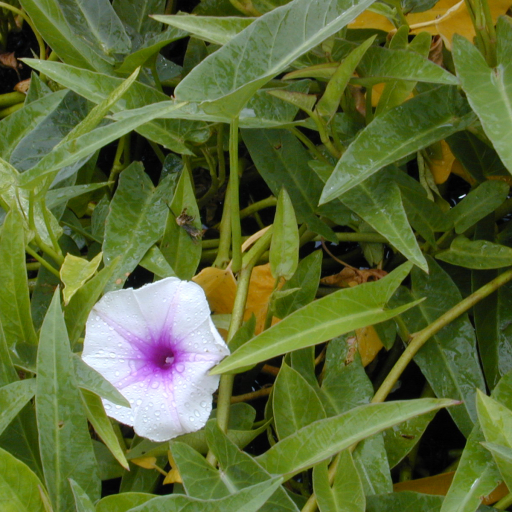
- 🍃 The Leaves: Long, arrowhead-shaped (sagittate) or lance-like foliage that stays a vibrant, glossy green throughout the growing season.
- 🌸 The Bloom: Showcases funnel-shaped flowers that resemble small white or pale pink Morning Glories, often featuring a deeper purple "throat" at the center.
- 🛶 The Stems: The most iconic feature is its hollow, succulent stems, which act like built-in flotation devices, allowing the plant to carpet the surface of ponds.
🏡 In Your Garden
- 💧 Thirst for Life: Unlike typical garden greens, this plant thrives with its "feet" submerged in water. It is best grown in containers without drainage holes or at the very edge of a pond to mimic its tropical marshland home.
- ✂️ Vigorous Vining: It grows incredibly fast in high heat and humidity. Regular harvesting of the top 6 inches encourages bushier branching and prevents the vines from becoming a tangled, unmanageable mess in your yard.
⚠️ Safety & Toxicity
- 🍴 Status: Edible and highly nutritious for humans when cooked; it is a significant source of vitamins A and C.
- 🐌 Wild Warning: If harvesting from the wild, beware of Giant Liver Flukes (Fasciolopsis buski), which can cling to the stems in stagnant water. It is essential to wash and cook the plant thoroughly to ensure safety.
- 🐾 Pets & Kids: Generally non-toxic, but like many leafy greens, the high fiber and moisture content might cause mild digestive upset in cats or dogs if they graze on it excessively.
✨ Fun Fact
In the United States, Ipomoea aquatica is technically classified as a "Federal Noxious Weed." Because it can grow up to 4 inches in a single day, it has the power to completely choke out local waterways and destroy native ecosystems, leading some states to ban its cultivation entirely!

Detailed Care Instructions
| Lighting | Full Sun |
| Toxicity | Poisonous |
| Hardiness Zones | Max 12 |
To grow Ipomoea Aquatica, also known as water spinach, you can follow these steps:
- Obtain seeds or seedlings: You can find Ipomoea Aquatica seeds or seedlings at a local nursery or through online gardening stores.
- Choose a location: Select a sunny spot in your garden or a patio container that receives 6-8 hours of direct sunlight per day.
- Prepare the soil: Ipomoea Aquatica thrives in well-drained soil that is rich in organic matter. Prepare the soil by adding compost or organic fertilizer to improve nutrient content and drainage.
- Sow seeds or plant seedlings: If using seeds, sow them directly into the moist soil at a depth of 1/4 inch. Space the seeds about 6-8 inches apart. If using seedlings, dig a hole large enough to accommodate the roots and gently place the plant in the hole, covering the roots with soil.
- Water regularly: Ipomoea Aquatica requires consistent moisture, so water regularly to keep the soil evenly moist. Avoid waterlogging as it can lead to root rot.
- Mulch: Apply a layer of organic mulch around the base of the plants to retain moisture, suppress weed growth, and protect the roots.
- Provide support: As the plants grow, they may benefit from support structures such as trellises or stakes to prevent them from sprawling on the ground.
- Fertilize: Ipomoea Aquatica grows quickly and benefits from regular feeding. Use a balanced organic fertilizer every 4-6 weeks or as per the instructions on the fertilizer package.
- Harvesting: Once the plants reach a height of 8-10 inches, you can start harvesting the tender shoots and leaves. Regular harvesting encourages new growth and prolongs productivity.
- Pest and disease control: Keep an eye out for common pests such as aphids and caterpillars, and treat them with organic insecticides if necessary. Also, check for signs of diseases like leaf spots or powdery mildew, and take appropriate measures to prevent or treat them.
Following these steps will help you successfully grow and harvest Ipomoea Aquatica in your garden.

Place in a bright room that is sun drenched almost all day. Or directly in a south-facing window.

To water this plant, one should ensure that the soil is consistently moist, but not waterlogged. It is important to water the plant deeply and thoroughly to encourage good root development and growth. However, the plant should not be allowed to sit in standing water as this can lead to root rot and other issues. Watering frequency will depend on factors such as temperature, humidity, and soil type, but generally, it should be done when the top inch of soil feels dry to the touch. Use a watering can or hose with a gentle spray nozzle to avoid damaging the delicate foliage of the plant.
To fertilize this plant, mix a balanced fertilizer containing nitrogen, phosphorus, and potassium in equal amounts. Dilute the fertilizer according to the manufacturer's instructions and apply it once a month during the growing season. Water the plant thoroughly before and after fertilizing to prevent root burn. Avoid over-fertilizing, as this can lead to foliage burn and reduce plant health.
When planting the mentioned plant, it is best to use a soil that is loose and well-draining. The ideal pH range of the soil should be slightly acidic, from 5.5 to 6.8. The soil should be rich in nutrients, high in organic matter and must be able to retain moisture. An appropriate soil type for this plant will ideally be compost-enriched garden soil or loamy soil with the addition of organic matter. It is not advisable to use sand or clay soil, as they do not provide the best conditions for healthy growth and development. Additionally, the soil must be kept evenly moist, but not waterlogged. Good drainage is key to preventing root rot, especially in locations with high rainfall or soils that do not drain well.
To propagate this plant, first, you need to select a healthy mature stem that has at least three nodes. Cut the stem using a sharp and clean knife, ensure the cut is above a node.
You then need to remove all the leaves except for the top two or three. Dip the cut end into a rooting hormone and then place it into a container filled with a well-draining potting mix.
Ensure the soil is moist but not too wet. Cover the container with a clear plastic bag to create a humid environment that will stimulate root growth. Place the container in a warm and bright location, but avoid direct sunlight.
Check the soil regularly and water it if it feels dry. After a few weeks, usually 2-4 weeks, the stem should have rooted and started sprouting new leaves. Once the new growth is evident, you can remove the plastic bag.
Allow the plant to keep growing until it reaches a size you are comfortable with before transplanting it into a larger container or into your garden.








