Plant Overview
Often called the "Railway Creeper" or the "Mile-a-minute Vine," Ipomoea cairica is a tireless traveler of the morning glory family. Native to tropical Africa and Asia, it earned its nickname by hitching rides on train tracks and ships, quickly draping railway embankments in a cloak of purple. While it is beloved for its rapid growth and delicate flowers, it is a plant that demands respect—and a very strong trellis.
🔍 How to Identify
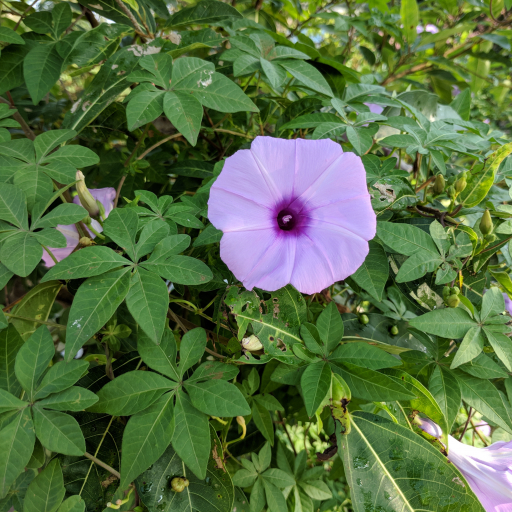
- 🖐️ Hand-Shaped Foliage: Unlike the heart-shaped leaves of common morning glories, this species features "palmate" leaves divided into five to seven slender, finger-like lobes that look like a tiny green hand.
- 🎺 Trumpet Blooms: The flowers are classic funnel-shaped trumpets, usually appearing in soft lavender or mauve with a distinct, darker violet "throat" at the center.
- 🌀 Smooth Twining Stems: The vines are slender, hairless, and highly flexible, spiraling tightly around anything they touch to climb toward the sunlight.
🏡 In Your Garden
- 🧗 The Great Escapist: This vine is a "mile-a-minute" grower, making it perfect for hiding an ugly chain-link fence or covering a pergola in record time. However, because it climbs via twining, it can accidentally "strangle" delicate saplings or smaller shrubs if not guided away from them.
- ☀️ Sun and Support: It thrives in full sun and is incredibly resilient against heat and drought once its tuberous roots are established. It isn't picky about soil, but it does require a sturdy structure; a flimsy trellis may eventually collapse under the weight of its dense, overlapping layers of foliage.
⚠️ Safety & Toxicity
- 🐾 Caution for Pets: The seeds of Ipomoea cairica contain alkaloids that are toxic to cats, dogs, and horses. If ingested, they can cause digestive upset or more serious symptoms.
- 👶 Human Safety: While the leaves are generally safe to touch, the seeds should never be consumed. They can cause nausea, vomiting, and in large quantities, may have hallucinogenic effects that are physically dangerous.
✨ Fun Fact
The Railway Creeper is a "circadian" plant; its blossoms usually open at the first light of dawn and begin to wilt by midday. Because it produces so many buds, it appears to be in a constant state of bloom for months on end!

Detailed Care Instructions
| Humidity | Normal |
| Lighting | Full Sun |
| Difficulty | Medium |
| Hardiness Zones | Max 8 |
To grow Ipomoea Cairica plant, also known as Mile-a-Minute Vine or Railroad Vine, you can follow these steps:
- Choose a suitable location: Ipomoea Cairica prefers full sun to partial shade. Select a location with well-draining soil.
- Prepare the soil: Before planting, loosen the soil and remove any weeds or debris. Add organic matter to improve soil fertility and drainage.
- Planting: If you have seeds, soak them in water overnight before planting. Plant the seeds about 1/4 inch deep in the soil. If you have a potted plant, dig a hole slightly larger than the root ball and place the plant inside. Backfill the hole with soil and gently firm it down.
- Watering: Water the plant regularly, making sure the soil stays consistently moist but not waterlogged. Once established, the plant is somewhat drought-tolerant but still benefits from occasional watering during dry periods.
- Support: Ipomoea Cairica is a climbing vine that requires support to grow. Install a trellis, fence, or other types of support structure for the plant to climb on.
- Mulching: Apply a layer of organic mulch around the base of the plant to help retain moisture and suppress weed growth. Keep the mulch a few inches away from the stem to prevent rotting.
- Pruning: Prune the plant regularly to maintain its shape, control its growth, and remove any dead or damaged parts. You can also trim it to encourage bushier growth.
- Fertilizing: Feed the plant with a balanced fertilizer every few months during the growing season to promote healthy growth. Follow the instructions on the fertilizer packaging for application rates.
- Pests and diseases: Keep an eye out for common garden pests like aphids, mites, and caterpillars. Treat any pests promptly using organic or chemical insecticides if necessary. Ipomoea Cairica is generally resistant to diseases.
- Winter care: In colder regions, where the plant is not frost-tolerant, you can grow it as an annual or bring container-grown plants indoors during winter. Place them in a bright, cool location and reduce watering.
With proper care and maintenance, your Ipomoea Cairica plant should thrive and provide you with lovely foliage and flowers.

Place in a bright room that is sun drenched almost all day. Or directly in a south-facing window.

To water this plant, ensure that the soil is dry to the touch before watering. Use a watering can or hose with a gentle spray nozzle to avoid damaging the plant's delicate foliage. Water at the base of the plant and avoid wetting the leaves as this can lead to fungal diseases. Water deeply, making sure the water penetrates the soil to the roots. Allow excess water to drain away to prevent waterlogging. Water consistently, but do not overwater as this can lead to root rot. In winter, reduce watering and allow the soil to dry slightly between waterings.
To fertilize this plant, you should apply a balanced fertilizer that contains equal parts of nitrogen, phosphorus, and potassium. Fertilize the plant once a month or as required based on the soil condition. Always follow the manufacturer’s instructions for application, and water the plant well after fertilizing. Avoid over-fertilizing as it can lead to salt buildup and damage the plant's roots.
The ideal soil for the Ipomoea Cairica plant should be well-draining and have a pH range of 6-7.5. It should have a mix of sand, loam, and organic matter to promote healthy root growth. The soil must also have good aeration and be able to retain enough moisture to keep the plant hydrated. Adding organic fertilizers or compost can help provide essential nutrients to the plant. Avoid using heavy or compacted soils that can restrict root growth and cause waterlogging. The soil should be regularly checked for pests and diseases and treated appropriately.
To propagate a certain plant species, you will need to take a few steps. Firstly, you will need to identify the species you want to propagate accurately. Then, find a healthy and well-formed plant of that species to use as a parent plant.
Next, prepare a cutting that is around 6-8 inches long and remove any leaves from the bottom third of the cutting. Dip the cut end of the cutting in rooting hormone powder to promote successful rooting.
Prepare a small pot with some well-draining soil mixture and plant the cutting in it, making sure the soil is firm and around the base of the cutting. Water the newly planted cutting well and cover it with a clear plastic bag or plastic wrap to create a humid environment. This will aid in the rooting process.
Place the pot in a bright location, but out of direct sunlight. Be sure to keep the soil evenly moist while the cutting roots over the next few weeks. When the cutting has developed new growth, you can remove the plastic covering and begin to gradually expose the plant to more sunlight.
As the plant continues to grow, it will require regular watering and periodic fertilization to maintain its health and vigor. In time, it can be transplanted to a larger pot, or directly into the ground if the climate and soil conditions are suitable.
Common pests of the railroad-creeper include Spider mites, thrips. Make a habit of checking your railroad-creeper frequently for pests so that any infestations can be caught and managed early.








