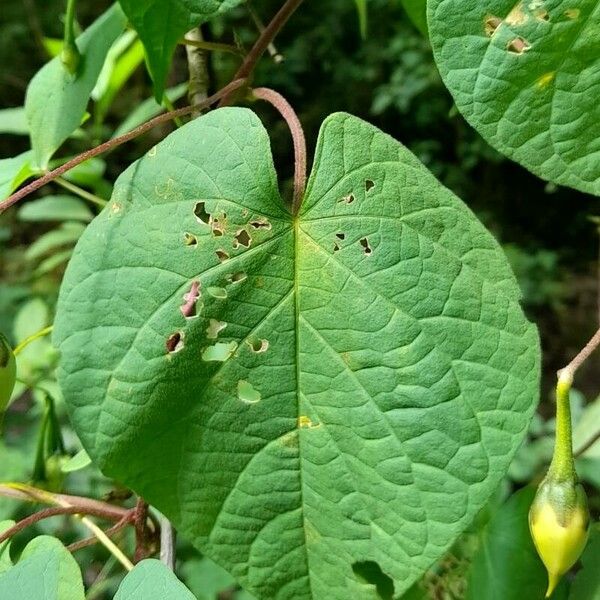
Plant Overview
Known as a wilder cousin of the classic garden Morning Glory, Ipomoea dumetorum is a vigorous climber that turns fences and thickets into a tapestry of vivid color. Native to the tropical regions of the Americas, its name literally translates to "of the thickets," perfectly describing its love for scrambling over other vegetation. It is a favorite for gardeners looking to create a lush, untamed screen or a vertical burst of magenta.
🔍 How to Identify
- 🍃 Heart-Shaped Foliage: The leaves are classically cordate (heart-shaped), usually smooth and bright green, creating a dense wall of greenery.
- 🌸 Trumpet Blooms: It produces funnel-shaped flowers, typically in shades of magenta, lavender, or purple, often with a slightly lighter or white "throat" in the center.
- 🌀 Twining Stems: Unlike vines with tendrils, this plant climbs by physically wrapping its slender, flexible stems tightly around branches, wires, or poles.
🏡 In Your Garden
- 🧱 Support is Essential: Because this plant is a natural "scrambler," it requires a trellis, fence, or arbor to look its best. Without a vertical structure, it will spread across the ground as a thick, tangled groundcover.
- ☀️ Sun-Seeker Nuance: While it needs full sun to trigger its prolific blooming, it thrives best when the soil at its base is kept cool and moist with a thick layer of mulch.
- ✂️ Growth Management: This species is an "enthusiastic" grower. In warmer climates, it can quickly overwhelm smaller neighbors, so regular pruning is recommended to keep it within its designated boundaries.
⚠️ Safety & Toxicity
- 🐾 Toxic to Pets: Like many members of the Morning Glory family, the seeds of Ipomoea dumetorum contain alkaloids that are toxic to dogs, cats, and horses.
- 👶 Human Caution: Ingestion of the seeds can cause significant gastrointestinal upset and, in some cases, neurological symptoms. It is best planted away from areas where small children might be tempted to pick at the seed pods.
✨ Fun Fact
The genus name Ipomoea is derived from the Greek words ips (meaning "worm") and homoios (meaning "resembling"), which is a poetic reference to the way the plant's stems "crawl" and wind their way up toward the light!

Detailed Care Instructions








