Plant Overview
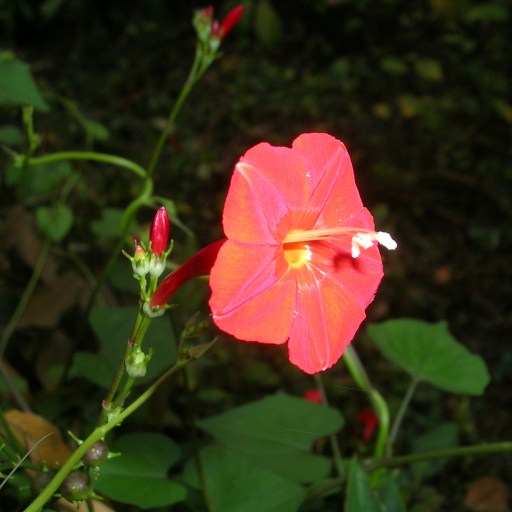
Known as the Scarlet Creeper or Ivy-leaf Morning Glory, this vibrant vine is a showstopper in any sun-drenched landscape. Native to the tropical Americas, it has charmed gardeners worldwide with its dainty, trumpet-shaped flowers that glow like embers against a backdrop of deep green foliage. It is a favorite among pollinators, often serving as a primary "filling station" for hummingbirds on their migratory routes.
🔍 How to Identify
- 🌿 The Foliage: Unlike many heart-shaped morning glories, this variety features "ivy-like" leaves that are deeply lobed, usually into three or five distinct points.
- 🎺 The Blooms: Look for small, brilliant scarlet or reddish-orange flowers. They have a long, slender tube that flares out into a star-shaped face, often with a subtle yellow or white throat.
- 🌀 Growth Habit: This is a twining vine; it doesn't have tendrils like a grape but instead wraps its entire stem tightly around any support it can find, from fences to neighboring shrubs.
🏡 In Your Garden
- 🪜 The Need for Speed: This plant is a rapid climber. Because it grows so fast, it is best suited for covering vertical eyesores like chain-link fences or old sheds, but be careful—it can quickly overwhelm smaller, slower-growing plants if left unchecked.
- 🌱 Self-Seeding Spirit: You rarely have to plant this twice. It produces small, round seed pods that burst when dry, scattering "volunteers" for the following year. If you want to control its spread, make sure to deadhead the flowers before they turn to seed.
⚠️ Safety & Toxicity
- 🚫 Status: Toxic to ingest.
- 🐾 Details: Like many members of the Ipomoea family, the seeds of the Scarlet Creeper contain alkaloids that can be harmful to humans, cats, dogs, and horses if swallowed. Ingestion can cause digestive upset or, in larger quantities, more serious neurological symptoms. It is best kept away from curious pets and toddlers.
✨ Fun Fact
The species name hederifolia literally translates to "ivy-leaved" from Latin (hedera meaning ivy and folium meaning leaf). Despite its name and appearance, it isn't related to English Ivy at all—it’s actually a close cousin to the Sweet Potato!

Detailed Care Instructions
| Humidity | Normal |
| Lighting | Full Sun |
| Difficulty | Easy |
| Hibernation | Cold Period |
| Temperature | Min 17°C |
| Hardiness Zones | 2 - 12 |
To grow Ipomoea Hederifolia (ivy-leaved morning glory) plants, you can follow these steps:
- Choose the right location: Ipomoea Hederifolia plants need full sunlight to thrive. Select a spot in your garden or balcony where they can receive direct sunlight for at least 6-8 hours a day.
- Prepare the soil: The soil should be well-draining and rich in organic matter. If the soil in your garden is heavy or clayey, amend it by adding compost or well-rotted manure to improve its drainage and fertility.
- Sow the seeds: Ipomoea Hederifolia can be grown from seeds. Sow the seeds directly into the soil once the danger of frost has passed and the temperature is consistently above 60°F (15°C). Make small holes in the soil, about 1/4 inch deep, and place 2-3 seeds in each hole. Space the holes about 6-8 inches apart.
- Watering: Keep the soil slightly moist but not overly saturated. Water the plants regularly, especially during dry spells or hot weather. Avoid overwatering, as it can lead to root rot.
- Support: Ipomoea Hederifolia is a climbing vine that needs support to grow. Provide a trellis, fence, or bamboo poles for the plants to climb on. As they grow, gently guide the tendrils towards the support structure.
- Pruning: Trim the plants as needed to control their size and shape. Pruning also promotes bushier growth and more blooms.
- Fertilization: Use a balanced, water-soluble fertilizer every few weeks during the growing season to provide essential nutrients. Follow the instructions on the fertilizer packaging for application rates.
- Pest and disease control: Watch out for common garden pests like aphids or spider mites. If necessary, use organic pest control methods or insecticidal soap to manage infestations. Proper spacing, good air circulation, and avoiding excessive moisture can help prevent diseases.
- Harvesting seeds: Once the Ipomoea Hederifolia plants have flowered and produced seed pods, you can harvest the seeds for future planting. Allow the seed pods to dry on the plant, then collect them and store them in a cool, dry place for next year's sowing.
By following these steps, you should be able to successfully grow Ipomoea Hederifolia plants and enjoy their beautiful foliage and flowers.

Place in a bright room that is sun drenched almost all day. Or directly in a south-facing window.

To water this particular plant, first ensure that the soil is completely dry before watering it again. When watering, use room temperature water and pour it slowly and evenly around the base of the plant. Avoid getting water on the leaves or stem to prevent rot. Water the plant once a week or as needed, adjusting the frequency depending on the weather and season. Keep an eye on the plant for signs of over or under watering, such as yellowing leaves, wilting, or root rot.
To fertilize this plant, use a balanced fertilizer with equal amounts of nitrogen, phosphorus, and potassium. Apply the fertilizer once a month during the growing season, which is typically from spring to early fall. Be sure to follow the recommended dosage on the fertilizer package and water the plant well after fertilizing. Avoid over-fertilizing, as this can lead to stunted growth and poor health.
When selecting soil for this plant, it is important to consider the native habitat and growing conditions. This plant is typically found in areas with well-draining, nutrient-rich soil. A soil mix that is slightly acidic with a pH between 5.5 to 7.5 is ideal. It is also recommended to choose a soil that is rich in organic matter, such as compost or peat moss, to improve soil fertility and retain moisture. Additionally, adding perlite or coarse sand to the soil mix can improve drainage and prevent waterlogging, which can lead to root rot. Overall, a light, loose, and well-draining soil mix will provide optimal growing conditions for this plant.
To propagate this plant, you can start by selecting a healthy and mature stem. Using a sharp and clean pair of scissors or pruners, cut the stem at a 45-degree angle, making sure that it is at least 6 inches long.
Next, remove the leaves from the bottom third of the stem and dip the cut end into rooting hormone. This will help the plant to establish roots.
Prepare a pot with moist soil and create a hole with your finger or a stick. Plant the stem in the soil, making sure that the rooting hormone is covered.
Water the soil and cover the pot with a plastic bag to create a humid environment. Place the pot in a bright and warm location, but avoid direct sunlight.
After a week or two, check for new growth and roots. Once you see roots forming, you can remove the plastic bag and continue to care for the plant as you would a mature plant.








