Plant Overview
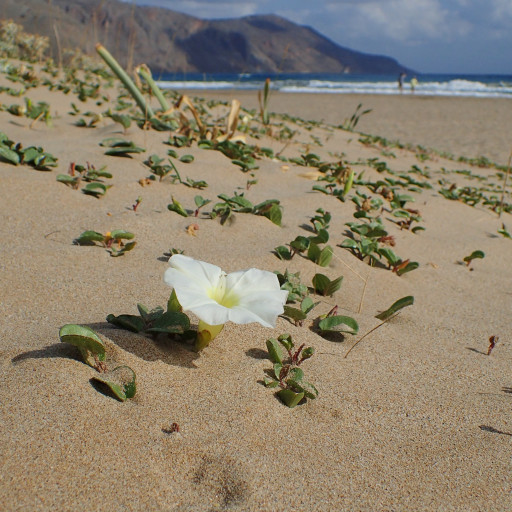
Often called the Beach Morning Glory or the Fiddle-leaf Morning Glory, Ipomoea imperati is a tough-as-nails coastal traveler. Thriving where most plants wither, it blankets tropical and subtropical sand dunes in a lush carpet of green and white, acting as a natural anchor against restless ocean winds. It is a true pioneer of the shoreline, turning harsh, salty environments into beautiful seaside landscapes.
🔍 How to Identify
- 🌼 The Flowers: Large, funnel-shaped blooms that are a brilliant, pristine white with a sunny yellow throat. True to their name, they typically open in the early morning and begin to wilt by the heat of the afternoon.
- 🍃 The Foliage: Thick, somewhat fleshy leaves that are highly variable. They can be simple ovals or take on a distinct "fiddle" or violin-like silhouette with notched sides.
- 🌱 Growth Habit: A low-creeping, perennial vine that sends out long, prostrate runners across the sand. It rarely climbs, preferring to stay grounded to avoid the shearing force of sea winds.
🏡 In Your Garden
- 🏖️ Coastal Specialty: This plant is the ultimate choice for "Xeriscaping" or beachside homes. It has an incredible tolerance for salt spray and high winds, making it a functional "living mulch" for sandy soils where other groundcovers fail.
- 🏜️ Drainage is Key: Because it naturally evolves on dunes, it requires exceptionally sharp drainage. It will quickly develop root rot if kept in heavy, water-logged garden soil. It prefers "lean" soil—avoid over-fertilizing, as this can lead to excessive leaf growth at the expense of its beautiful flowers.
⚠️ Safety & Toxicity
- 🐾 Mildly Toxic: Like many members of the Morning Glory family, Ipomoea imperati contains compounds that can be harmful if eaten.
- 🤢 Symptoms: Ingestion of seeds or foliage can cause gastrointestinal distress, including nausea or vomiting, in humans, dogs, and cats. It is best enjoyed as a hardy ornamental rather than a snack for curious pets.
✨ Fun Fact
- 🏗️ The Dune Builder: This plant is a "primary stabilizer." Its extensive underground root system acts like a subterranean net, catching blowing sand and helping to physically build and maintain the very sand dunes it lives on!

Detailed Care Instructions
To grow Ipomoea Imperati (beach morning glory) plants, you can follow these steps:
- Choose the right location: Ipomoea Imperati plants require full sun exposure for at least six hours a day. It thrives well in sandy or well-drained soil.
- Prepare the soil: Before planting, loosen the soil and remove any weeds or grass. Add compost or well-rotted manure to improve soil fertility and drainage.
- Sow seeds or transplant: You can start Ipomoea Imperati from seeds or transplant young seedlings. Sow the seeds directly into the prepared soil, about half an inch deep. Water gently after sowing. If transplanting seedlings, make sure to dig a hole large enough for the root ball and water well after planting.
- Watering: Ipomoea Imperati prefers moist soil but can tolerate periods of drought once established. Water regularly, especially during dry spells, to keep the soil evenly moist. Avoid overwatering, as it can lead to root rot.
- Provide support: Ipomoea Imperati is a vine-like plant that benefits from support structures such as trellises, fences, or stakes. Give them something to climb on as they grow.
- Pruning: Ipomoea Imperati can become leggy if not pruned regularly. To encourage bushier growth, pinch off the growing tips of the plant. This encourages lateral branches to develop and results in a fuller plant.
- Fertilization: While Ipomoea Imperati generally doesn't require heavy feeding, you can apply a balanced fertilizer (such as 10-10-10) once every two months during the growing season. Be sure to follow the manufacturer's instructions for application rates.
- Watch for pests and diseases: Keep an eye out for common pests like aphids, spider mites, or caterpillars. Treat infestations promptly with organic or chemical pest control methods. Also, monitor for signs of diseases like powdery mildew, root rot, or leaf spots, and take appropriate action if needed.
- Harvesting seeds: Ipomoea Imperati produces attractive seed pods. Allow the pods to turn brown and dry on the vine. Harvest the pods, remove the seeds, and store them in a cool, dry place for future propagation.
By following these steps, you can successfully grow Ipomoea Imperati plants and enjoy their beautiful flowers and foliage.

Place in a bright room that is sun drenched almost all day. Or directly in a south-facing window.

Ipomoea Imperati plant requires regular watering to keep its roots moist. It is recommended to water this plant deeply, allowing the water to reach the roots. However, overwatering should be avoided as it can lead to root rot.
The best way to water this plant is to check the soil moisture levels frequently. Stick your finger about an inch deep into the soil, and if it feels dry, it's time to water. You can also use a moisture meter to determine when to water.
When watering, ensure that the water is directed to the base of the plant, avoiding wetting the foliage. Watering in the morning is best as it allows the plant's foliage to dry off before night when temperatures are cooler and more humid, reducing the risk of fungal diseases.
The frequency of watering Ipomoea Imperati plant depends on the environment and the soil type. In hot and dry weather, you may need to water the plant more frequently. In contrast, in cooler or humid conditions, the plant may require less watering.
Overall, watering the Ipomoea Imperati plant moderately and consistently is key to maintaining healthy growth.
- Choose a high-quality fertilizer that is rich in nutrients and has a balanced N-P-K ratio.
- Dilute the fertilizer according to the package instructions.
- Apply the fertilizer to the soil around the plant, making sure to avoid getting any on the leaves or stems.
- Water the plant immediately after fertilizing to help the nutrients absorb into the soil.
- Repeat fertilizing every 4-6 weeks during the growing season, but avoid over-fertilizing as this can damage the plant.
To grow Ipomoea Imperati, it is recommended to use well-draining soil that is rich in nutrients. The soil should be slightly acidic with a pH ranging from 5.5 to 6.5. A mixture of garden soil, compost, peat, and sand in a 2:1:1:1 ratio is appropriate for this plant. The soil should be able to retain moisture, but not become waterlogged, as this can lead to root rot. Adding slow-release fertilizer to the soil will provide the necessary nutrients for the plant's growth. It is also important to ensure that the soil is free from weeds and debris before planting.
Ipomoea Imperati is a plant species that can be propagated through various methods. The first method is through seeds, which can be collected from mature plants. To propagate through seeds, the seeds should be sown in well-draining soil mix and kept in a warm location with adequate sunlight.
The second method is through stem cuttings which involves taking a stem cutting from a parent plant preferably in the early morning when the plant is turgid. The cutting should be approximately 6-8 inches long and should have at least 2-3 nodes. The cutting should be dipped into rooting hormone powder and placed in a well-draining potting mix. The cutting should be watered frequently and placed in a warm location with adequate sunlight. After about 2-3 weeks, the cutting should develop roots, and new growth should start to emerge.
The third method is through division, which involves separating the parent plant by carefully digging it up and dividing the root system into multiple sections. Each section should have enough roots and healthy shoots or leaves. These sections should then be replanted into well-draining soil mix and watered frequently.
Regardless of the method of propagation, it is important to keep the plants away from extreme conditions such as cold drafts or too much direct sunlight. Once established, the plants should be watered regularly and fed with a balanced fertilizer to ensure optimal growth.








