Plant Overview
Known as the "Bush Morning Glory" or the "Manroot," this tough-as-nails perennial is a true survivor of the American Great Plains. Unlike its climbing relatives that scramble over fences, this species grows as a sturdy, upright mound, producing stunning oversized flowers in the harshest of conditions. It is famously resilient, relying on a massive underground storage system to survive years of drought and intense prairie heat.
🔍 How to Identify
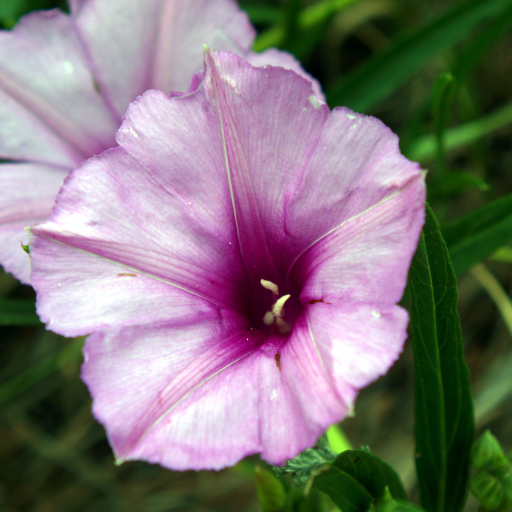
- 🌸 The Bloom: Large, trumpet-shaped flowers that range from lavender to deep rose-pink, often featuring a darker "ruby" throat that guides pollinators inside.
- 🌿 Narrow Foliage: The species name leptophylla means "thin leaf," referring to its long, slender, grayish-green leaves that look more like blades of grass than typical morning glory leaves.
- 🏗️ Bushy Habit: It forms a rounded, shrub-like clump about 1 to 3 feet tall, lacking the twining tendrils found on common garden morning glory vines.
🏡 In Your Garden
- 🏜️ Drought Champion: This plant is the ultimate "set it and forget it" choice for dry, sandy, or rocky soils. It thrives in full sun and actually prefers to be left alone once the roots take hold.
- 🛑 The Permanent Resident: Because it develops a gargantuan taproot, this plant is nearly impossible to move once established. Choose its spot wisely, as digging it up often results in "transplant shock" that the plant rarely survives.
⚠️ Safety & Toxicity
- 🚫 Seed Toxicity: The seeds of the Bush Morning Glory contain ergot alkaloids. If ingested, they can cause digestive upset, nausea, and in some cases, blurred vision or hallucinations.
- 🐾 Pets & Kids: While the foliage is generally ignored by animals, the seed pods should be kept away from curious pets and children to avoid accidental poisoning.
✨ Fun Fact
The nickname "Manroot" isn't an exaggeration; the central taproot of a mature plant can grow to be as large as a human torso and weigh over 100 pounds! This massive "underground canteen" stores enough water and nutrients to keep the plant alive for decades.

Detailed Care Instructions
To grow Ipomoea leptophylla, also known as bush morning glory or manroot, you can follow these steps:
- Choose the right location: Ipomoea leptophylla prefers full sun or partial shade. It can tolerate various soil types, but well-draining soil is ideal.
- Prepare the soil: Before planting, work the soil to improve its drainage and fertility. Incorporate organic matter like compost or aged manure to enrich the soil.
- Sow seeds: You can plant seeds directly into the soil after the last frost has passed. Sow the seeds about 1/4 inch deep and space them around 6-12 inches apart. Water gently after planting.
- Provide adequate water: Ipomoea leptophylla requires moderate watering. Keep the soil consistently moist but not waterlogged. Water deeply whenever the top inch of soil feels dry.
- Mulch: Applying a layer of organic mulch around the base of the plants can help retain moisture, regulate soil temperature, and control weed growth. Use mulch like straw or wood chips.
- Provide support (optional): Ipomoea leptophylla can climb and trail along the ground. If desired, provide a trellis, fence, or other support for the vines to climb.
- Monitor and control weeds: Regularly check for the growth of weeds near the plant. Remove any weeds to reduce competition for nutrients and water.
- Fertilize: Ipomoea leptophylla generally doesn't require heavy fertilization. However, you can apply a balanced, general-purpose fertilizer sparingly once or twice during the growing season to support healthier growth.
- Prune if needed: If the plant becomes overgrown or unruly, you can prune it lightly to control its size and shape. Pruning will also help promote bushier growth.
- Watch for pests and diseases: Monitor the plant for any signs of pests or diseases, such as aphids or powdery mildew. If necessary, use appropriate organic pest control methods or consult a specialist for effective treatment.
- Harvest seeds (optional): If you want to collect seeds for future propagation, allow the flowers to bloom, fade, and form seed pods. Harvest the pods once they turn brown and dry, then store the seeds in a cool, dry place.
Following these steps should help you successfully grow Ipomoea leptophylla and enjoy its beautiful flowers and unique foliage.

Place in a bright room that is sun drenched almost all day. Or directly in a south-facing window.

To water this plant, you should first observe the soil moisture level by sticking your finger about two inches into the soil. If it feels dry, it's time to water. Use a watering can with a spout or a hose with a gentle spray attachment to water around the base of the plant. Be sure to water deeply enough to saturate the soil to the root level without causing water to pool on the surface or run off. It's important not to overwater this plant as it can cause root rot. Watering once a week is typically sufficient, but adjust according to the weather and soil conditions. Drought-tolerant, this plant can withstand some dryness and thrives in well-draining, sandy soil.
To fertilize this particular plant, use a balanced fertilizer with equal amounts of nitrogen, phosphorus, and potassium. Apply the fertilizer every two to three weeks during the plant's growing season, which is typically from spring to fall. Be sure to follow package instructions for the specific type of fertilizer being used, as the amount and frequency of application can vary. Additionally, make sure the plant is well-watered before and after fertilizing to avoid any potential damage to the roots.
Ipomoea Leptophylla plant is a relatively easy to grow plant that requires well-draining soil with a pH range of 6.0 to 7.0. The soil should be rich in organic matter and should not be too heavy or compacted, as this could limit root growth. A mixture of peat moss, perlite, and sand is often recommended for planting Ipomoea Leptophylla as it provides both good drainage and aeration for the roots. It is important to keep the soil consistently moist but not waterlogged, as too much water can lead to root rot. Adding a slow-release fertilizer to the soil will also help provide essential nutrients to support healthy growth.
To propagate this plant, you will need to obtain healthy cuttings from mature stems of the plant. Take a sharp and clean pair of scissors and cut a section of stem that is about 6-8 inches long. Remove any leaves or flowers from the bottom half of the stem.
Fill a small container with moist potting soil or sand and make a hole in the center. Dip the bottom end of the stem in rooting hormone powder and carefully place it into the hole. Firmly press the soil around the cutting to provide support.
Water the cutting thoroughly and cover it with a clear plastic bag to create a humid environment. Place the container in a warm and bright spot, but not in direct sunlight. Mist the cutting daily to keep the soil moist.
After a few weeks, check the cutting for roots by gently pulling it. If you feel resistance, it means roots have formed. Once the roots have developed, remove the plastic bag and move the container to a brighter and cooler location. Gradually acclimate the plant to direct sunlight.
Once the plant has grown to about 6 inches tall, you can transplant it into a larger container or into the garden.








