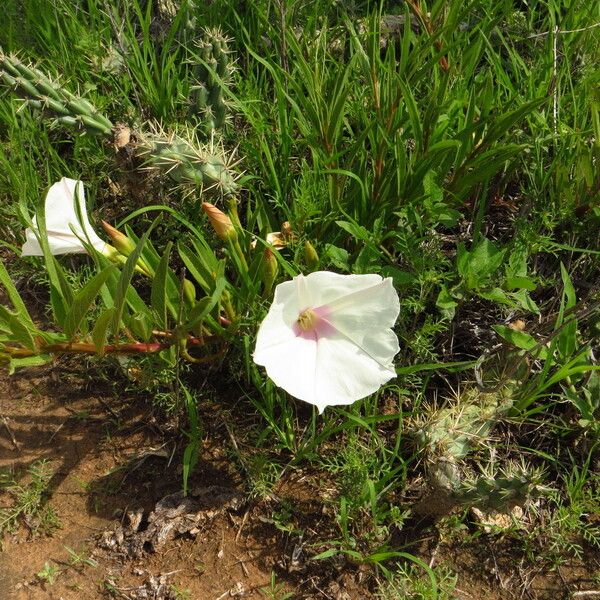
Plant Overview
Often called the Long-leaf Morning Glory, this desert gem is the elegant, understated cousin of the common garden vine. Native to the arid landscapes of Mexico and the Southwestern United States, it trades the typical heart-shaped leaves for long, ribbon-like foliage. It is a resilient survivor that brings a touch of delicate, pale color to harsh, sun-drenched environments.
🔍 How to Identify
- 🍃 Linear Foliage: Unlike the classic heart-shaped leaves of most morning glories, these leaves are remarkably long, narrow, and pointed, often resembling willow leaves.
- 🌸 Funnel Blooms: The flowers are large and trumpet-shaped, typically appearing in shades of white to soft lavender-pink, often with a darker, contrasting "throat" at the center.
- 🌱 Low Sprawl: While it can climb slightly, it is primarily a trailing perennial, creating a low-growing mat of greenery across the soil.
🏡 In Your Garden
- 🏜️ The Taproot Secret: This plant develops a massive, woody root system deep underground. This makes it incredibly drought-resistant, but it also means it hates being moved; transplanting an established Ipomoea longifolia is rarely successful.
- ☀️ Heat Seekers: These plants are "extremophiles" for the sun. They require well-draining, even rocky soil to thrive. In humid or soggy conditions, the plant is highly susceptible to root rot and will lose its vibrant form.
⚠️ Safety & Toxicity
- 🐾 Toxic to Pets: Like many members of the Convolvulaceae family, the seeds contain alkaloids that are toxic if ingested by dogs, cats, or horses.
- 👶 Child Safety: The seeds should be kept away from children, as ingestion can lead to digestive upset or more serious neurological symptoms in large quantities.
- 🧴 Sap Irritation: Some individuals may experience mild skin redness or itching if they come into frequent contact with the plant’s sap during pruning.
✨ Fun Fact
Because of its luminous white or pale pink flowers, this species is a favorite haunt for Sphinx Moths. These large, "hummingbird-like" moths are attracted to the pale colors that stand out in the fading twilight when the flowers are most fragrant.

Detailed Care Instructions
To grow Ipomoea longifolia (also known as the blue dawn flower), follow these steps:
- Choose a suitable location: The plant prefers full sunlight, so select a site that receives at least 6-8 hours of direct sunlight per day. It can also tolerate partial shade.
- Prepare the soil: Ipomoea longifolia thrives in well-draining soil. Ensure the soil is loose, fertile, and rich in organic matter. If the soil is heavy or clayey, add compost or organic matter to improve its texture and drainage.
- Planting: Sow the seeds directly into the prepared soil after the last frost date. Plant the seeds about 1/2 inch deep and 12-18 inches apart. Alternatively, you can start the seeds indoors 4-6 weeks before the last frost and transplant the seedlings once all danger of frost has passed.
- Watering: Water the seeds or seedlings immediately after planting to help establish moisture around the roots. Once established, Ipomoea longifolia is relatively drought-tolerant, but regular watering during hot and dry periods is necessary to aid in growth and blooming.
- Mulching: Apply a layer of organic mulch around the base of the plant to help retain moisture, regulate soil temperature, and suppress weed growth.
- Fertilizing: Feed the plants with a balanced fertilizer (such as a slow-release granular fertilizer) once a month during the growing season to promote healthy growth and blooming.
- Support: Ipomoea longifolia is a climbing vine and needs support to grow upright. Install trellises or provide a structure for the plant to climb on. This will help the plant grow vertically and display its beautiful blue flowers.
- Pruning: Prune the plant as needed to control its growth and shape. Regular pruning also encourages more branching and increases flower production.
- Pest and disease control: Keep an eye out for common garden pests such as aphids, spider mites, and whiteflies. Treat any infestations promptly with natural or chemical insecticides. Additionally, ensure good air circulation around the plant to prevent the development of fungal diseases.
- Harvesting seeds: If you wish to collect seeds for future growing, allow the flowers to dry on the vine. Once the flowers have dried, they will produce seed pods filled with seeds. Harvest and store the seeds in a cool, dry place for later use.
Remember to check your specific region's climate and growing conditions to ensure that Ipomoea longifolia will thrive in your area.

Place in a bright room that is sun drenched almost all day. Or directly in a south-facing window.

To water this plant, you should first determine its water requirements based on its stage of growth, environment, and weather conditions. Before watering, ensure that the soil is dry or moderately moist. Use a watering can or hose to gently water the soil around the plant. Avoid getting the leaves and flowers wet to prevent fungal diseases and damage. Water thoroughly until the water seeps through the soil to prevent waterlogging. Reduce watering during the dormant period or dry spells to prevent root rot. Ensure proper drainage and avoid overwatering as it can cause the plant to wilt or die.
To fertilize this plant, use a slow-release granular fertilizer with balanced nutrients. Apply the fertilizer at the base of the plant, avoiding direct contact with the stems or leaves. Water the plant immediately after fertilizing to help the nutrients penetrate the soil. Repeat this process every four to six weeks during the growing season, but reduce the frequency during the winter months. Avoid over-fertilizing, as this can cause salt buildup and damage the roots. Always follow the manufacturer's instructions for application rates and frequency.
The ideal soil to use with this plant should be well-draining and rich in nutrients. It should have a pH range of 6.0 to 7.5. The soil should be loose and not clayey, as clay soils tend to hold too much water and may cause root rot. The plant prefers a slightly moist soil, so it is recommended to water it regularly, but not to the point of waterlogging. Additionally, organic matter such as compost or well-rotted manure can be added to the soil to improve its quality and fertility.
Ipomoea Longifolia plant can be propagated through stem cuttings. Select a healthy stem with a few leaves on it. Cut a 6-inch-long piece of the stem, making sure to include a node where leaves emerge. Remove any leaves from the bottom half of the stem. Dip the cut end of the stem in rooting hormone powder. Plant the stem in a small pot filled with moist soil. Keep the soil moist and place the pot in a warm, bright spot with indirect sunlight. After a few weeks, roots should start to grow from the bottom of the stem. Once the roots have established, the plant can be transplanted into a larger pot or garden bed.








