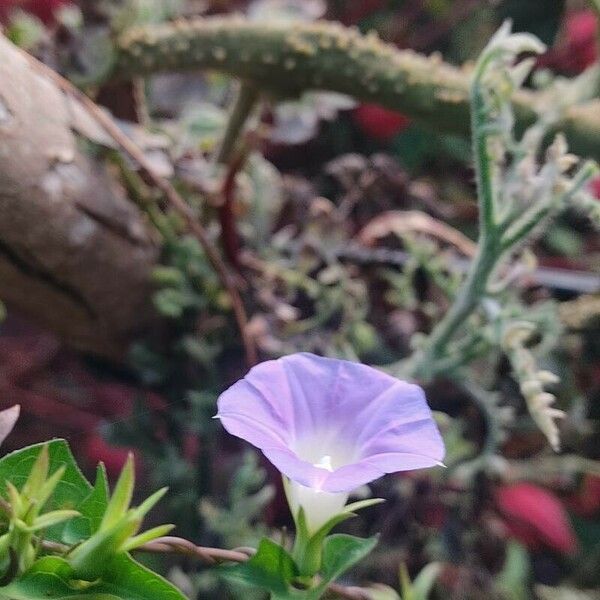
Plant Overview
Meyer’s Morning Glory is a dainty, climbing gem of the tropical Americas. Often found trailing over fences or scaling shrubs in the wild, it brings a touch of "wildflower charm" to any space. While it shares the famous family name of the common Morning Glory, this species is prized for its smaller, more delicate blooms that appear to glow when they catch the first rays of the morning sun.
🔍 How to Identify
- 💜 The Bloom: Small, trumpet-shaped flowers that are typically a vibrant violet or deep blue, often featuring a contrasting white or pale throat.
- 💚 The Foliage: Bright green, heart-shaped (cordate) leaves that are smooth to the touch and arranged alternately along the vine.
- 🌀 The Growth: Slender, twining stems that lack tendrils but wrap themselves tightly around any available support in a characteristic spiral.
🏡 In Your Garden
- 🧗 Vertical Ambition: Because of its vigorous climbing habit, Meyer’s Morning Glory needs a trellis, fence, or even a tall stalk of corn to call home. It is excellent for creating "living privacy screens" in a single season.
- ☀️ Sun Seeker: This plant is a true sun-worshipper. While it can tolerate light shade, the flowers often refuse to open fully or may drop prematurely if they don't receive several hours of direct morning light.
- 🦋 Pollinator Magnet: The deep nectar tubes are a favorite for long-tongued bees and butterflies, making it a functional addition to a wildlife-friendly garden.
⚠️ Safety & Toxicity
- 🐾 Toxic to Pets: Like many members of the Convolvulaceae family, Meyer’s Morning Glory is considered toxic to dogs, cats, and horses.
- 🚫 Seed Danger: The seeds contain alkaloids that, if ingested, can cause gastrointestinal upset or more severe neurological symptoms. It is best kept away from curious toddlers and nibbling pets.
✨ Fun Fact
The genus name Ipomoea comes from the Greek words ips (worm) and homoios (resembling), referring to the plant's "worm-like" twining growth habit as it winds its way up toward the sky.

Detailed Care Instructions

Place in a bright room that is sun drenched almost all day. Or directly in a south-facing window.

Some plants require more regular watering than others, which should be done every few days. It's critical to maintain the soil moist all of the time. The water requirements of the same plant placed in pots with varying sizes will differ. Because the water in the smaller pot evaporates faster than the water in the larger pot, it will require more watering. Regardless of pot size, the surface should constantly be maintained moist.







