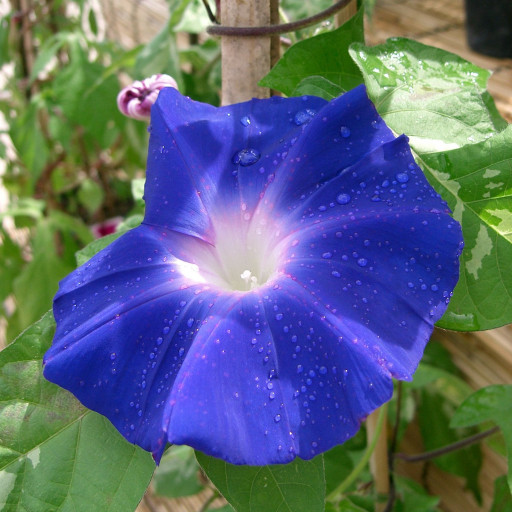
Plant Overview
Often called the "Japanese Morning Glory" or "Imperial Morning Glory," Ipomoea nil is the crown jewel of vining plants. While many morning glories are considered simple wildflowers, this species has been bred for centuries in Japan into breathtaking, artistic forms. It is a "one-day wonder," waking up with the morning dew and fading by the time you sit down for lunch.
🔍 How to Identify
- 🌿 Hairy Stems and Leaves: Unlike its cousin Ipomoea purpurea, the stems and the heart-shaped (or three-lobed) leaves of I. nil are covered in soft, fine hairs that give them a velvety texture.
- 🌸 Giant Funnel Blooms: The flowers are notably large and come in a "galaxy" of colors—including rare chocolate browns, smoky grays, and striped "picotee" patterns with white edges.
- 🌀 Twining Tendency: It lacks tendrils but climbs by tightly spiraling its entire main stem around any vertical support it can find.
🏡 In Your Garden
- 🏗️ Trellis Training: This vine is a vigorous climber but needs a head start. Providing a thin mesh or twine early on helps it find its way up; otherwise, it will sprawl across the ground and hide its beautiful blooms under the foliage.
- ☀️ Light Sensitivity: This plant is highly sensitive to daylight length. To ensure it blooms, avoid planting it near bright streetlights or porch lights, as "artificial days" can trick the plant into staying in a leafy state without ever producing flowers.
- 🌱 The Seed Soak: The seeds have a very tough outer coat. For the best success, gardeners should "scarify" them (nick the shell) or soak them in warm water for 24 hours before planting to wake the embryo inside.
⚠️ Safety & Toxicity
- 🚫 Seed Warning: While the flowers and leaves are generally safe to handle, the seeds are toxic if ingested.
- 🐾 Pets and Kids: The seeds contain alkaloids (LSA) that can cause distress, nausea, or coordination issues in cats, dogs, and small children. It is best to harvest the brown seed pods as they appear if you have curious pets in the yard.
✨ Fun Fact
During the Edo period in Japan, a "Morning Glory Mania" occurred, similar to the Dutch Tulip Fever. Samurai and merchants competed to breed the most "distorted" and unique flowers, leading to historical records of single plants being traded for the price of a small house!

Detailed Care Instructions
To grow the Ipomoea Nil plant, also known as the morning glory, follow these steps:
- Choose a suitable location: Morning glory plants thrive in full sunlight, so make sure to select an area with at least 6-8 hours of direct sunlight each day. The soil should be well-draining, fertile, and rich in organic matter.
- Prepare the soil: Before planting, enrich the soil by adding compost or well-rotted manure. Remove any weeds or debris from the area.
- Sow the seeds: Morning glory plants can be started from seeds, which can be purchased from a reputable nursery or acquired from mature plants. Sow the seeds directly into the ground in the spring after the last frost date in your area. Make small holes about 1 inch deep and space the seeds about 6-12 inches apart.
- Watering: Keep the soil consistently moist but avoid overwatering, as this can cause root rot. Water the plants deeply whenever the top inch of soil feels dry. However, established morning glory plants are fairly drought-tolerant, so they do not require excessive watering once they are well-established.
- Provide support: Morning glories are climbers, so they need support to grow vertically. Install trellises, fences, or other structures for the plants to climb on. Alternatively, you can grow morning glory plants in hanging baskets or containers with trailing support.
- Mulching: Apply a layer of organic mulch around the base of the plants to help retain moisture, suppress weeds, and maintain a more even soil temperature. Avoid placing mulch directly against the stem to prevent rot.
- Fertilizer: Morning glory plants generally do not require heavy fertilization. However, you can apply a balanced slow-release fertilizer or a water-soluble fertilizer once or twice during the growing season to promote healthy growth.
- Pruning: Occasionally, morning glory plants may require pruning to control their growth or maintain their shape. Trim back any excessive foliage or remove any dead, damaged, or diseased parts of the plants.
- Pests and diseases: Morning glory plants are generally resistant to most pests and diseases. However, keep an eye out for slugs, snails, aphids, and spider mites. Treat any infestations promptly with suitable organic or chemical solutions.
- Harvesting seeds: If you want to collect seeds from mature morning glory plants for future planting, allow the seed pods to dry on the plant until they turn brown and start to split open. Then, remove the seeds, allow them to dry completely, and store them in a cool, dry place until ready to plant.
Remember, Ipomoea Nil is an invasive plant species in some regions, so check your local guidelines and regulations before planting.

Place in a bright room that is sun drenched almost all day. Or directly in a south-facing window.

In order to water this plant, you should thoroughly moisten the soil around its roots. The plant will need regular watering, especially during hot summer months or if it is growing in a container. However, it is important not to over-water, as this can lead to root rot or other issues. It is best to allow the soil to dry out slightly between waterings, checking the moisture level by sticking your finger an inch or two into the soil. When watering, use a watering can or hose with a gentle nozzle to avoid damaging the plant or disrupting the soil. Aim to water from the base of the plant, avoiding getting water on the leaves or flowers.
To fertilize the Ipomoea Nil plant, use a water-soluble fertilizer with a balanced ratio of nitrogen, phosphorus, and potassium. Apply the fertilizer every two to three weeks during the growing season, making sure to water the plant thoroughly before and after fertilization to avoid burning the roots. Avoid using too much fertilizer, as this can lead to excessive foliage growth at the expense of flower production.
The ideal type of soil to use with this particular plant is a well-draining mix that is rich in organic matter. It should have a pH level between 5.5 to 6.5 and be kept consistently moist but not overly waterlogged. The soil mix should also contain perlite or vermiculite to increase drainage. It is important to note that this plant does not tolerate heavy or clay soil.
To propagate this plant, take stem cuttings from a healthy parent plant. Cut a section of the stem that is several inches long and has at least one node (where a leaf joins the stem). Remove the leaves from the lower half of the cutting. Dip the cut end in rooting hormone powder and plant it in a container filled with moist potting soil. Keep the soil moist and provide bright, indirect light. Within a few weeks, roots should form and the cutting can be transplanted into a larger container or into the garden.








